Warehouse Robotics and Automation: The Labor Solution Freight Has Been Waiting For
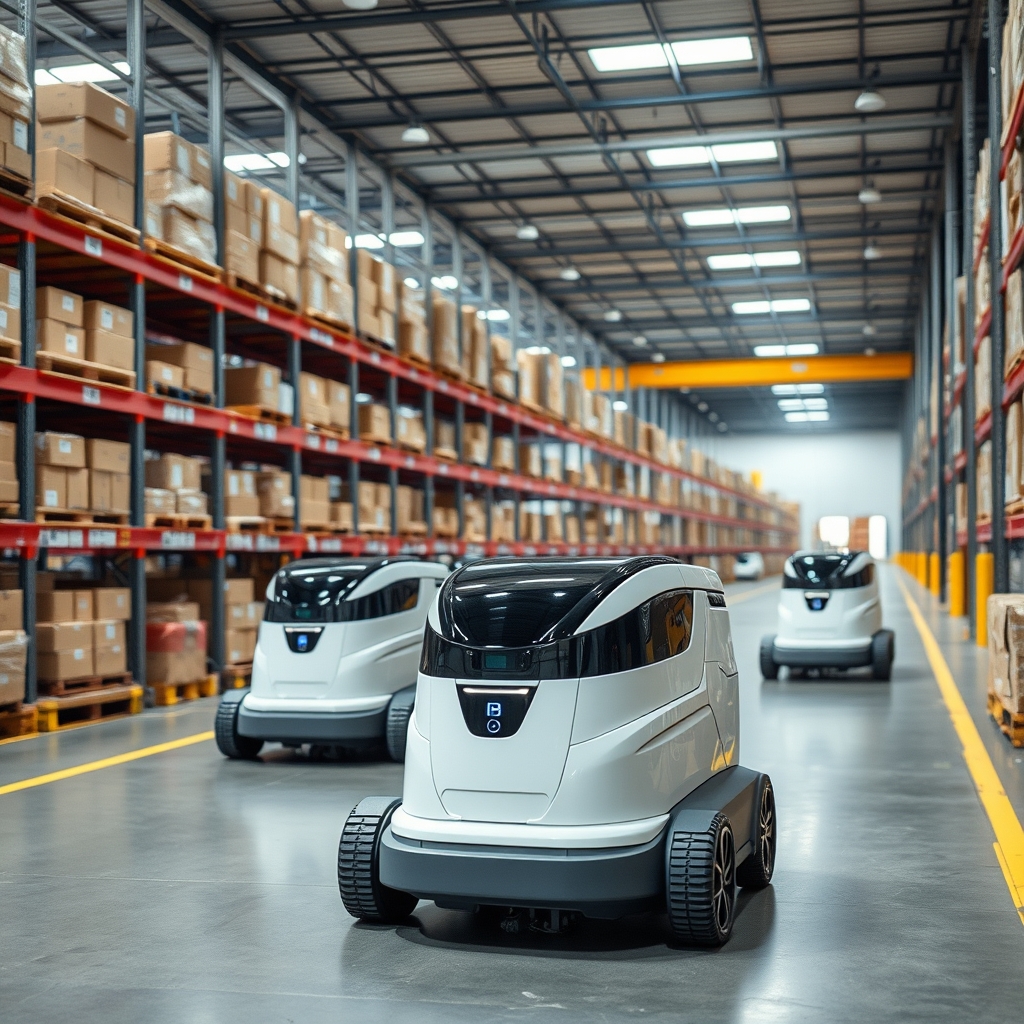
The warehouse labor crisis isn't coming — it's been here for years, and it's getting worse. The Bureau of Labor Statistics reports that the warehousing and storage sector has 450,000 unfilled positions nationally, with turnover rates exceeding 43% annually. Average warehouse wages have climbed to $21.50/hour (up 28% since 2020), and even at these rates, operators can't find enough workers. Peak season temp labor costs have become borderline absurd, with agencies charging $28–$35/hour in major logistics markets.
Enter robotics. The warehouse robotics market hit $9.4 billion in 2025 and is projected to reach $18 billion by 2030, according to Interact Analysis. But more importantly, the technology has reached an inflection point: robots are now genuinely cheaper, faster, and more reliable than the manual labor they supplement. In 2026, warehouse automation isn't a futuristic experiment — it's the most practical solution to freight's most pressing operational challenge.
The Automation Landscape: What's Working in 2026
Autonomous Mobile Robots (AMRs)
AMRs have become the gateway drug of warehouse automation — relatively low cost, fast to deploy, and requiring minimal facility modification. Unlike their predecessors (AGVs, or Automated Guided Vehicles, which follow fixed paths), AMRs navigate dynamically using LiDAR, cameras, and onboard AI.
The leading AMR platforms in 2026:
- Locus Robotics: The market leader in collaborative picking robots, with over 15,000 units deployed across 250+ facilities. Their LocusBot Origin reduces picker walking by 60% and increases units picked per hour (UPH) from 80–100 to 200–300.
- 6 River Systems (Shopify): Their Chuck robots are deeply integrated with Shopify's fulfillment network, handling collaborative picking for thousands of e-commerce merchants.
- Fetch Robotics (Zebra): Strong in manufacturing and distribution center environments, offering both picking assistance and autonomous material transport.
- Geek+ (Geekplus): The largest AMR manufacturer globally, with 30,000+ robots deployed, particularly strong in goods-to-person systems across Asia and expanding aggressively in North America.
📊 AMR ROI: By the Numbers
A typical AMR deployment of 50 robots in a 200,000 sq ft facility costs $1.5–$2.5 million (or $3,000–$5,000/month per robot on a RaaS model). This replaces or augments approximately 30–40 full-time pickers, generating annual labor savings of $1.2–$1.8 million. Payback period: 14–20 months for purchased systems, immediate ROI for Robots-as-a-Service (RaaS) deployments.
Goods-to-Person (GTP) Systems
GTP systems represent the next level of automation intensity. Instead of workers walking to products (or AMRs guiding workers to products), GTP systems bring the products directly to a stationary workstation where a human — or increasingly, a robotic arm — picks items.
Major GTP vendors and their approaches:
- AutoStore: The cube storage pioneer, with over 1,250 installations worldwide. Their grid-based system achieves 4x the storage density of traditional shelving and delivers items to pick ports in 6–12 seconds. A mid-size AutoStore system (20,000 bins, 50 robots) costs $5–$10 million but reduces facility footprint by 75%.
- Ocado/Tharsus: Originally built for online grocery, Ocado's robotic grid technology is now available to third parties. Their bots operate on a lightweight aluminum grid, picking and delivering grocery items with 99.5% accuracy.
- OPEX: Their Sure Sort and Perfect Pick systems combine goods-to-person delivery with automated sorting, particularly effective for e-commerce fulfillment with high SKU counts.
- Exotec: The Skypod system uses 3D-navigating robots that climb storage racks vertically and horizontally, achieving pick rates of 450 order lines per hour per workstation.
Robotic Picking Arms
The holy grail of warehouse automation — robotic arms that can pick individual items — has finally become commercially viable in 2026. Key advances in computer vision (particularly foundation models like those from Covariant, now part of this space) enable robots to identify, grasp, and place millions of unique SKUs they've never seen before.
- Covariant: Their AI-powered RFM (Robotic Foundation Model) enables arms to pick virtually any item, from small cosmetics to irregularly shaped products, with 99%+ accuracy and 700+ picks per hour.
- RightHand Robotics: Specializes in piece-picking for e-commerce, with the RightPick system handling items from 0.1 to 10 lbs across diverse shapes and packaging.
- Dexterity: Focused on palletizing and depalletizing, their AI-driven arms handle mixed-SKU cases at speeds rivaling manual labor but with 24/7 operation capability.
- Boston Dynamics (Stretch): The Stretch robot handles truck unloading — one of the most physically demanding warehouse tasks — moving 800 cases per hour from trailer to conveyor.
The Labor Context: Why Automation Is Inevitable
The case for warehouse automation extends far beyond labor shortages:
Demographics Are Destiny
The working-age population (16–64) in the U.S. is growing at just 0.2% annually and will begin shrinking by 2030. Meanwhile, e-commerce order volumes are growing 10–15% annually. The math simply doesn't work without automation. By 2028, the International Federation of Robotics estimates the warehouse sector will need 1.2 million more workers than the labor market can supply.
Workers' Compensation and Safety
Warehouse work ranks among the most injury-prone occupations. Amazon alone reported 39,000 recordable injuries across its fulfillment network in 2023. Repetitive motion injuries, back strains, and falls cost the industry an estimated $13 billion annually in workers' comp claims. Robots don't get hurt, don't file claims, and don't need ergonomic accommodations.
Throughput Predictability
Human workforce availability fluctuates — illness, absenteeism, shift changes, and fatigue all impact throughput. A robotic system delivers consistent performance 20+ hours per day (accounting for maintenance and charging), with throughput variance under 5%. For shippers managing tight carrier pickup windows, this predictability is invaluable.
The RaaS Revolution: Automation Without Capital Outlay
The biggest barrier to warehouse automation has always been upfront cost. A fully automated goods-to-person system can cost $15–$50 million depending on scale. But the Robots-as-a-Service (RaaS) model has demolished this barrier.
Under RaaS, operators pay per robot per month — typically $2,000–$5,000 depending on the system — with the vendor handling installation, maintenance, software updates, and hardware replacements. This converts a massive CapEx decision into a predictable OpEx line item.
- Locus Robotics: Pioneered the RaaS model for AMRs, with month-to-month contracts and no minimum commitment periods.
- Vecna Robotics: Offers a RaaS model for autonomous forklifts and tuggers, starting at $4,500/month per unit.
- inVia Robotics: Their "automation as a service" model includes not just robots but also the WES (Warehouse Execution System) software and ongoing optimization.
💡 RaaS vs. Purchase: Decision Framework
Choose RaaS when: you need flexibility for seasonal peaks, have limited capital, want to test automation before committing, or operate in a leased facility. Choose purchase when: you have a 5+ year facility commitment, stable year-round volumes, and want the lowest long-term cost per unit handled. Hybrid approaches — owning a base fleet and adding RaaS robots for peak periods — are becoming the most popular model.
Implementation Playbook: Getting Started
1. Audit Your Current Operations
Before selecting technology, map your warehouse processes in detail: items picked per hour, average walking distance, order profiles (single-item vs. multi-item), SKU velocity distribution, and peak-to-average volume ratios. This data determines which automation technology fits best.
2. Start with the Highest-Impact Area
Don't automate everything at once. Identify your biggest bottleneck — usually picking (which accounts for 55% of warehouse labor costs) — and deploy there first. A phased approach reduces risk and generates ROI faster to fund subsequent phases.
3. Don't Neglect Software
Robots without good WMS/WES integration are expensive paperweights. Ensure your warehouse management system can orchestrate robotic and human workers together. Platforms like Manhattan Associates, Blue Yonder, and SVT Robotics specialize in multi-robot orchestration.
4. Train Your Team
Automation changes roles, not just headcount. Pickers become "robot supervisors" and "exception handlers." Maintenance teams need new skills for robotic systems. Invest in training programs — vendors like Locus and AutoStore offer certification courses — and communicate clearly with your workforce about how automation will change (not eliminate) their jobs.
Optimize Your Warehouse Operations
FreightPulse connects warehouse performance data with transportation planning to create end-to-end supply chain visibility.
Start Free TrialThe Next Wave: 2027 and Beyond
The warehouse of 2028 will look dramatically different from today. Humanoid robots from companies like Agility Robotics (Digit) and Figure AI are entering pilot deployments, capable of handling unstructured tasks that current automation can't touch — loading trucks, reorganizing storage areas, and working alongside humans in dynamic environments. Whether humanoids or purpose-built machines win the warehouse, the trajectory is clear: automation is no longer optional, and the operators who move now will have a compounding advantage over those who wait.
The warehouse labor crisis has a solution. It runs on batteries, navigates by LiDAR, and never calls in sick.