Warehouse Automation and Robotics: A Practical Guide for 2026
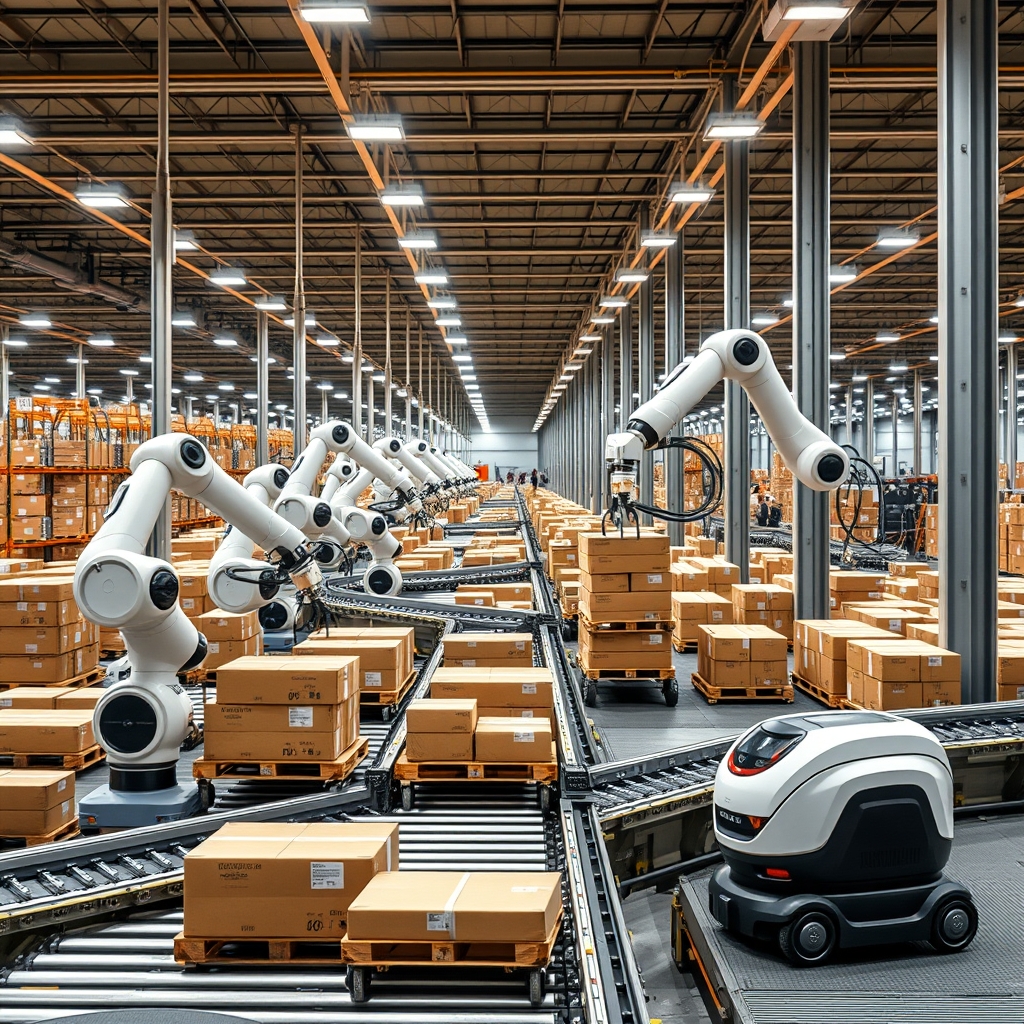
The warehouse labor shortage isn't getting better—it's structural. With an aging workforce, declining interest in manual warehouse jobs, and e-commerce volumes still growing at double-digit rates, automation has shifted from a competitive advantage to a survival strategy. The global warehouse automation market is expected to exceed $41 billion by 2027, with robotics leading the charge.
But warehouse automation isn't a monolithic solution. The technology landscape ranges from simple conveyor systems to fully autonomous facilities, and the right approach depends entirely on your operation's specific characteristics. Here's what you need to know to make informed decisions in 2026.
The Automation Spectrum
Warehouse automation exists on a continuum, and understanding where different technologies fall helps prioritize investments:
Level 1: Mechanization
Basic conveyors, sortation systems, and powered lift equipment. Low cost, proven technology, minimal integration complexity. Still the right choice for many operations handling uniform product types with predictable volumes.
Level 2: Basic Automation
Automated storage and retrieval systems (AS/RS), carousel systems, and light-directed picking. Requires warehouse management system (WMS) integration but uses well-established technology with predictable ROI.
Level 3: Advanced Automation
Autonomous mobile robots (AMRs), robotic picking arms, goods-to-person systems, and automated packaging. This is where most investment is happening in 2026—flexible, scalable, and increasingly affordable.
Level 4: Intelligent Automation
AI-orchestrated systems that dynamically adjust workflows, self-optimize layouts, and coordinate heterogeneous robot fleets. Early-stage but emerging rapidly in the most advanced facilities.
Autonomous Mobile Robots (AMRs): The Workhorse of 2026
AMRs have become the most widely deployed warehouse robotics technology, and for good reason. Unlike AGVs (automated guided vehicles) that follow fixed paths, AMRs navigate dynamically using LIDAR, cameras, and AI—working safely alongside human workers without infrastructure modifications.
Common AMR Applications
- Goods-to-person picking: Robots bring shelving units to stationary pickers, eliminating 60-70% of walking time
- Collaborative picking: Robots follow pickers through the warehouse, carrying picked items and navigating to the next location
- Transport and putaway: Moving pallets, totes, and carts between zones without human drivers
- Sortation: AMRs with tilt trays or pocket sorters for parcel-level sorting
Cost Benchmark
AMR deployment costs have dropped 40% since 2022. A typical goods-to-person AMR system for a 100,000 sq ft facility runs $1.5-3M installed, with 18-24 month payback periods. Robotics-as-a-Service (RaaS) models further reduce upfront investment to as little as $2,000-4,000 per robot per month.
Robotic Picking: The Last Frontier
Picking—selecting individual items from storage locations—represents 50-60% of warehouse labor costs and has historically been the hardest task to automate. That's changing rapidly in 2026:
Vision-Guided Picking Arms
Modern picking robots use 3D cameras and deep learning to identify, locate, and grasp millions of different SKUs. The latest generation achieves pick rates of 1,000-1,500 items per hour with 99.5%+ accuracy—comparable to experienced human pickers but sustainable across 24/7 operations without fatigue.
Multi-Modal Grippers
The breakthrough enabling universal picking has been adaptive grippers that combine vacuum suction, mechanical fingers, and soft robotics. These systems can handle everything from rigid boxes to flexible polybags to fragile glass bottles without tool changes.
Depalletizing and Palletizing
Robotic arms that build and break down pallets are now mainstream, handling mixed-SKU pallets that were previously manual-only. AI-powered stacking algorithms optimize pallet stability and space utilization, often outperforming human palletizers in consistency.
AI-Powered Warehouse Orchestration
The biggest gains in 2026 aren't coming from faster robots—they're coming from smarter orchestration. AI systems that coordinate the entire warehouse operation are delivering step-change improvements:
- Dynamic slotting: AI continuously repositions inventory based on demand patterns, seasonality, and picking frequency, reducing travel time by 20-30%
- Predictive labor planning: ML models forecast order volumes 72 hours ahead with 95% accuracy, enabling precise staffing
- Wave optimization: Intelligent wave planning that batches orders to minimize robot travel and maximize throughput
- Exception handling: AI that detects and resolves operational anomalies (jams, misplaced inventory, equipment issues) before they cascade
The RaaS Revolution
Robotics-as-a-Service has fundamentally changed the adoption curve for warehouse automation. Instead of multi-million dollar capital expenditures, operators can now deploy robots through subscription models that include hardware, software, maintenance, and upgrades.
Key advantages of RaaS:
- Scalability: Add or remove robots seasonally—perfect for peak period capacity
- Low risk: No large upfront investment; pay per robot, per pick, or per month
- Always current: Hardware and software upgrades included in the subscription
- Faster deployment: Standardized systems can be operational in 4-8 weeks versus 6-12 months for custom automation
The RaaS model is particularly attractive for 3PLs and mid-market operators who need flexibility to adapt to changing client requirements and seasonal demand swings.
Implementation Pitfalls to Avoid
- Automating a broken process: Fix your workflows before automating them. Robots will execute bad processes faster—amplifying problems, not solving them
- Underestimating integration: Connecting robots to your WMS, ERP, and order management systems is typically 40% of project cost and timeline
- Ignoring the human factor: Successful automation augments workers rather than replacing them. Invest in retraining and change management
- Over-engineering for day one: Start with the highest-impact, lowest-complexity applications and expand. Don't try to automate everything at once
- Neglecting maintenance: Robots need preventive maintenance too. Budget 8-12% of system cost annually for maintenance and spare parts
- Forgetting about facility constraints: Floor flatness, ceiling height, power capacity, and WiFi coverage can all derail a robotics deployment
Making the Business Case
When evaluating warehouse automation investments, consider the full picture:
- Direct labor savings: Typically 40-60% reduction in picking and transport labor
- Throughput improvement: 2-3x increase in orders per hour per square foot
- Accuracy gains: 99.9%+ pick accuracy versus 97-99% for manual operations
- Space utilization: Dense AS/RS systems can reduce footprint requirements by 50-80%
- Safety improvements: 60-80% reduction in workplace injuries
- Energy efficiency: Modern systems use 30-50% less energy than conventional material handling
The strongest business cases combine labor savings with throughput and accuracy improvements. A warehouse that picks faster and more accurately with fewer people isn't just cheaper to operate—it delivers a better customer experience.
Optimize Your Logistics Operations
FreightPulse provides real-time data and analytics to complement your warehouse automation strategy.
Start Free — 100 calls/mo →