Supply Chain Control Towers: From Visibility to Real-Time Orchestration in 2026
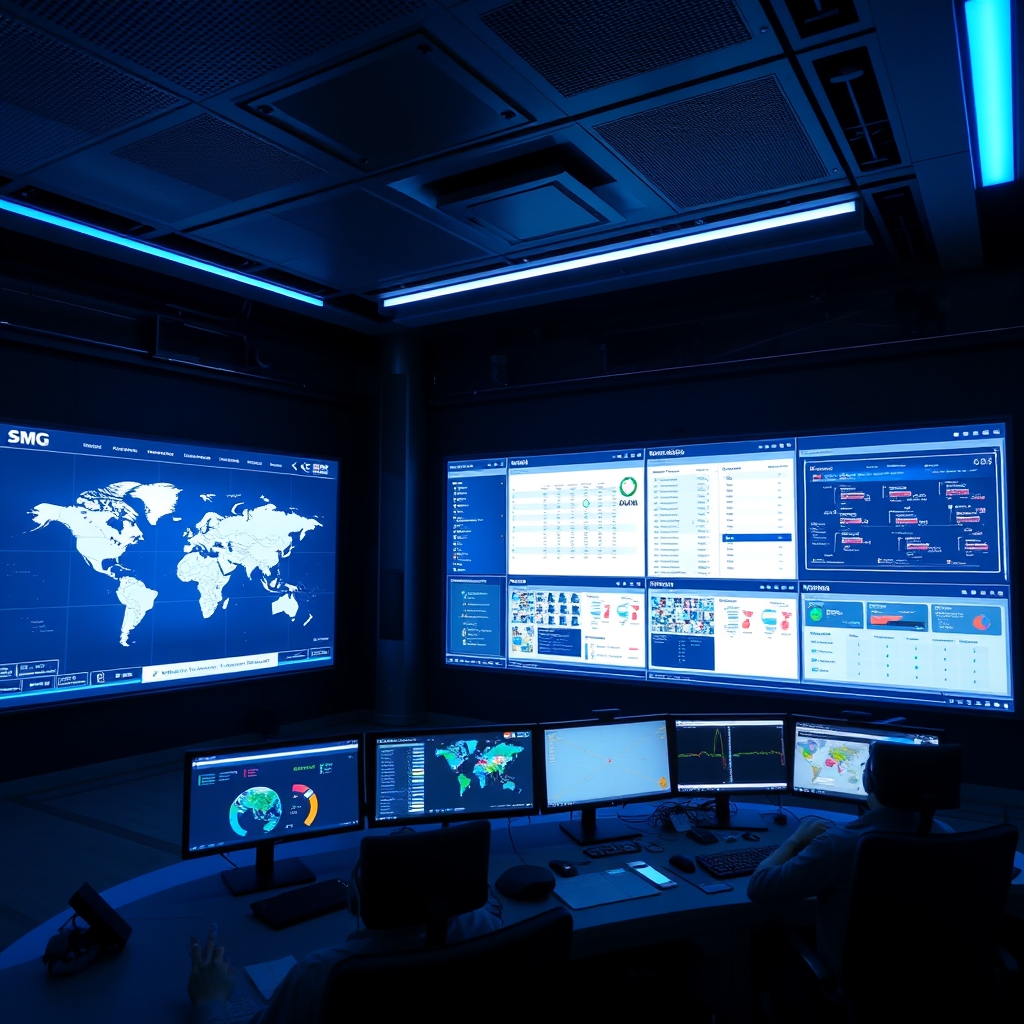
The concept of a supply chain control tower has existed for over a decade, but for most of that time it was little more than a glorified dashboard—a wall of screens showing shipment locations, exception counts, and KPI charts that analysts stared at while manually making phone calls and sending emails to resolve problems. In 2026, the control tower has evolved into something fundamentally different: an AI-powered orchestration engine that doesn't just show you what's happening in your supply chain but actively decides what to do about it, executing corrective actions in real time with minimal human intervention.
This shift from passive visibility to active orchestration represents the most important architectural change in supply chain management since the adoption of ERP systems in the 1990s. Companies that have made this transition are seeing 30–50% reductions in exception resolution time, 15–25% improvements in on-time delivery, and measurable reductions in safety stock requirements as supply chain uncertainty decreases.
The Evolution: Three Generations of Control Towers
Generation 1: Visibility (2015–2020)
The first generation answered one question: "Where is my stuff?" These platforms aggregated tracking data from carriers, freight forwarders, and ELD providers into a single view. The value was real—replacing the chaos of tracking spreadsheets, carrier portal logins, and phone calls with a unified map. But the limitation was equally clear: visibility without action is just expensive watching. A logistics manager could see that a shipment was late, but the platform offered no intelligence about what to do about it.
Generation 2: Predictive Visibility (2020–2024)
The second generation added machine learning to predict problems before they materialized. Instead of alerting when a shipment was already late, these platforms could predict 8–24 hours in advance that a shipment was likely to miss its delivery window based on current location, speed, traffic patterns, weather, and historical lane performance. This was a significant improvement—proactive exception management rather than reactive firefighting. But the predictions still required humans to decide what to do and execute the response manually.
Generation 3: Autonomous Orchestration (2024–Present)
The current generation closes the loop. When the AI predicts a disruption, it doesn't just alert a human—it evaluates response options, selects the optimal action based on cost and service impact, and executes it automatically. A container delayed at a transshipment port doesn't just generate an alert; the system automatically rebooks connecting vessels, notifies the destination warehouse of the new ETA, adjusts downstream transportation, and updates the customer's delivery promise—all within minutes, without human intervention for routine exceptions.
🏗️ Control Tower Maturity Model
Level 1 — Reactive: Manual tracking, spreadsheets, phone calls. Average exception resolution: 4–8 hours
Level 2 — Visible: Real-time tracking dashboard. Resolution: 2–4 hours (still manual)
Level 3 — Predictive: ML-predicted exceptions 8–24h ahead. Resolution: 1–2 hours (human decides, platform assists)
Level 4 — Prescriptive: AI recommends optimal actions for each exception. Resolution: 30–60 min (human approves, platform executes)
Level 5 — Autonomous: AI decides and executes routine actions automatically. Resolution: 5–15 min (human oversight for high-impact decisions only)
Core Architecture of a Modern Control Tower
Data Integration Layer
The foundation of any control tower is its ability to ingest, normalize, and correlate data from dozens of heterogeneous sources. A modern control tower typically connects to:
- Transportation systems: TMS, carrier APIs, ELD/GPS providers, ocean vessel tracking (AIS), air cargo tracking, rail tracking systems
- Warehouse systems: WMS, yard management systems, dock scheduling platforms
- Order systems: ERP, OMS, e-commerce platforms, EDI order feeds
- External data: Weather (NOAA, commercial providers), traffic (HERE, TomTom), port congestion (MarineTraffic), geopolitical risk feeds, commodity price indices
- IoT sensors: Temperature monitors, shock/tilt sensors, door open/close sensors on containers and trailers
The critical challenge is data normalization. A shipment might be tracked by a TMS load number, a carrier PRO number, a container number, a purchase order, and a customer order number simultaneously. The control tower must maintain a unified identity graph that links all these identifiers to a single shipment entity.
Digital Twin Engine
The most sophisticated control towers in 2026 maintain a real-time digital twin of the entire supply chain network. This isn't a static model—it's a continuously updated simulation that represents:
- Every in-transit shipment's current location, speed, and predicted trajectory
- Every warehouse's current inventory levels, inbound pipeline, and outbound commitments
- Every carrier's current capacity utilization and availability
- Every customer order's current status and delivery promise
The digital twin enables "what-if" analysis at machine speed. When a disruption occurs, the AI can simulate hundreds of response scenarios against the digital twin in seconds, evaluating the ripple effects of each option across the entire network before selecting the optimal response.
Decision Engine
The AI decision engine is the brain of the control tower. It operates through a hierarchy of automated responses:
- Rule-based automation: Simple, deterministic rules for high-frequency, low-risk decisions. Example: "If a carrier's ETA slip exceeds 2 hours on a next-day delivery, automatically send a proactive notification to the customer with the updated ETA"
- ML-optimized decisions: Machine learning models that evaluate multiple options and select the best action. Example: "Shipment X will miss its appointment window at Warehouse Y. Options: (a) reschedule appointment (+$0, -4h delay), (b) divert to alternative warehouse (+$200, same-day), (c) expedite with a different carrier (+$450, recovers original timeline). ML model selects based on customer priority, cost tolerance, and inventory position"
- Human escalation: Complex or high-value decisions routed to human planners with full context and AI-recommended options. Example: "A major port strike is predicted with 70% confidence within 48 hours. 35 containers are at risk. Recommended action: pre-pull 20 highest-priority containers and reroute 15 to alternative port. Estimated incremental cost: $125,000. Approve/Modify/Reject?"
Real-World Impact: What Control Towers Actually Deliver
Exception Resolution
The most measurable impact is on exception handling efficiency. In a typical supply chain, 8–15% of shipments experience some form of exception (delay, damage, wrong quantity, customs hold, etc.). Without a control tower, each exception requires 45–90 minutes of analyst time to investigate, communicate, and resolve. With an autonomous control tower:
- 60–70% of exceptions resolved automatically without human intervention
- Remaining exceptions resolved 3–5x faster with AI-prepared context and recommended actions
- Total analyst headcount for exception management reduced 40–60%
Customer Experience
Modern control towers enable proactive customer communication that was previously impossible at scale:
- Predictive ETAs: Instead of "your shipment is in transit," customers get "your shipment will arrive between 2:15 PM and 3:00 PM on Thursday" with accuracy above 90%
- Proactive delay notifications: Customers are informed of delays before they notice them, with updated timelines and (where applicable) automatic remediation (expedited shipping, alternative sourcing)
- Self-service tracking: Customer-facing portals powered by the same control tower data, reducing "where is my order" inquiries by 50–70%
Inventory Optimization
When you have high-confidence ETAs and proactive exception management, you need less safety stock. Companies report 10–20% reductions in safety stock after implementing advanced control towers, because the buffer for supply chain uncertainty shrinks. For a company carrying $100 million in inventory, a 15% safety stock reduction frees $15 million in working capital.
Vendor Landscape in 2026
The control tower market has matured significantly, with clear category leaders:
- FourKites: The largest independent visibility platform, now with strong orchestration capabilities through its Dynamic Yard and automated workflow engine. Strengths: massive carrier network (1,000+ connected carriers), multimodal coverage, strong in CPG and retail
- project44: Focused on data quality and API-first architecture. Acquired Convey in 2022 for last-mile visibility. Strengths: developer-friendly platform, strong parcel tracking, embedded visibility for TMS vendors
- o9 Solutions: Coming from the planning side, o9's control tower integrates demand planning, supply planning, and execution monitoring into a single digital twin. Strengths: end-to-end planning-to-execution integration
- Blue Yonder (Panasonic): The enterprise heavyweight with Luminate Control Tower. Strengths: deep integration with Blue Yonder's TMS, WMS, and planning suite; preferred by large enterprises already in the BY ecosystem
- Shippeo: Strong in European markets with excellent ocean and European road freight visibility. Growing North American presence through partnerships
Implementation Guide: Building Your Control Tower
Phase 1: Foundation (Months 1–3)
- Define scope: Which modes, regions, and supply chain segments will the control tower cover? Start focused (e.g., inbound ocean and domestic TL for the top 50 lanes) rather than trying to boil the ocean
- Data integration: Connect TMS, carrier tracking, and ERP/OMS data. This is typically the longest phase—budget 60% of Phase 1 time for data connectivity and quality remediation
- Baseline metrics: Measure current exception rates, resolution times, on-time delivery, and customer complaint volumes
Phase 2: Visibility and Prediction (Months 3–6)
- Deploy tracking and ETA predictions: Get accurate real-time visibility and predictive ETAs operational
- Configure alerting: Set up intelligent alert rules (not "alert on everything"—that creates alert fatigue—but targeted alerts on actionable exceptions)
- Build stakeholder dashboards: Different views for operations, customer service, and executive leadership
Phase 3: Automation (Months 6–12)
- Automate routine responses: Start with low-risk, high-frequency exceptions (customer notifications, appointment rescheduling, carrier performance scoring)
- Implement prescriptive recommendations: For medium-complexity exceptions, have the AI recommend options for human approval
- Measure and iterate: Track automation rates, false positive rates, and user override rates to continuously improve the decision models
Phase 4: Orchestration (Months 12–18)
- Enable autonomous execution: For proven decision patterns with consistently good outcomes, remove the human approval requirement
- Cross-functional integration: Connect the control tower to procurement (automatic PO adjustments), sales (proactive customer outreach), and finance (automated freight claims and accruals)
- Continuous learning: Implement feedback loops where actual outcomes are compared to AI predictions and decisions, continuously improving model accuracy
The supply chain control tower has finally grown into its name. It's no longer just a tower you look out from—it's a command center that sees, thinks, decides, and acts. The organizations that build this capability won't just manage supply chain disruptions more efficiently; they'll turn supply chain agility into a competitive advantage that's nearly impossible to replicate.
Power Your Control Tower with Real-Time Data
FreightPulse's API delivers the rate intelligence and market data that feeds modern control tower platforms.
Start Free Trial →