Reverse Logistics Mastery: Turning Returns into Revenue in 2026
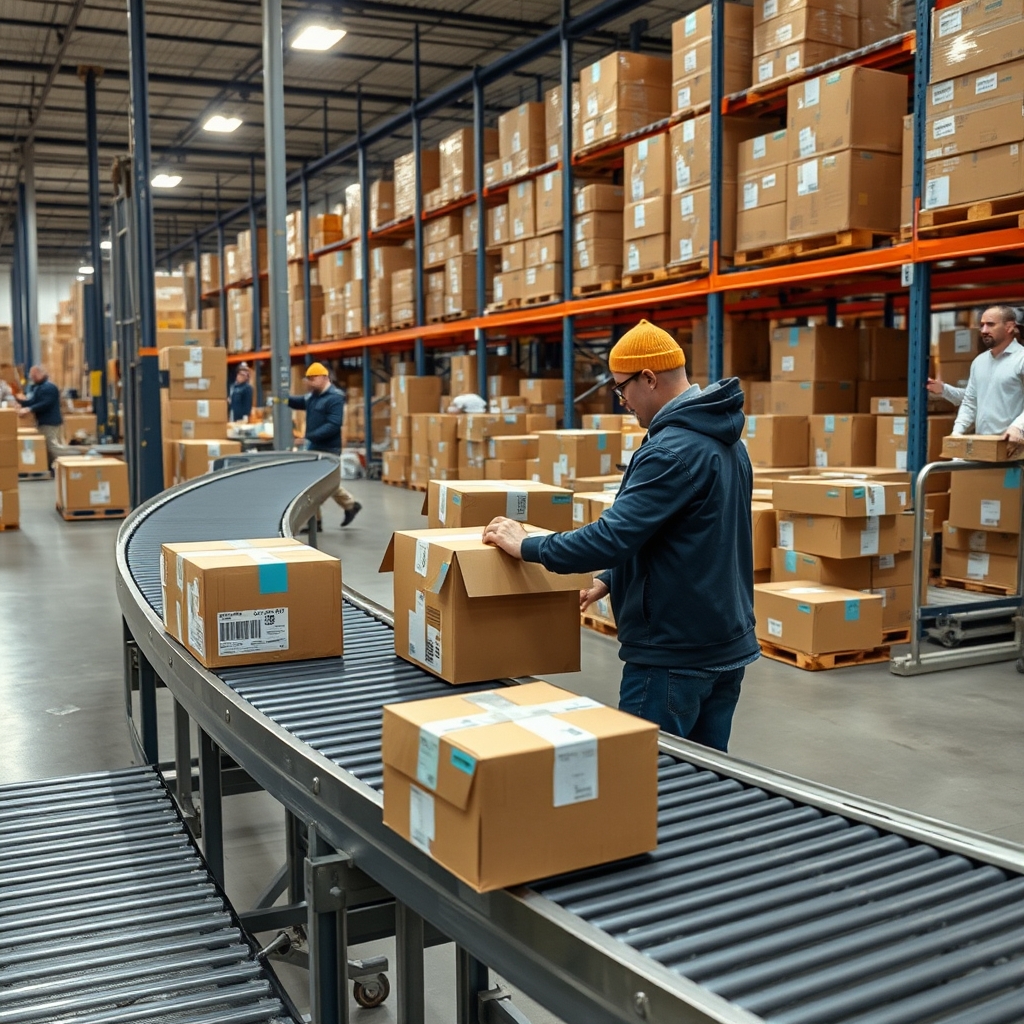
Here's a number that should keep every supply chain executive awake at night: $890 billion. That's the estimated value of product returns in the U.S. retail market in 2025, representing roughly 16.9% of total retail sales. For most companies, reverse logistics is a black hole—products come back, money disappears, and the operational complexity is staggering. But a growing number of forward-thinking companies have flipped the script, transforming their returns operations from pure cost centers into genuine profit drivers.
In 2026, reverse logistics mastery isn't just about minimizing losses. It's about building a competitive moat through superior returns experiences, faster asset recovery, and circular economy strategies that create new revenue streams from products most companies would write off.
The True Cost of Returns (It's Worse Than You Think)
The sticker price of a return is just the beginning. When you account for every touchpoint, the real cost of processing a single return typically ranges from 59% to 75% of the original item's selling price. That cost breaks down across multiple categories:
- Return shipping: $8–$15 per package for ground service (higher for bulky or heavy items)
- Receiving and inspection: $3–$7 per unit in labor costs for intake, quality assessment, and disposition decisions
- Repackaging and restocking: $2–$5 per unit, assuming the product can be resold as new
- Value depreciation: Products lose 20–45% of their value during the return cycle due to time decay, especially in fashion, electronics, and seasonal goods
- Liquidation or disposal: Items that can't be resold as new recover only 5–25% of their original value through liquidation channels
- Customer service: $4–$8 per return interaction for call center and chat support
📊 Reverse Logistics by the Numbers in 2026
$890B in U.S. retail returns annually. The average return costs 66% of the item's sale price to process. Only 48% of returned products are resold at full price. Companies with optimized reverse logistics programs recover 30–40% more value from returns than average. The recommerce (resale) market has grown to $245B globally, up 28% from 2024.
The Five Pillars of Reverse Logistics Excellence
Pillar 1: Gatekeeping — Preventing Unnecessary Returns
The cheapest return to process is the one that never happens. Leading companies are investing heavily in return prevention without restricting customer-friendly policies:
- Enhanced product content: 360° imagery, detailed size guides, AR try-on tools, and honest product descriptions reduce "not as expected" returns by 22–35%
- AI-powered size recommendations: For apparel, machine learning models that analyze purchase and return history to recommend the right size reduce size-related returns by up to 40%
- Quality control tightening: "Defective" is the #2 return reason. Investing an extra $0.50–$1.00 in outbound QC per unit can prevent $15+ in return processing costs
- Smart return policies: Offering exchanges instead of refunds, providing store credit with a bonus (e.g., "return for 110% store credit"), or offering partial refunds with keep-the-item options for low-value goods
Pillar 2: Speed — Compressing the Return Cycle
Time is the enemy of value recovery. Every day a returned product sits in a processing queue, it loses value. The best reverse logistics operations have compressed the return-to-resale cycle from an industry average of 14–21 days to 3–5 days through:
- Instant refund processing at the point of carrier scan (before the item reaches the warehouse)
- Automated disposition routing that sorts returns into resale, refurbish, liquidate, or recycle channels immediately upon receipt
- Regional return processing centers that eliminate the long-haul return trip back to a central DC
- Pre-printed return labels with embedded disposition codes that speed warehouse intake
Pillar 3: Disposition Intelligence — Maximizing Value Recovery
Not every returned item should follow the same path. Intelligent disposition—routing each returned product to its highest-value recovery channel—is where the real money is made.
The disposition decision tree in 2026 looks like this:
- Resell as new: Item is unopened or in perfect condition. Restock immediately. (Recovery: 95–100% of value)
- Resell as open-box/certified: Item was opened but is fully functional. Repackage, discount 10–20%, and list on your certified pre-owned channel. (Recovery: 70–85%)
- Refurbish and resell: Item has minor cosmetic damage or missing accessories. Repair, repackage, and sell through secondary channels. (Recovery: 40–65%)
- Liquidate in bulk: Item is out of season or excess. Sell to liquidation marketplaces or off-price retailers. (Recovery: 15–30%)
- Harvest components: Item is non-functional but contains valuable parts or materials. Extract and reuse. (Recovery: 5–15%)
- Recycle responsibly: Item has no resale or component value. Partner with certified recyclers to minimize landfill impact and meet ESG commitments. (Recovery: 0–5%)
Pillar 4: Recommerce — Building a Secondary Sales Channel
The recommerce market—selling returned, refurbished, or pre-owned products—has exploded to $245 billion globally in 2026. What was once the domain of eBay resellers is now a mainstream retail strategy, with brands from Apple to Patagonia to IKEA operating dedicated recommerce channels.
For freight-intensive businesses, recommerce creates new logistics requirements:
- Grading and certification workflows that require trained inspectors and quality standards documentation
- Separate inventory management for recommerce SKUs that may have variable condition grades
- Fulfillment infrastructure that can handle one-of-a-kind items rather than uniform new-product inventory
- Reverse logistics networks designed to efficiently collect and consolidate returns for recommerce processing
Pillar 5: Data and Analytics — Learning from Every Return
Every return tells a story. The most sophisticated reverse logistics operations mine return data systematically to improve the entire business:
- Product design feedback: When a specific SKU has a 25% return rate for "defective," that's a design or manufacturing issue, not a logistics problem
- Supplier quality scoring: Tracking return rates by supplier identifies quality issues before they become systemic
- Customer behavior patterns: Serial returners, bracket buyers (ordering multiple sizes), and wardrobing (wearing and returning) each require different mitigation strategies
- Freight optimization: Return shipment data reveals consolidation opportunities—grouping returns from a region into scheduled pickup routes rather than processing individual return labels
The Freight Angle: Optimizing Return Transportation
Return shipping is often the single largest cost component in reverse logistics, yet it receives the least optimization attention. Strategies that work in 2026:
- Consolidated return pickups: Instead of individual return labels through parcel carriers, establish scheduled pickup routes from high-volume return origins (retail stores, drop-off points) using LTL or dedicated trucks
- Regional return centers: Processing returns at regional facilities near customers rather than shipping everything back to a central location cuts return transit costs by 30–50%
- Carrier diversification: Returns are typically less time-sensitive than outbound shipments, allowing the use of economy carriers or consolidated ground services that cost 25–40% less than standard parcel
- Drop-off network partnerships: Partnering with retail chains, locker networks, or convenience stores as return drop-off points allows batch consolidation before carrier pickup
The companies winning at reverse logistics in 2026 don't treat it as an afterthought. They design return flows with the same rigor they apply to outbound fulfillment—because in a world where 17% of everything sold comes back, reverse logistics isn't a side operation. It's half the game.
Get Visibility Into Your Reverse Logistics
FreightPulse tracks return shipments with the same precision as outbound freight—giving you the data to optimize costs, speed, and recovery rates.
Start Free Trial →