How Reshoring and Onshoring Are Reshaping U.S. Freight Networks in 2026
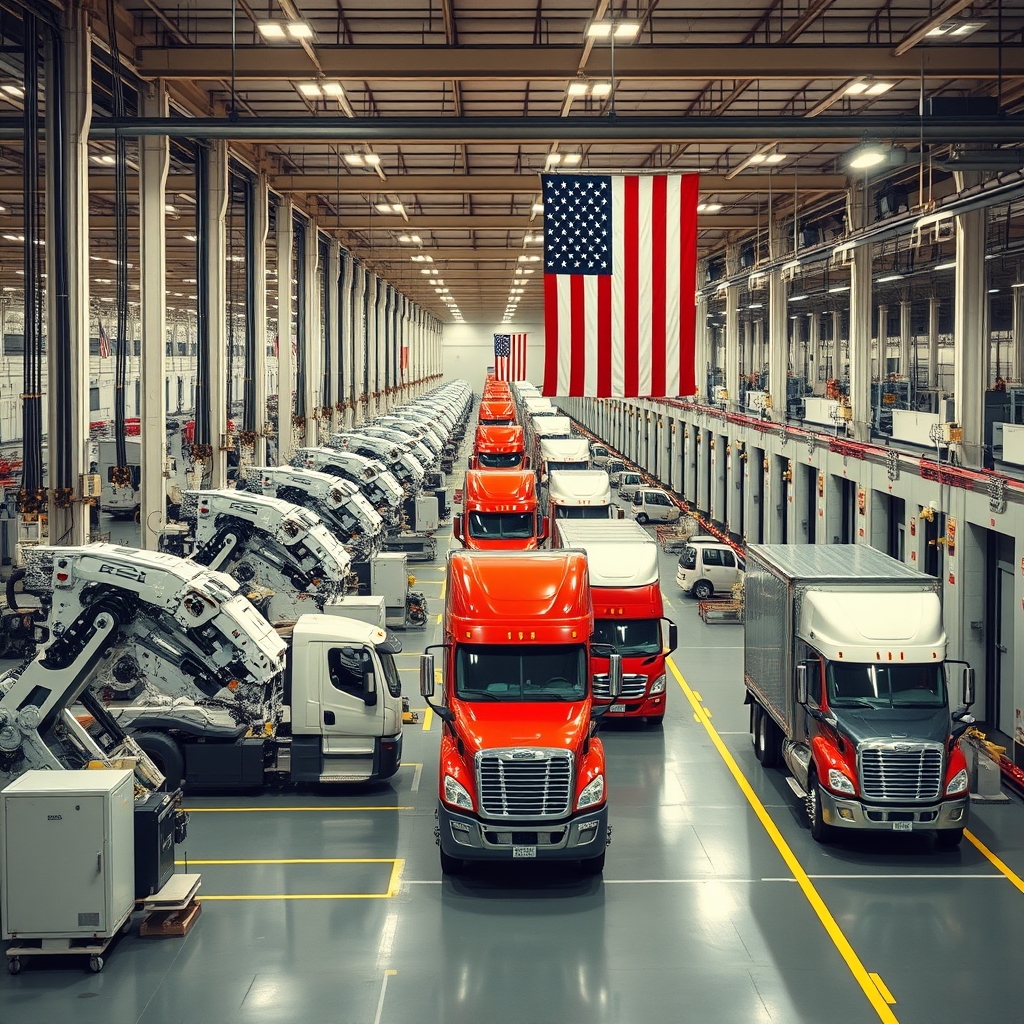
The great migration of manufacturing back to American soil isn't a projection anymore—it's a freight reality. Since 2022, over $280 billion in new manufacturing construction has been announced across the United States, driven by federal incentives like the CHIPS Act and Inflation Reduction Act, geopolitical risk aversion, and the hard lessons of pandemic-era supply chain failures. For logistics professionals, the question is no longer whether reshoring will affect freight networks. It's how fast the transformation will happen and who's prepared for it.
In 2026, reshoring is fundamentally redrawing the map of American freight. New lanes are emerging, existing corridors are getting heavier, and warehouse markets that were sleepy five years ago are suddenly white-hot. Here's what every shipper needs to understand.
The Reshoring Wave: Scale and Scope
Reshoring and foreign direct investment (FDI) brought an estimated 364,000 manufacturing jobs back to the U.S. in 2025 alone, according to the Reshoring Initiative. But the logistics impact goes far beyond headcount. Every manufacturing job generates roughly 3.4 additional supply chain jobs—warehouse workers, truck drivers, freight coordinators—amplifying the effect across the entire freight ecosystem.
📊 Reshoring Impact on U.S. Freight in 2026
$280B+ in announced manufacturing construction since 2022. Domestic truckload volume on reshoring-linked lanes has increased 18% year-over-year. Warehouse vacancy rates in the Southeast and Southwest have dropped to 3.1%, the tightest on record. The average domestic shipment now travels 642 miles—down from 791 miles in 2020—as production moves closer to consumption centers.
Which Industries Are Moving and Where
Semiconductors and Electronics
The CHIPS Act alone has catalyzed over $100 billion in semiconductor fabrication investments. Major facilities in Arizona, Ohio, Texas, and New York are coming online through 2026 and 2027. These plants require massive inbound logistics for raw materials (specialty chemicals, silicon wafers, ultra-pure gases) and generate high-value, time-sensitive outbound freight.
Electric Vehicles and Battery Manufacturing
The EV supply chain is arguably the single largest reshoring catalyst for freight. Battery gigafactories in Georgia, Tennessee, Kentucky, Michigan, and Nevada are creating entirely new freight lanes for lithium, cathode materials, and battery-grade chemicals. A single gigafactory can generate 500+ inbound truckloads per week of raw materials alone.
Pharmaceuticals and Medical Devices
The pandemic exposed dangerous dependencies on overseas API (active pharmaceutical ingredient) production. New pharma manufacturing in North Carolina's Research Triangle, New Jersey, and Indiana is shifting temperature-controlled and high-security freight from ocean containers to domestic trucks and air freight.
Consumer Goods and Apparel
While full apparel reshoring remains limited, nearshoring to Mexico and Central America has surged. This shifts freight patterns from transpacific ocean + West Coast drayage to cross-border trucking through Laredo, El Paso, and Nogales—ports of entry that are seeing record commercial vehicle crossings.
How Freight Networks Are Changing
New Lane Density in the Southeast and Midwest
The traditional freight map concentrated around coastal ports and legacy industrial centers. Reshoring is redistributing volume inland. Key corridors seeing the biggest gains:
- I-65 Corridor (Alabama to Indiana): EV battery and automotive supplier freight has doubled since 2023
- I-85 Corridor (Georgia to Virginia): Life sciences and advanced manufacturing driving 22% volume growth
- Phoenix–Albuquerque–Dallas triangle: Semiconductor and solar manufacturing creating new west-to-south freight flows
- Ohio Valley: Intel's fab complex in Columbus is reshaping regional LTL and specialized freight markets
Shorter Hauls, Higher Frequency
Reshored manufacturing generally sits closer to end consumers than imports arriving at West Coast ports. This means shorter average haul lengths but higher shipment frequency. For carriers, this shifts the economics from long-haul truckload toward regional TL, LTL, and dedicated fleet operations. Shippers are finding that total transportation costs may actually decrease even as per-mile rates remain elevated, because total miles are dropping.
Warehouse Market Disruption
New factories need supplier parks, raw material staging areas, and finished goods distribution centers nearby. Markets like Savannah, GA; Greenville, SC; Columbus, OH; and Phoenix, AZ have seen industrial real estate absorption rates exceed new construction for six consecutive quarters. Shippers planning reshoring-adjacent operations should be locking in warehouse capacity now—waiting 12 months could mean paying 30–40% more in lease rates.
What Shippers Should Do Now
- Audit your lane exposure. If your freight moves on corridors that are gaining reshoring volume, expect tighter capacity and rising spot rates. Build those assumptions into your 2026–2027 RFPs.
- Diversify your carrier base regionally. National mega-carriers may not be the best fit for the new regional freight patterns reshoring creates. Build relationships with strong regional carriers in the Southeast, Midwest, and Southwest.
- Secure warehouse space proactively. If you're within 200 miles of a major reshoring project, industrial real estate is tightening fast. Consider longer lease terms to lock in current rates.
- Rethink your network design. With production moving closer to demand, your distribution center locations may need updating. Run network optimization models with reshored supply points, not just legacy import-based origins.
- Watch cross-border closely. Nearshoring to Mexico is accelerating alongside domestic reshoring. If your suppliers are moving to Monterrey or Guadalajara instead of Shenzhen, your logistics playbook needs a cross-border chapter.
The Carrier Perspective: Opportunity and Strain
For trucking companies, reshoring is a double-edged sword. New freight volume is welcome after the 2023–2024 freight recession, but the geographic redistribution creates challenges. Carriers with strong Southeast and Midwest networks are booming, while those built around port drayage and long-haul transcontinental lanes may need to reposition assets.
The driver shortage—projected at 82,000 by 2027—intersects painfully with reshoring. New factories in smaller metro areas often lack the deep driver pools of major logistics hubs. Companies like Georgia-Pacific and Toyota have begun offering direct driver recruitment programs in partnership with local community colleges, but the talent pipeline takes years to build.
Looking Ahead: The 2027–2030 Horizon
Reshoring is not a one-year trend—it's a structural shift that will play out over a decade. By 2030, analysts project that U.S. domestic manufacturing output will account for 15% more freight tonnage than 2020 levels, fundamentally altering carrier economics, warehouse markets, and supply chain design.
Shippers who adapt their logistics networks now—before capacity tightens further and real estate prices peak—will have a significant competitive advantage. Those who wait will find themselves competing for scarce trucks and warehouses in markets they didn't see coming.
Optimize Your Network for the Reshoring Era
FreightPulse helps you analyze lane performance, track capacity trends, and optimize routing as freight networks shift. Stay ahead of the reshoring curve.
Start Free Trial →