Real-Time Freight Visibility: Why End-to-End Tracking Is Non-Negotiable in 2026
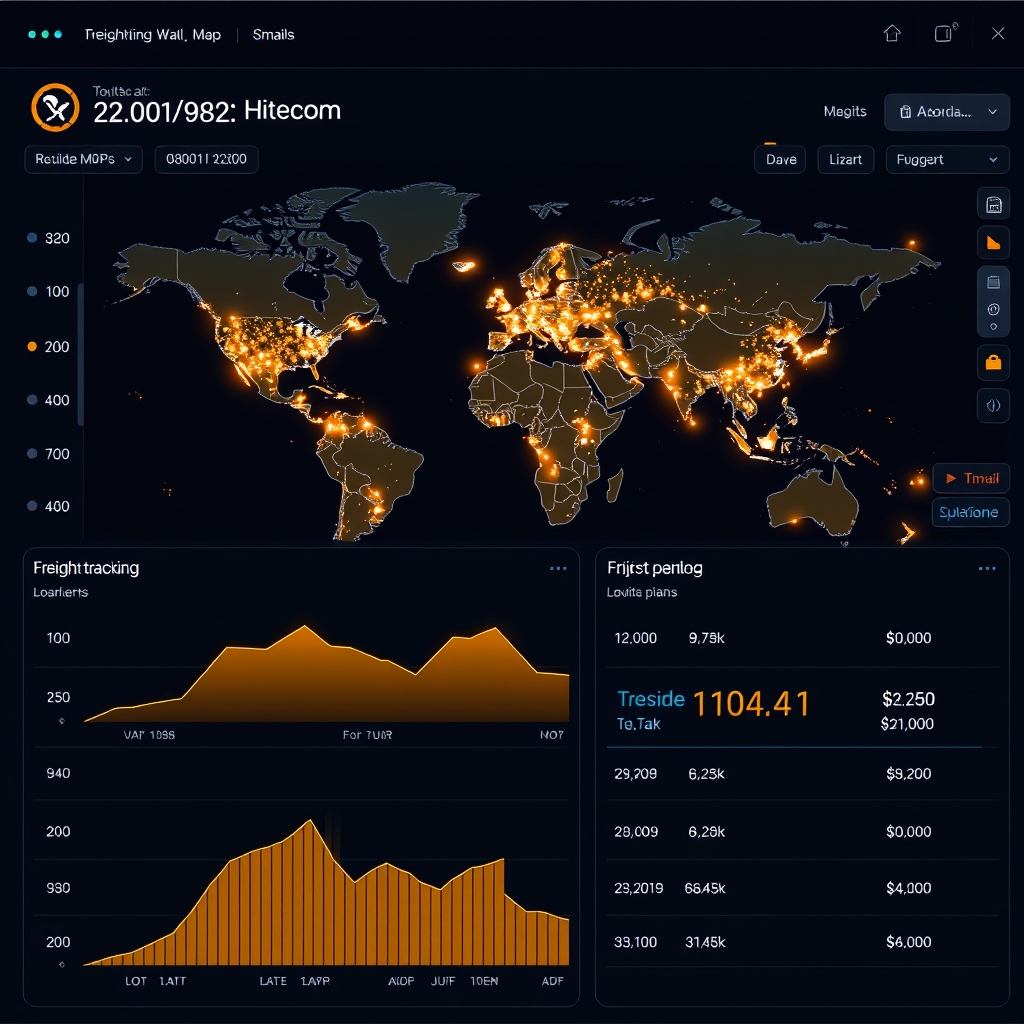
There was a time when "Where's my shipment?" was answered with a phone call, an email chain, and a best guess. That era is decisively over. In 2026, real-time freight visibility isn't a premium feature or a nice-to-have — it's the baseline expectation from every shipper, receiver, and end consumer in the supply chain.
The numbers tell the story: Gartner reports that 85% of large enterprise shippers now require real-time visibility as a contractual obligation with their carriers, up from 50% in 2022. The global supply chain visibility market has grown to $4.2 billion, with projections hitting $8.3 billion by 2030. And according to a 2025 survey by Descartes Systems Group, 73% of shippers say they would switch carriers over poor visibility capabilities — even if the alternative costs 5–8% more.
The Technology Stack Powering Modern Visibility
Real-time freight visibility in 2026 is built on a layered technology stack that has matured significantly from the GPS-only solutions of a decade ago.
IoT Sensors: Beyond Location
Modern IoT devices don't just track where a shipment is — they monitor its condition in real time. The latest generation of multi-sensor devices from companies like Tive, Sensitech, and Roambee costs as little as $15 per trip and provides:
- GPS location: Updates every 5–15 minutes with ±3 meter accuracy via GPS/GLONASS/Galileo multi-constellation tracking.
- Temperature monitoring: Critical for pharmaceuticals and perishables, with ±0.1°C accuracy and automated excursion alerts.
- Shock and tilt detection: Accelerometers detect drops, impacts, and improper handling, creating timestamped evidence for claims.
- Light exposure: Detects when a sealed container is opened, critical for high-value and pharmaceutical shipments.
- Humidity sensing: Prevents moisture damage in electronics and paper goods shipments.
📊 IoT Adoption by Mode
In 2026, IoT sensor penetration varies by freight mode: full truckload (78% of shipments tracked), ocean container (65%), LTL (45%), air cargo (82%), and rail (52%). The biggest growth area is LTL, where sensor costs have finally dropped below the ROI threshold for most commodity shipments.
API-Based Carrier Integration
The real revolution in visibility has been the proliferation of standardized APIs. The days of EDI 214 messages arriving hours or days late are numbered. Modern visibility depends on real-time API connections that pull data directly from carrier systems, ELDs (Electronic Logging Devices), and telematics platforms.
Key developments in 2026:
- OpenTelemetry for Freight: The emerging standard for carrier data exchange, supported by over 200 carriers representing 65% of North American truckload capacity.
- ELD data feeds: The FMCSA's 2025 mandate requiring ELD data sharing APIs has created a universal data source for truckload visibility, covering 98% of regulated carriers.
- Ocean carrier APIs: All major ocean carriers (Maersk, MSC, CMA CGM, COSCO, Hapag-Lloyd) now offer real-time container tracking APIs, with average latency under 5 minutes.
- Rail GPS tracking: BNSF, Union Pacific, CSX, and Norfolk Southern all offer sub-15-minute railcar location updates via API.
The Visibility Platform Landscape in 2026
The freight visibility platform market has consolidated significantly, with a few major players dominating while specialized providers carve out niches:
Enterprise Leaders
- project44: The market leader with over 1,300 enterprise customers, tracking 2+ billion shipments annually across all modes. Known for the deepest carrier network (175,000+ carriers) and predictive ETA accuracy of 93%.
- FourKites: Strong in CPG and retail verticals, with Dynamic Ocean and Dynamic Yard products extending visibility beyond in-transit to facility operations. Tracks over $2.5 trillion in annual freight spend.
- Descartes MacroPoint: Deeply embedded in the 3PL and brokerage ecosystem, with the widest LTL carrier network and strong integration with TMS platforms.
Specialized Players
- Tive: Leading the sensor-based visibility segment, particularly strong in cold chain and high-value cargo.
- Overhaul: Focused on cargo security and risk management visibility, serving defense, pharmaceutical, and luxury goods shippers.
- Vizion: API-first ocean visibility platform offering the most comprehensive bill of lading tracking across 18 ocean carriers.
Why Visibility Directly Impacts the Bottom Line
Real-time visibility isn't just about answering "where's my stuff?" — it drives measurable financial outcomes:
Detention and Demurrage Reduction
Shippers with real-time visibility report 35% fewer detention charges, saving an average of $1,200–$2,500 per incident. For a shipper moving 5,000 loads per month, that translates to $500,000–$1.2 million in annual savings.
Safety Stock Optimization
When you know exactly when inventory will arrive, you can carry less buffer stock. McKinsey research shows that effective visibility reduces safety stock requirements by 15–25%, freeing up significant working capital. For a company with $50 million in inventory, that's $7.5–$12.5 million in freed capital.
Customer Experience
According to Convey (now project44 Last Mile), proactive delivery notifications reduce "Where is my order?" (WISMO) calls by 60%. Each WISMO call costs $5–$8 to handle, making visibility a direct customer service cost reducer.
💡 The Predictive ETA Advantage
The frontier of visibility has moved from "where is it now?" to "when will it arrive?" Machine learning models trained on billions of historical shipments can now predict delivery times with 93–95% accuracy within a 1-hour window for truckload and 4-hour window for intermodal. This predictive capability enables warehouse labor scheduling, dock appointment optimization, and proactive exception management.
Customer Expectations Are Driving the Standard
The Amazon effect has permanently raised the bar. B2C consumers expect package-level tracking as a given. But the more significant shift is in B2B:
- Walmart's OTIF 2.0: Walmart now requires suppliers to provide real-time shipment visibility as part of its On-Time In-Full compliance program, with financial penalties for non-compliant shipments.
- Automotive JIT: Toyota, GM, and Ford mandate real-time visibility for all inbound parts shipments, with automated line-down risk alerts when deliveries are predicted to be late.
- Pharmaceutical compliance: The Drug Supply Chain Security Act (DSCSA) requires end-to-end tracking for all prescription drugs, with temperature monitoring documentation.
Building Your Visibility Strategy
1. Start with Your Biggest Pain Points
Don't try to boil the ocean. If detention charges are your biggest cost leak, prioritize truckload visibility. If customer complaints dominate, focus on last-mile tracking. Build from the highest-ROI use case outward.
2. Demand Carrier Compliance
Include visibility requirements in every carrier RFP and contract. Specify minimum tracking frequency, data format standards, and ETA accuracy thresholds. Consider tying a portion of carrier payments (1–2%) to visibility compliance.
3. Integrate Visibility into Decision-Making
Tracking data is only valuable if it drives action. Connect your visibility platform to your TMS, WMS, and OMS so that late shipments automatically trigger rescheduling, customer notifications, and exception workflows.
4. Measure and Benchmark
Track visibility KPIs: percentage of shipments with real-time tracking, ETA accuracy, exception detection lead time, and WISMO reduction. Benchmark against industry standards and use the data in carrier scorecards.
Get Complete Freight Visibility
FreightPulse integrates with 50,000+ carriers to give you real-time tracking, predictive ETAs, and automated exception alerts.
Start Free TrialWhat's Next: The Autonomous Visibility Era
Looking ahead, the next frontier is autonomous visibility — systems that don't just track and predict, but act. Imagine a platform that automatically rebooks a shipment when it detects a carrier will miss the delivery window, or proactively shifts inventory between distribution centers based on real-time demand signals and in-transit inventory positions. That future is closer than you think, and the foundation is the real-time visibility infrastructure being built today.
In 2026, the question isn't whether you need real-time freight visibility. It's whether your current visibility capabilities are keeping pace with what your customers, carriers, and competitors expect.