Predictive Maintenance in Fleet Management: Reducing Downtime with IoT and AI
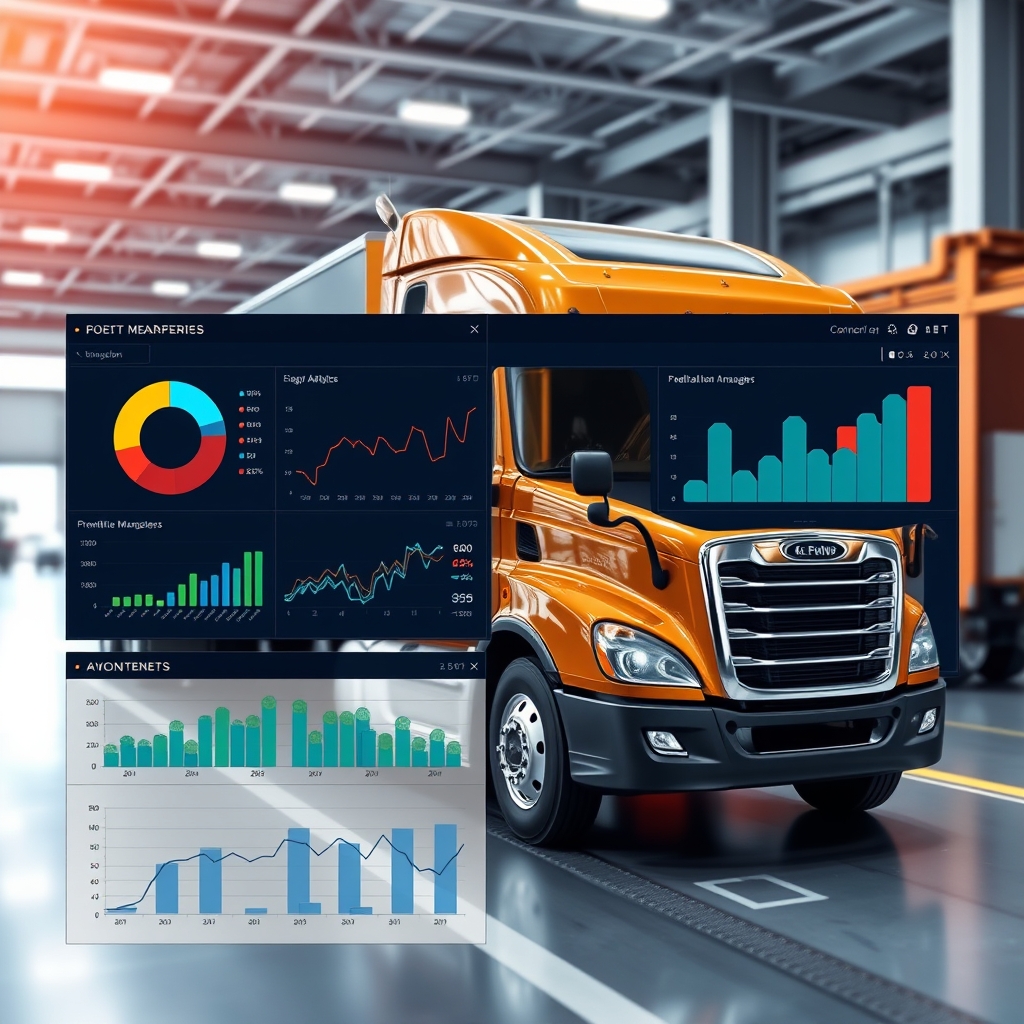
Unplanned vehicle breakdowns cost the US trucking industry an estimated $70 billion annually. Each roadside failure means delayed deliveries, towing expenses, emergency repairs at premium rates, and—worst of all—damaged customer relationships. In an industry running on razor-thin margins, the difference between a profitable and unprofitable fleet often comes down to maintenance strategy.
Predictive maintenance, powered by IoT sensors and machine learning, is fundamentally changing this equation. Instead of waiting for something to break (reactive) or replacing parts on a fixed schedule regardless of condition (preventive), fleets can now predict failures before they occur and intervene at the optimal moment.
How Predictive Maintenance Works
The concept is deceptively simple: continuously monitor vehicle components, detect early signs of degradation, and schedule repairs before failure occurs. The execution, however, requires a sophisticated technology stack:
1. IoT Sensor Layer
Modern commercial trucks can generate over 25,000 data points per second. Key sensors for predictive maintenance include:
- Vibration sensors: Detect bearing wear, misalignment, and imbalance in rotating components
- Oil quality sensors: Monitor viscosity, contamination levels, and degradation in real-time
- Tire pressure and temperature monitors: Predict blowouts and optimize tire replacement timing
- Exhaust gas sensors: Identify engine combustion issues and DPF regeneration problems
- Brake wear sensors: Track pad thickness and rotor condition continuously
- Battery health monitors: Critical for electric and hybrid fleet vehicles
2. Data Transmission and Edge Computing
Raw sensor data is pre-processed by edge computing devices installed on the vehicle. This reduces cellular bandwidth requirements by 90% while enabling real-time local alerts for critical conditions. Processed data is transmitted to cloud platforms via 5G or satellite connections.
3. AI and Machine Learning Models
Cloud-based ML models analyze historical failure patterns across the entire fleet to build predictive models for each component type. These models improve continuously as more data is collected, achieving prediction accuracy rates above 90% for common failure modes after 12-18 months of training.
Case Study: Werner Enterprises
After deploying predictive maintenance across its 8,000+ truck fleet, Werner reported a 72% reduction in roadside breakdowns, 35% decrease in maintenance costs, and a 12% improvement in fleet utilization within 18 months. The program paid for itself in under 8 months.
Key Components to Monitor
Not all vehicle components benefit equally from predictive monitoring. Focus your investment on these high-impact areas:
Engine and Powertrain
Engine failures are the most expensive category of unplanned downtime, averaging $15,000-$30,000 per incident including towing, repair, and opportunity costs. Oil analysis, coolant temperature patterns, and exhaust back-pressure monitoring can detect 85% of engine issues weeks before catastrophic failure.
Tires
Tire-related breakdowns account for roughly 50% of all roadside failures. Continuous pressure monitoring alone reduces blowouts by 60%, while advanced systems that track tread wear patterns and internal temperature can predict failures 2-4 weeks in advance.
Braking Systems
Beyond safety implications, brake system failures trigger DOT out-of-service orders that sideline vehicles entirely. Monitoring brake lining thickness, air system pressure decay rates, and ABS sensor health keeps fleets compliant and drivers safe.
Aftertreatment Systems
DEF quality issues and DPF clogging are among the most common causes of modern truck downtime. Predictive systems monitor regeneration cycles, exhaust temperatures, and DEF concentration to prevent forced regenerations and system derates.
Implementation Roadmap
Rolling out predictive maintenance across a fleet is a multi-phase journey. Here's a practical roadmap based on successful implementations:
Phase 1: Foundation (Months 1-3)
- Audit current maintenance data quality and processes
- Install telematics and basic sensor packages on a pilot fleet (10-15% of vehicles)
- Establish data collection and storage infrastructure
- Define KPIs: breakdown rate, cost per mile, fleet availability
Phase 2: Learning (Months 3-9)
- Collect baseline data across seasonal conditions
- Train initial ML models on historical failure data
- Begin generating maintenance recommendations alongside existing schedules
- Measure prediction accuracy and refine models
Phase 3: Scaling (Months 9-18)
- Expand sensor deployment to full fleet
- Integrate predictions into maintenance scheduling and parts ordering systems
- Develop mobile technician tools for field diagnostics
- Transition from calendar-based to condition-based maintenance intervals
Phase 4: Optimization (Ongoing)
- Continuous model refinement with new failure data
- Predictive parts inventory management
- Integration with OEM warranty systems
- Fleet design optimization based on component lifecycle data
ROI: Making the Business Case
For fleet managers skeptical about the investment, the numbers are compelling:
- Maintenance cost reduction: 25-40% decrease in total maintenance spend
- Breakdown reduction: 50-75% fewer unplanned roadside events
- Fleet utilization: 8-15% improvement in vehicle availability
- Tire savings: 10-20% reduction in tire costs through optimized replacement timing
- Fuel efficiency: 3-5% improvement from maintaining optimal engine and tire condition
- Safety: 20-30% reduction in maintenance-related accidents
For a 500-truck fleet, these improvements typically translate to $3-5 million in annual savings—against a technology investment of $500K-$800K in the first year and $200K-$300K annually thereafter.
Challenges and Pitfalls
Predictive maintenance isn't a silver bullet. Common challenges include:
- Data quality: Garbage in, garbage out. Inaccurate historical maintenance records undermine ML model training
- Change management: Technicians accustomed to scheduled maintenance may resist condition-based approaches
- Sensor reliability: Harsh trucking environments cause sensor failures—plan for 5-10% annual replacement rates
- Integration complexity: Connecting sensor platforms with existing TMSs, ERPs, and parts inventory systems
- Model drift: Prediction accuracy degrades if models aren't regularly retrained with new data
The Road Ahead
By 2028, predictive maintenance will be table stakes for competitive fleets. Early adopters are already exploring next-generation capabilities: digital twins that simulate entire vehicle lifecycles, autonomous diagnostic systems that can order parts and schedule repairs without human intervention, and cross-fleet data sharing platforms that accelerate model training for emerging vehicle technologies like hydrogen fuel cells and electric drivetrains.
The fleets that invest now in building their data infrastructure and organizational capabilities will have a compounding advantage that late entrants will struggle to match.
Fleet Intelligence Powered by Data
FreightPulse API provides carrier reliability metrics, real-time fleet tracking, and predictive analytics for logistics operations.
Start Free — 100 calls/mo →