Predictive Analytics for Freight Demand Planning: Turning Data into Capacity Advantage in 2026
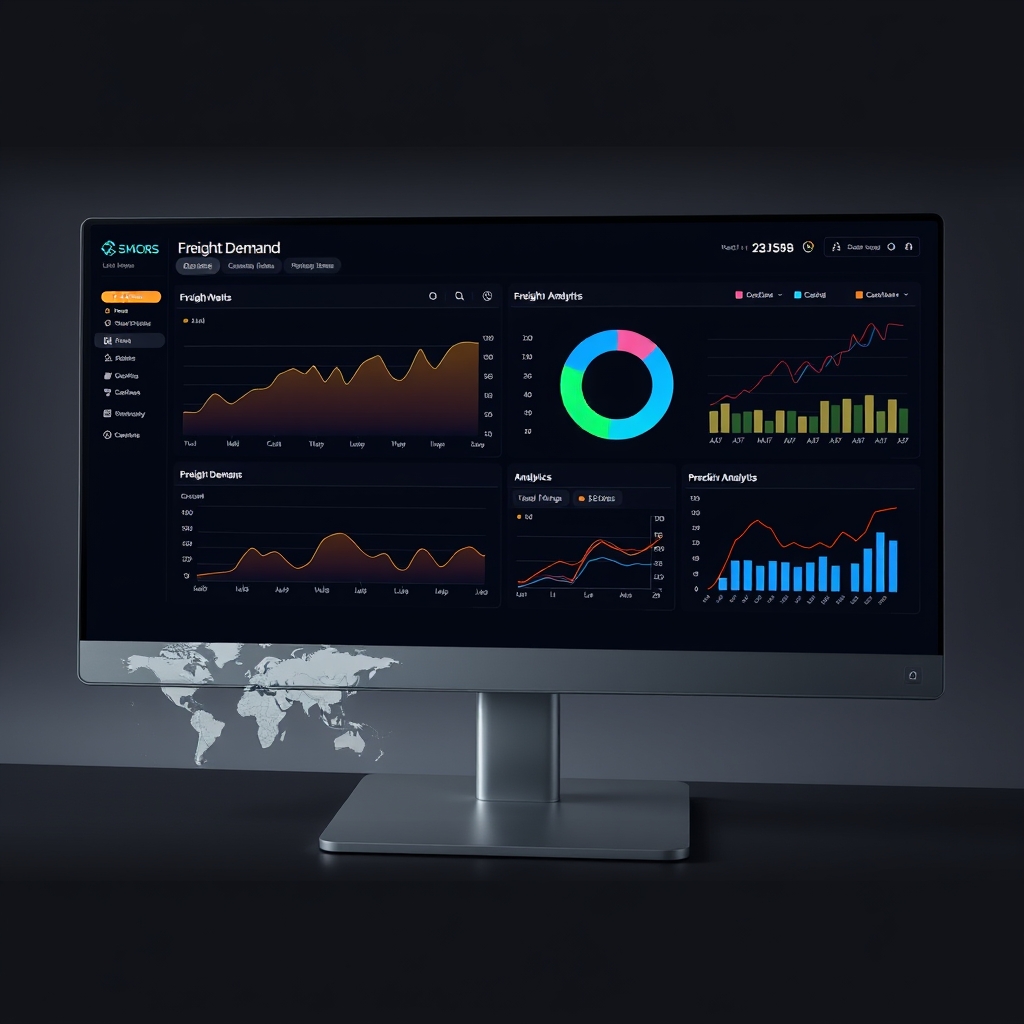
Every year, U.S. shippers lose an estimated $25–$35 billion to the gap between planned and actual freight volumes. The pattern is painfully familiar: transportation budgets are built on annual volume forecasts that miss the mark by 15–30%, contract carriers are procured based on these flawed projections, and when actual demand deviates—as it inevitably does—shippers scramble to the spot market where rates run 20–40% higher than contract. The root cause is clear: most freight demand planning still relies on spreadsheets, gut instinct, and last year's numbers plus a growth percentage.
In 2026, predictive analytics powered by machine learning is replacing this approach with models that achieve forecast accuracy of 85–92% at the lane-week level—a transformative improvement that enables shippers to right-size their carrier portfolios, minimize spot market exposure, and negotiate contracts based on data rather than guesswork. This isn't theoretical; it's being deployed by hundreds of enterprise shippers with measurable, auditable results.
Why Traditional Freight Forecasting Fails
Traditional freight demand planning typically works like this: a transportation manager takes the previous year's shipping volumes, applies a growth or contraction factor based on business forecasts from sales and operations planning (S&OP), and uses this to build a routing guide with contract carriers. The problems are structural:
- Annual granularity masks weekly volatility: A lane that averages 50 loads per week annually might fluctuate between 20 and 120 loads per week. Contracting for 50 loads means you're under-covered half the time and over-committed the other half
- Sales forecasts are notoriously inaccurate: S&OP forecasts focus on revenue and units, not shipments. The translation from "we'll sell 10% more product" to "we'll need 23% more truckloads on the Dallas–Phoenix lane in Q3" involves multiple assumptions that compound errors
- No demand signals beyond the company: Internal data tells you what happened last year. It doesn't tell you about competitive dynamics, consumer spending shifts, weather impacts, or capacity market conditions that will shape next year's shipping reality
- Static routing guides decay rapidly: A routing guide built in January is typically 20–30% stale by April as market conditions, carrier capacity, and demand patterns shift
📊 The Cost of Inaccurate Freight Forecasting
Forecast error range (traditional): ±15–30% at lane-month level
Forecast error range (ML-powered): ±8–15% at lane-week level
Spot market premium: 20–40% above contract rates
Spot market exposure (industry average): 18–25% of total shipments
Spot market exposure (best-in-class with predictive analytics): 5–10%
Annual savings potential (for $100M freight spend): $3–$8M from forecast improvement alone
The Machine Learning Approach to Freight Demand
Data Inputs That Drive Accuracy
ML-based freight forecasting models consume far more data than a human analyst could process. The most predictive inputs include:
- Historical shipment data: 2–5 years of detailed shipment records by lane, mode, weight, and customer—the foundation that captures seasonal patterns, trends, and cyclical behavior
- Order pipeline: Real-time and near-term order data from ERP/OMS systems, providing 1–4 week forward visibility into confirmed demand
- Macroeconomic indicators: GDP growth, industrial production index, retail sales data, housing starts—these leading indicators correlate with freight demand 4–12 weeks out
- Consumer demand signals: Point-of-sale data, e-commerce order trends, web traffic and search trends for relevant product categories
- Commodity-specific data: Agricultural harvest cycles, manufacturing PMI, automotive production schedules—industry-specific drivers that affect shipping patterns
- Weather and climate data: Hurricane season predictions, winter storm patterns, drought conditions (affecting agricultural shipments and waterway transportation)
- Calendar effects: Holidays, promotional events (Prime Day, Black Friday), port closures, and seasonal business cycles
Model Architectures That Work
The freight demand forecasting problem has specific characteristics that favor certain ML approaches:
- Gradient boosted trees (XGBoost, LightGBM): The workhorse of freight forecasting. These models handle the mixed data types (numerical, categorical, temporal) common in freight data excellently, and are robust to noisy data and outliers. Most production freight forecasting systems use gradient boosted trees as their primary model
- Temporal fusion transformers: A deep learning architecture specifically designed for multi-horizon time series forecasting. Particularly effective for capturing long-range dependencies (e.g., how a trade policy change 6 months ago is still affecting shipping patterns) and incorporating known future inputs (holidays, planned promotions)
- Hierarchical forecasting: Freight demand has natural hierarchies (total → mode → region → lane → customer-lane). Models that forecast at multiple levels simultaneously and reconcile the forecasts (ensuring lane-level forecasts sum to regional totals) significantly outperform models that forecast at a single level
- Ensemble methods: Combining forecasts from multiple model types (averaging or weighted combination) consistently outperforms any single model by 5–15% on accuracy metrics
Forecast Granularity and Horizons
The practical value of a freight forecast depends on matching the right granularity to the right decision:
- Annual forecasts (lane-year): Drive contract procurement strategy—how many loads to commit to contract carriers on each lane for the upcoming bid season. Accuracy target: ±10%
- Monthly forecasts (lane-month): Inform carrier capacity allocation, warehouse staffing, and mode selection. Accuracy target: ±12–15%
- Weekly forecasts (lane-week): Operationally the most valuable. Guide load planning, carrier tender strategies, and short-term capacity procurement. Accuracy target: ±15–20%
- Daily forecasts (facility-day): Drive dock scheduling, trailer pool management, and driver dispatch. Accuracy target: ±20–25%
From Forecast to Action: Closing the Loop
Dynamic Carrier Procurement
The most impactful application of freight demand forecasting is transforming how shippers procure carrier capacity. Instead of the traditional annual bid cycle where shippers forecast volume, solicit carrier bids, and build a static routing guide, predictive analytics enables continuous procurement optimization:
- Right-sizing contract commitments: Using lane-level forecasts to set minimum volume commitments that carriers will reliably receive, reducing the "over-promise, under-deliver" pattern that erodes carrier trust and compliance
- Surge capacity pre-procurement: When the model predicts demand spikes 4–8 weeks out (e.g., pre-holiday surge, post-harvest shipping season), proactively securing capacity before the spot market tightens
- Mini-bid optimization: Running targeted, lane-specific mini-bids quarterly or monthly on lanes where forecast vs. contract alignment has drifted, rather than waiting for the annual bid cycle
Spot Market Strategy
Some spot market exposure is inevitable and even strategic. Predictive analytics transforms spot procurement from reactive panic buying to strategic market timing:
- Rate forecasting: ML models that predict spot market rates 2–4 weeks ahead based on capacity indices, tender rejection rates, fuel prices, and seasonal patterns. Shippers can time spot purchases to capture favorable rates
- Contract vs. spot optimization: Real-time decision engines that evaluate whether a specific load should be tendered to a contract carrier, offered on a digital freight marketplace, or held for a predicted rate decline
- Carrier portfolio optimization: Maintaining relationships with backup carriers for predictable surge periods, rather than calling brokers in desperation when primary carriers reject tenders
Network Design and Mode Optimization
Longer-horizon forecasts (quarterly, annually) feed into strategic network decisions:
- Mode shifting: When forecasts predict sustained volume growth on specific lanes, evaluating whether to shift from TL to intermodal, or from parcel to LTL consolidation
- Facility location: Demand forecasts by geography inform decisions about warehouse locations, cross-dock placement, and distribution center sizing
- Inventory positioning: Predictive demand models integrated with transportation forecasts determine where to pre-position inventory to minimize total logistics cost
Implementation Playbook
Phase 1: Data Readiness (Months 1–2)
- Audit your shipment data: You need at minimum 2 years of detailed shipment records with consistent lane definitions, dates, weights, and costs. Clean up inconsistencies (merged terminals, carrier name variations, mode classification errors)
- Identify supplementary data sources: Map which external data feeds (economic indicators, weather, order pipeline) are accessible and how to integrate them
- Establish baseline accuracy: Document your current forecasting method's accuracy at each granularity level. You can't prove improvement without a baseline
Phase 2: Model Development (Months 2–4)
- Start simple: Build a gradient boosted tree model on historical shipment data with calendar features. This alone typically beats manual forecasting by 20–30%
- Add external features iteratively: Incorporate economic indicators, weather, and order pipeline data one source at a time, measuring accuracy improvement from each addition
- Validate rigorously: Use time-series cross-validation (walk-forward validation), not random hold-out splits, to ensure the model generalizes to future periods
Phase 3: Operationalize (Months 4–6)
- Embed forecasts in planning workflows: Forecasts are useless if they live in a data scientist's notebook. Integrate outputs into your TMS, procurement platform, and S&OP process
- Build forecast monitoring: Track actual vs. predicted volumes weekly, with automated alerts when forecast accuracy degrades beyond thresholds
- Create feedback loops: When planners override the forecast (which they should be able to do), capture the override reason. These overrides become training data for future model improvements
Phase 4: Advanced Analytics (Months 6–12)
- Add rate forecasting: Extend from volume prediction to price prediction, enabling total freight cost forecasting and budget accuracy improvement
- Scenario planning: Build "what-if" capabilities (what happens to our freight demand if we lose our largest customer? If tariffs increase 10% on Chinese imports? If we open a new DC in Nashville?)
- Automated procurement actions: Connect demand forecasts directly to carrier procurement systems for automated mini-bids, spot market purchases, and contract adjustments
Vendor Options in 2026
- TMS-native forecasting: Oracle, Blue Yonder, and MercuryGate have built forecasting modules into their TMS platforms. Advantage: native integration with execution. Disadvantage: often less sophisticated ML than specialized vendors
- Specialized freight analytics platforms: Companies like Transplace (Uber Freight), Chainalytics, and FreightWaves SONAR provide freight-specific forecasting with proprietary market data. Advantage: deep industry data. Disadvantage: may require integration effort
- General ML platforms applied to freight: Databricks, AWS SageMaker, and Google Vertex AI provide the infrastructure for building custom models. Advantage: full flexibility. Disadvantage: requires in-house data science capability
- Procurement optimization platforms: Emerge, Greenscreens.ai, and Optimal Dynamics combine demand forecasting with carrier matching and rate optimization. Advantage: end-to-end from forecast to carrier award. Disadvantage: newer platforms with less track record
The era of "last year plus 5%" freight planning is ending. The data, models, and platforms to forecast freight demand with meaningful accuracy are available, proven, and delivering measurable ROI. The shippers who embrace predictive analytics aren't just saving money on freight—they're building a structural advantage in carrier relationships, service reliability, and budget predictability that compounds over time. In a market where capacity is the new currency, knowing what you'll need before you need it is the ultimate competitive edge.
Freight Intelligence, Delivered via API
FreightPulse provides the real-time and historical rate data that powers predictive freight analytics platforms.
Start Free Trial →