Nearshoring and Reshoring: How Supply Chain Relocalization Is Reshaping Freight Networks in 2026
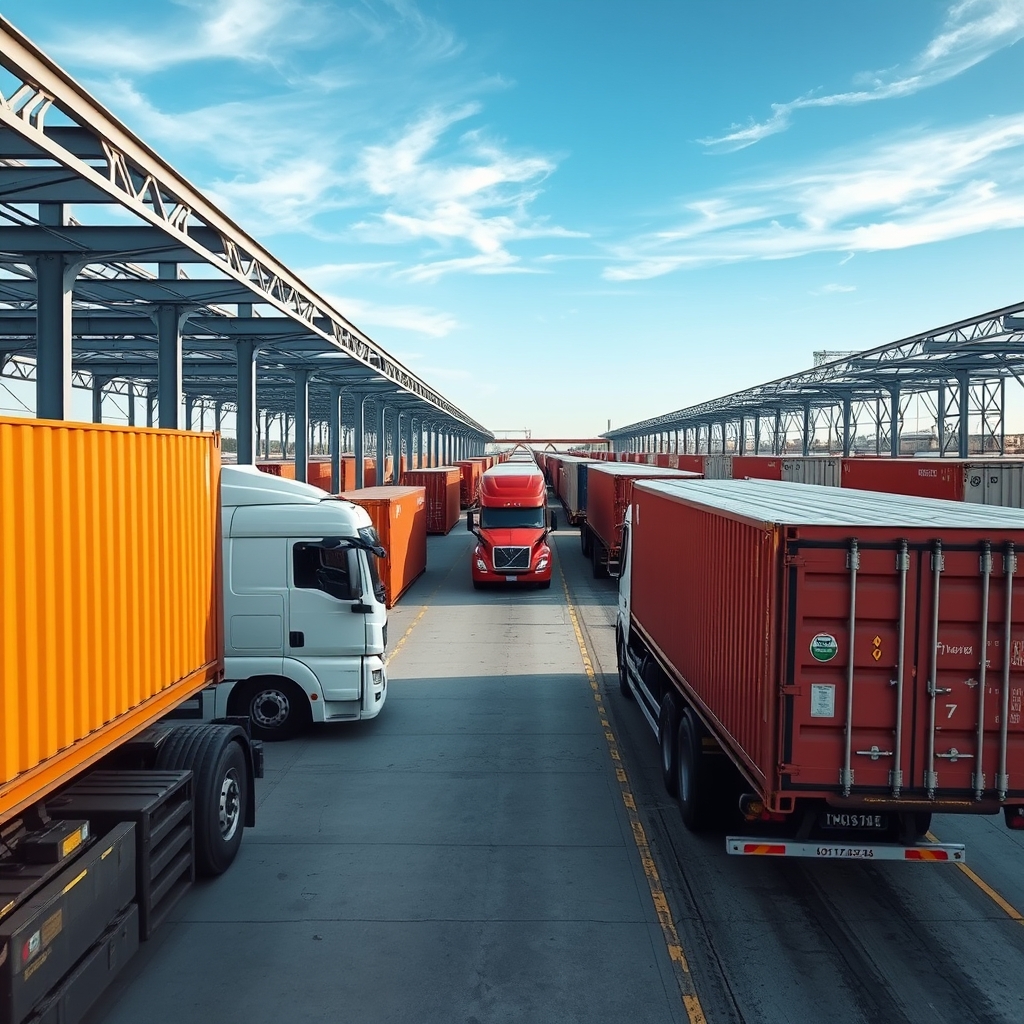
The great supply chain migration is well underway. After years of pandemic-era disruptions, geopolitical tensions, and rising trans-Pacific shipping costs, North American manufacturers and retailers are voting with their feet — and their freight budgets. In 2026, nearshoring and reshoring have moved from boardroom buzzwords to balance-sheet realities, fundamentally reshaping how goods flow across the continent.
According to Kearney's 2026 Reshoring Index, U.S. manufacturing imports from Mexico surpassed $500 billion for the first time in 2025, a 23% increase over 2022 levels. Meanwhile, the U.S. Census Bureau reports that domestic manufacturing construction spending has exceeded $220 billion annually — more than double the figure from just four years ago. These numbers aren't abstract: they translate directly into new freight lanes, shifted capacity demands, and a fundamentally different logistics landscape.
Why 2026 Is the Tipping Point
Several converging forces have made 2026 the year relocalization became irreversible:
- Geopolitical risk premiums: Ongoing U.S.-China trade tensions, including tariffs averaging 25% on Chinese goods, have made Asia-Pacific sourcing 15–20% more expensive when factoring in duties, lead times, and inventory carrying costs.
- USMCA maturation: The United States-Mexico-Canada Agreement's rules of origin, particularly the 75% regional value content requirement for automotive, have incentivized billions in new Mexican and Canadian production capacity.
- Energy cost advantages: U.S. natural gas prices averaging $2.50/MMBtu give domestic manufacturers a 60% energy cost advantage over European competitors and 40% over Chinese factories.
- Speed-to-market demands: Consumer expectations for 2-day delivery have made 30-day ocean transit times from Asia increasingly untenable for consumer goods categories.
Mexico: The New Manufacturing Superpower
Mexico has emerged as the undisputed winner of the nearshoring wave. Industrial real estate vacancy rates in key manufacturing corridors like Monterrey, Saltillo, and Querétaro have dropped below 2%, with rental rates climbing 30% since 2023. CBRE reports that over 40 million square feet of new industrial space is under construction across Mexico's northern states alone.
Key Sectors Driving Mexican Nearshoring
- Automotive: Tesla, BMW, and BYD have all announced or expanded Mexican production facilities, with the automotive sector accounting for 35% of nearshoring investment.
- Electronics: Foxconn, Pegatron, and Quanta have shifted significant production from China to Chihuahua and Jalisco states.
- Medical devices: Baja California's medical device cluster now employs over 70,000 workers, making it the second-largest med-tech hub in North America.
- Consumer goods: Procter & Gamble, Colgate-Palmolive, and Unilever have all expanded Mexican manufacturing to serve the U.S. market.
📊 By the Numbers: Laredo-Nuevo Laredo Trade Corridor
The Laredo, Texas border crossing now handles over $350 billion in annual trade — more than U.S. trade with Japan and South Korea combined. Truck crossings average 16,000 per day, up 28% from 2022. This single corridor handles 40% of all U.S.-Mexico surface trade.
The Impact on North American Freight Networks
Relocalization isn't just moving production — it's redrawing the freight map. Here's how:
New Dominant Trade Corridors
The traditional East-West orientation of U.S. freight (port-to-warehouse from LA/Long Beach) is giving way to a North-South axis. The I-35 corridor from Laredo to Dallas, Kansas City, and Chicago has seen truckload volumes increase 35% since 2022. Similarly, the I-69 corridor connecting the Texas border to Michigan's automotive heartland is experiencing unprecedented demand.
Cross-Border Trucking Capacity Crunch
The surge in Mexico-U.S. trade has created a significant capacity shortage at border crossings. Wait times at Laredo averaged 3.2 hours in Q1 2026, up from 1.8 hours in 2023. Carriers specializing in cross-border operations — like Heartland Express, Werner Enterprises, and Mexican carrier CEVA — are commanding 15–20% rate premiums over domestic lanes of similar distance.
Intermodal Shift
Kansas City Southern (now part of CPKC) has positioned itself as the primary rail beneficiary of nearshoring, with its single-line network connecting Mexico City to Chicago. Intermodal volumes on CPKC's cross-border routes grew 18% year-over-year in 2025, and the railroad has invested $1.2 billion in new terminal capacity.
Friend-Shoring: The Geopolitical Dimension
Beyond pure economics, friend-shoring — the practice of sourcing from geopolitically aligned nations — has become a formal U.S. policy priority. The CHIPS Act, Inflation Reduction Act, and related legislation have created powerful incentives to source critical materials and components from allied nations.
This has particular implications for freight networks:
- Semiconductor logistics: New fabs in Arizona (TSMC), Ohio (Intel), and Texas (Samsung) are creating entirely new inbound raw material lanes and outbound chip distribution networks.
- Battery supply chains: EV battery gigafactories in Georgia, Tennessee, and Michigan require massive inbound flows of lithium, nickel, and cobalt — increasingly sourced from Canada, Australia, and Chile rather than China.
- Pharmaceutical reshoring: Following the 2024 Drug Supply Chain Security Act amendments, 40% of active pharmaceutical ingredients must be sourced domestically or from allied nations by 2028, driving new production and logistics flows.
Canada's Quiet Renaissance
While Mexico grabs headlines, Canada is experiencing its own nearshoring boom, particularly in critical minerals, clean energy, and advanced manufacturing. Canada's Critical Minerals Strategy has attracted $15 billion in new mining and processing investment, with freight implications for rail corridors connecting Quebec's lithium deposits and Ontario's nickel belt to U.S. manufacturing centers.
What Shippers Should Do Now
1. Audit Your Lane Mix
If your freight network was designed around Asian imports through West Coast ports, it's time for a fundamental redesign. Map your current lanes against supplier relocation plans and identify where nearshoring will create new origin-destination pairs.
2. Build Cross-Border Expertise
Cross-border freight requires specialized knowledge of customs brokerage, C-TPAT certification, FAST lane access, and Mexican carrier qualification. Invest in partnerships with experienced cross-border 3PLs like NFI, Ryder, or XPO.
3. Secure Border Capacity Early
With cross-border capacity tightening, lock in contract rates for key Mexico-U.S. lanes 6–12 months in advance. Consider dedicated fleet arrangements for high-volume, predictable flows.
4. Leverage Intermodal Where Possible
For shipments originating in central Mexico destined for the U.S. Midwest or Northeast, rail-truck intermodal via CPKC can offer 20–30% cost savings over all-truck solutions, with only 1–2 days of additional transit time.
Optimize Your Cross-Border Freight
FreightPulse helps shippers benchmark rates, track shipments, and manage carrier performance across North American trade lanes.
Start Free TrialThe Road Ahead
Nearshoring and reshoring are not temporary trends — they represent a structural shift in global trade patterns that will define North American freight networks for decades. The shippers, carriers, and logistics providers who adapt fastest to this new reality will capture significant competitive advantages. Those who continue to operate with a pre-2020 supply chain mindset risk being left behind as the freight map redraws itself around them.
The question is no longer whether relocalization will happen. It's whether your freight strategy is ready for it.