Micro-Fulfillment Centers and Urban Logistics: The Last-Mile Revolution in 2026
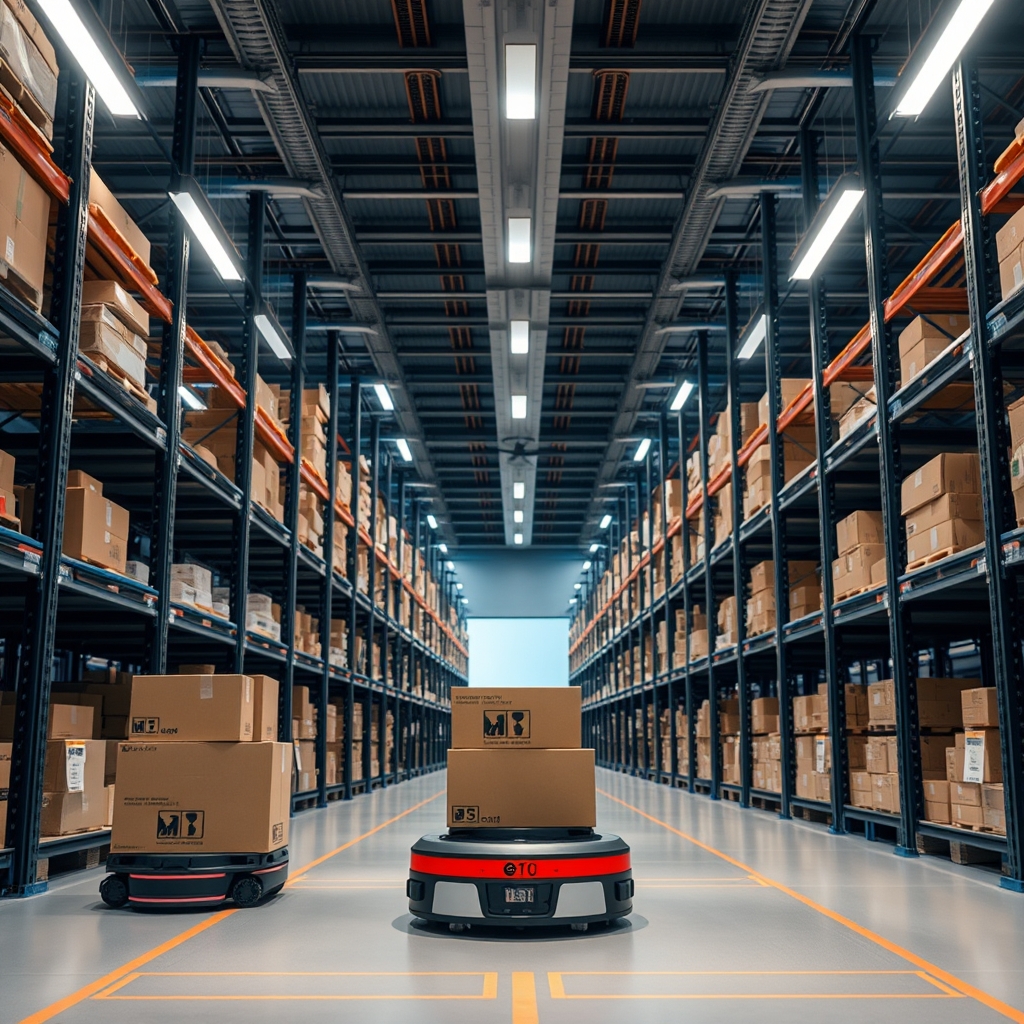
Last-mile delivery accounts for 53% of total shipping costs—the single most expensive leg of any supply chain. In dense urban areas, that number can climb to 60% or higher as drivers fight traffic, search for parking, navigate apartment buildings, and deal with failed delivery attempts. For retailers and e-commerce companies competing on delivery speed, the math has been brutal: offering same-day or next-day delivery from a distant regional warehouse means either absorbing crushing delivery costs or passing them to customers and watching conversion rates plummet.
Micro-fulfillment centers (MFCs) are fundamentally changing this equation. By positioning small, highly automated warehouses inside urban areas—often within 3–5 miles of customers—companies are slashing last-mile distances, enabling sub-2-hour delivery windows, and reducing per-delivery costs by 40–60% compared to traditional centralized fulfillment. In 2026, what started as a grocery-focused experiment has expanded into a broad logistics strategy reshaping how goods move through cities.
What Exactly Is a Micro-Fulfillment Center?
A micro-fulfillment center is a small-footprint warehouse (typically 3,000–15,000 square feet) located inside or near the urban areas it serves. Compared to a traditional distribution center (200,000–1,000,000+ square feet) located 20–50 miles outside a city, an MFC is:
- 10–50x smaller: Designed for high-velocity, limited-SKU assortments rather than full catalog storage
- Highly automated: Robotic goods-to-person systems (from vendors like AutoStore, Fabric/CommonSense Robotics, Dematic, and Alert Innovation) can pick orders in 3–5 minutes versus 30–60 minutes in a conventional warehouse
- Located in the demand zone: Inside shopping centers, attached to existing retail stores, in repurposed urban real estate (closed restaurants, parking garages, basement levels)
- Optimized for throughput: An MFC can process 600–1,000 orders per hour in a space the size of a tennis court
The Economics: Why MFCs Are Winning
Delivery Cost Reduction
The primary financial driver is simple: shorter last-mile distances mean cheaper deliveries. When your fulfillment point is 3 miles from the customer instead of 30, each delivery uses less fuel, takes less time, and the driver can complete more stops per shift. The numbers are dramatic:
- Average delivery cost from regional DC: $8–$15 per order (urban), $5–$8 per order (suburban)
- Average delivery cost from MFC: $3–$6 per order (urban), using bike couriers, walking delivery, or short van routes
- Orders per driver per hour: 4–6 from regional DC vs. 10–15 from MFC (due to shorter distances and denser route clusters)
📦 Micro-Fulfillment by the Numbers (2026 Industry Averages)
Facility size: 5,000–15,000 sq ft
SKU capacity: 3,000–15,000 SKUs (vs. 50,000+ in a traditional DC)
Order throughput: 600–1,000 orders/hour (automated) vs. 60–120/hour (manual)
Pick accuracy: 99.8–99.95% (automated) vs. 97–99% (manual)
Setup cost: $3–$8 million per MFC (including automation)
Payback period: 18–30 months at 500+ orders/day
Last-mile cost reduction: 40–60% vs. centralized fulfillment
Speed as a Competitive Advantage
Beyond cost, MFCs enable delivery speeds that are physically impossible from distant warehouses. When a customer in Manhattan orders at 2 PM, an MFC in the same borough can have the order picked, packed, and on a bike courier within 15 minutes. Delivery in 30–90 minutes becomes standard, not premium. This speed creates a powerful competitive moat:
- Conversion rate impact: Offering 2-hour delivery increases e-commerce conversion rates by 15–25% compared to next-day delivery
- Customer retention: Customers who receive same-day delivery have 35% higher repeat purchase rates
- Reduced returns: Faster delivery means fewer "I already found it at a store" cancellations and impulse-purchase regret returns
MFC Deployment Models in 2026
Retail-Attached MFCs
The most proven model: installing an automated MFC inside or adjacent to an existing retail store. Grocery chains pioneered this approach (Walmart, Kroger, H-E-B), and it's now expanding to other retail categories. The store serves double duty—customers shop in person while the MFC fulfills online orders from the same inventory, with automated systems accessing backroom storage that would otherwise sit underutilized.
Standalone Urban Dark Stores
"Dark stores"—facilities that look like stores but serve only online orders with no walk-in customers—have become the preferred model for pure e-commerce players. Companies like Gopuff, Getir (in markets where it still operates), and Amazon Fresh operate hundreds of these facilities in major metros. The advantage: complete optimization for fulfillment speed and density without the constraints of retail store layouts and foot traffic.
Shared/Multi-Tenant MFCs
A newer model emerging in 2026: third-party operators building MFCs that serve multiple brands and retailers from a single facility. Companies like Fabric (now part of CommonSense Robotics) and Fulfil Solutions offer MFC-as-a-service, where retailers rent automated picking capacity by the order rather than building their own facilities. This dramatically lowers the barrier to entry for mid-size retailers who can't justify a $5 million dedicated MFC but need urban fulfillment capability to compete.
Repurposed Urban Spaces
Urban real estate is expensive, so creative space utilization is critical. Successful MFC deployments in 2026 include:
- Underground parking garages: Converting unused parking levels (as ride-sharing reduces car ownership in cities) into fulfillment space
- Former retail spaces: Closed department stores and big-box locations repurposed with automation systems
- Shipping container farms: Modular MFCs built inside shipping containers, deployable in parking lots or vacant lots
- Mixed-use developments: New urban construction incorporating fulfillment space on ground floors with residential or office above
The Technology Stack
Robotic Goods-to-Person Systems
The core automation technology in most MFCs is the goods-to-person (G2P) system, where robots bring storage bins to stationary human pickers rather than having workers walk aisles. The dominant architectures:
- AutoStore: A cube-based grid storage system where robots ride on top and dive into the grid to retrieve bins. Extremely space-efficient—stores 4x more per square foot than traditional shelving. Used by over 1,300 installations globally
- Fabric/CommonSense: Purpose-built for grocery MFCs with climate-controlled zones (ambient, chilled, frozen) in a single compact system
- Ocado Smart Platform: Licensed to Kroger and other grocers, using a grid of collaborative robots on top of a storage framework. Can handle 50+ items per order in under 5 minutes
- Alert Innovation (Walmart): Walmart's proprietary Alphabot system, installed in 65+ Supercenters for online grocery fulfillment
Order Management and Orchestration
The software layer is equally critical. Modern MFC orchestration platforms handle:
- Demand prediction: ML models that forecast order volumes by hour and SKU to pre-position inventory in optimal bin locations
- Dynamic slotting: Automatically moving high-velocity items to the most accessible storage positions
- Delivery promise engine: Real-time calculation of the fastest and cheapest delivery option for each order based on current MFC workload, courier availability, and traffic conditions
- Inventory balancing: Deciding which MFC should fulfill each order when a customer is within range of multiple facilities
Last-Mile Delivery Integration
An MFC is only as good as the last-mile delivery network it feeds. The most effective operations in 2026 use a multi-modal delivery approach:
- Electric cargo bikes: Ideal for orders under 20 lbs in dense urban cores. Companies like Reef and Jokr use fleets of e-cargo bikes that can carry 4–8 orders per trip, navigating traffic and parking-free
- Walking couriers: For very dense areas (Manhattan, downtown Chicago, San Francisco), foot couriers with insulated bags can deliver within a 0.5–1 mile radius faster than any vehicle
- Electric vans: For suburban MFC deployments and larger orders, electric delivery vans handle 50–80 stop routes efficiently
- Autonomous delivery robots: Companies like Serve Robotics and Nuro are operating sidewalk and road delivery bots in select markets, particularly for restaurant and convenience store deliveries from MFCs
Challenges and Limitations
Limited SKU Assortment
The biggest constraint: a 10,000 square foot MFC simply cannot hold the full catalog that a 500,000 square foot DC can. MFCs typically stock the top 3,000–15,000 SKUs, which may represent 80–90% of orders by volume but only 20–30% of the full catalog. Long-tail items still need to ship from regional DCs, creating a split-fulfillment experience that requires careful order routing logic.
Urban Real Estate Costs
MFC locations need to be close to customers, which means expensive real estate. Rents of $30–$80 per square foot in major metros add significant fixed costs. The automation investment must generate enough throughput to justify the real estate premium. Below 300–400 orders per day, the economics don't work for a dedicated MFC.
Inventory Complexity
Managing inventory across dozens of MFCs plus regional DCs requires sophisticated systems. Stockouts at a specific MFC (which customers can't see—they just see "unavailable for fast delivery") require real-time inventory visibility and rapid replenishment from hub warehouses. Overstock is equally problematic in space-constrained facilities.
The Road Ahead: MFC Trends for 2026–2028
- AI-driven network design: Machine learning models that continuously optimize the number, location, and size of MFCs based on demand patterns, real estate costs, and delivery performance
- Consolidation of operators: The standalone quick-commerce model (Gopuff, Getir) is merging with traditional retail MFC strategies. Expect partnerships where quick-commerce operators manage MFC fulfillment for traditional retailers
- Fresh and frozen expansion: Temperature-controlled MFCs for grocery are becoming more cost-effective as automation vendors release integrated multi-temp systems
- Returns processing: MFCs are being equipped to handle returns locally—inspecting, restocking, or routing to liquidation—instead of shipping returns back to distant DCs
The bottom line: micro-fulfillment isn't a niche experiment anymore. It's becoming the standard architecture for urban commerce logistics. Companies that master the interplay between MFC automation, real-time inventory management, and multi-modal last-mile delivery will own the customer experience in the cities where most commerce happens.
Data-Driven Logistics Intelligence
FreightPulse helps logistics operators optimize costs across every mile—including the last one.
Start Free Trial →