Last-Mile Delivery Innovation: Drones, Micro-Fulfillment, and the 2026 Landscape
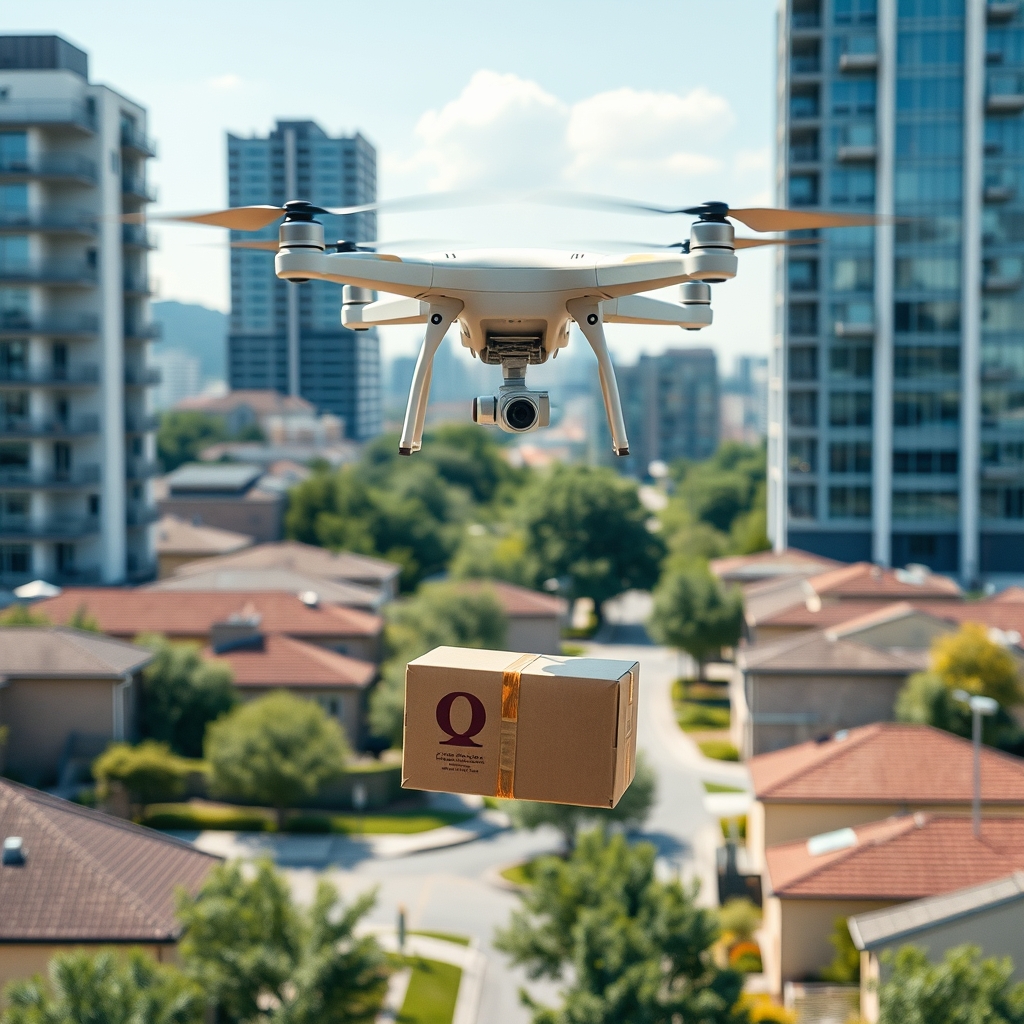
Last-mile delivery — the final leg from distribution center to doorstep — remains the most expensive and complex segment of the logistics chain. It accounts for 53% of total shipping costs on average, and in dense urban environments, that figure can exceed 65%. For e-commerce operators and retailers, last-mile economics often determine whether a delivery is profitable or a loss leader.
But 2026 is proving to be the inflection year that the industry has been anticipating. Drone deliveries have moved beyond pilot programs into scaled commercial operations. Micro-fulfillment centers are proliferating in urban centers worldwide. Autonomous ground vehicles are handling meaningful delivery volumes in select markets. And the data infrastructure connecting these systems is finally mature enough to orchestrate multi-modal last-mile networks in real time.
Drone Delivery: From Novelty to Network
After years of regulatory delays and technological limitations, commercial drone delivery hit a tipping point in 2025. The FAA's Part 108 framework, finalized in mid-2025, created the regulatory clarity needed for operators to scale beyond individual routes. As of Q1 2026, three operators — Wing (Alphabet), Amazon Prime Air, and Zipline — are conducting over 500,000 deliveries per month across the United States.
Where Drones Work (and Where They Don't)
Drone delivery economics are compelling in specific conditions but limited in others:
- Optimal: Suburban and exurban residential areas with low-density housing, clear landing zones, and packages under 5 lbs. Cost per delivery: $1.50–3.00, compared to $8–12 for traditional van delivery.
- Viable: Medical and pharmaceutical deliveries where speed justifies premium costs. Zipline's medical delivery network now covers 38 US hospitals with average delivery times under 25 minutes.
- Challenging: Dense urban cores with tall buildings, limited landing zones, and complex airspace. Downtown Manhattan, for example, remains effectively off-limits for drone delivery.
- Not viable: Heavy or bulky items (current payload limits are 5–10 lbs for most operators), extreme weather conditions, and rural areas beyond 10-mile radius from a drone hub.
📊 Drone Delivery by the Numbers (Q1 2026)
Wing leads with 280,000 monthly deliveries across 14 US metros. Amazon Prime Air follows at 165,000 deliveries in 8 markets. Average delivery time from order to doorstep: 18 minutes. Customer satisfaction scores consistently exceed 94%. Regulatory approvals now active in the US, EU, Australia, Japan, and South Korea.
Micro-Fulfillment Centers: The Urban Warehouse Revolution
If drones solve the "how to deliver" problem, micro-fulfillment centers (MFCs) solve the "where to deliver from" problem. Traditional e-commerce fulfillment relies on large distribution centers located 30–100 miles from urban centers. MFCs bring inventory within 2–5 miles of the end consumer, enabling same-day and even sub-hour delivery.
The MFC Model
A typical MFC in 2026 occupies 5,000–15,000 square feet — often in repurposed retail space, parking structures, or the back rooms of existing stores. Inside, automated storage and retrieval systems (AS/RS) from companies like AutoStore, Fabric (now CommonSense Robotics), and Attabotics handle the picking and packing. A single MFC can process 2,000–4,000 orders per day with a staff of just 8–15 people.
The economics are transforming urban logistics:
- Reduced delivery distance: Average last-mile distance drops from 15–25 miles to 2–5 miles, cutting delivery costs by 40–60%
- Speed advantage: Sub-2-hour delivery becomes standard, competing directly with the "instant gratification" of physical retail
- Lower vehicle requirements: Shorter routes mean more deliveries per vehicle per shift, and enable the use of electric bikes and small EVs instead of vans
- Real estate flexibility: MFCs can be deployed incrementally as demand grows, unlike massive DCs that require years of planning and construction
Who's Leading
Grocery leads MFC adoption, with Kroger, Walmart, and Ahold Delhaize operating a combined 450+ MFCs in the US alone. But the model is expanding into general merchandise, pharmacy, and even electronics. Amazon's "sub-same-day" initiative now uses over 200 urban MFCs to offer 2-hour delivery on 500,000+ SKUs in major metros.
💰 MFC Economics
Setup cost for a 10,000 sq ft MFC with automated picking: $1.5M–3M. Monthly operating cost: $80K–150K. Break-even volume: approximately 1,200 orders per day. At scale (3,000+ orders/day), MFCs achieve a 22–28% cost advantage over traditional DC-to-doorstep fulfillment for same-day delivery.
Autonomous Ground Vehicles: The Quiet Disruptor
While drones capture headlines, autonomous ground vehicles (AGVs) may ultimately handle more last-mile volume. Two categories are gaining traction:
Sidewalk Robots
Companies like Serve Robotics (backed by Uber) and Starship Technologies have deployed fleets of small, six-wheeled robots that navigate sidewalks to deliver food and small packages. Starship alone has completed over 7 million deliveries worldwide. These robots work best in college campuses, planned communities, and suburban neighborhoods with good sidewalk infrastructure. Per-delivery cost: $1.80–2.50.
Autonomous Delivery Vans
Nuro's R3 vehicle and Gatik's autonomous box trucks are handling middle-mile and last-mile deliveries on public roads in Texas, California, and Arkansas. These vehicles operate on fixed routes between MFCs and delivery zones, typically in the early morning hours when traffic is minimal. Walmart's partnership with Gatik now covers 120 routes across 8 states, with fully driverless operations (no safety driver) on 40% of routes.
The Orchestration Challenge
The biggest innovation in last-mile delivery isn't any single technology — it's the orchestration layer that decides which delivery method to use for each package. A sophisticated last-mile platform in 2026 evaluates multiple factors in real time:
- Package characteristics: Weight, dimensions, fragility, temperature sensitivity
- Delivery location: Urban density, building type, access restrictions, weather conditions
- Time requirements: Standard, same-day, 2-hour, or immediate
- Cost optimization: Balancing delivery cost against customer willingness to pay and competitive pressure
- Capacity availability: Real-time fleet status across drones, robots, autonomous vehicles, and human drivers
This multi-modal orchestration is where companies like FedEx, UPS, and Amazon are investing most heavily. The goal is a seamless system where the customer sees "delivered by 2 PM" and the platform automatically selects the optimal combination of MFC staging, drone delivery, robot handoff, or human courier based on dozens of variables.
What This Means for Shippers and Retailers
If you're a brand or retailer planning your fulfillment strategy, here's the practical takeaway:
- Diversify your last-mile network: Reliance on a single carrier or delivery method is increasingly risky. Build relationships with drone operators and MFC providers alongside traditional carriers.
- Invest in location intelligence: Understanding exactly where your customers are — and how delivery economics vary by location — is essential for choosing the right fulfillment model.
- Rethink your inventory positioning: MFCs only work if the right products are in the right locations. This requires demand forecasting at a much more granular geographic level than traditional planning.
- Watch the cost curves: Drone and robot delivery costs are dropping 15–20% year-over-year. Routes that don't make economic sense today may pencil out within 12–18 months.
Last-mile delivery has been called "logistics' last unsolved problem." In 2026, it's not solved — but the solution architecture is becoming clear. The winners will be the companies that combine multiple innovative delivery methods into a coherent, data-driven network that can adapt in real time to the infinite variability of getting packages to people's doors.
Power Your Last-Mile Strategy with Logistics Data
FreightPulse provides real-time shipping data, port intelligence, and supply chain analytics to optimize every mile.
Start Free — 100 calls/mo →