The Rise of Green Corridors: Sustainable Shipping Routes Transforming Global Trade
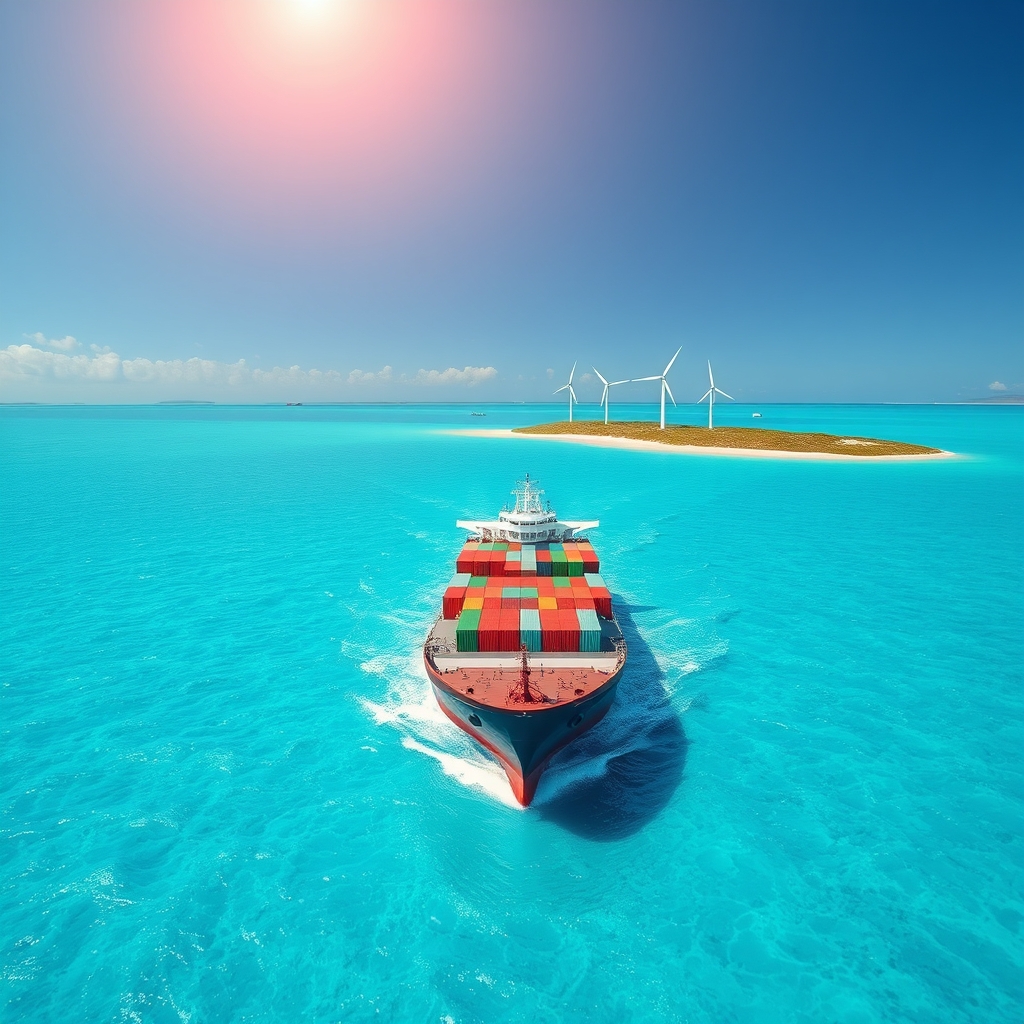
Maritime shipping accounts for nearly 3% of global greenhouse gas emissions — roughly equivalent to Germany's entire carbon footprint. For decades, the industry resisted meaningful decarbonization, citing the complexity of international regulation, the lack of viable alternative fuels, and the razor-thin margins that make any cost increase existential. That calculus is changing fast in 2026, driven by the rapid expansion of green shipping corridors.
Green corridors are designated shipping routes where zero or near-zero emission solutions are demonstrated and scaled. Think of them as the maritime equivalent of electric vehicle charging highways — dedicated pathways where the infrastructure, regulation, and commercial incentives align to make clean shipping viable. As of March 2026, there are 27 active green corridor initiatives worldwide, up from just 6 in 2023.
What Exactly Is a Green Corridor?
A green corridor is more than just a shipping lane with lower emissions targets. It's a coordinated ecosystem that requires alignment across multiple stakeholders:
- Port infrastructure: Bunkering facilities for alternative fuels (green methanol, ammonia, or hydrogen) at both origin and destination ports
- Regulatory framework: Harmonized safety standards, emissions reporting requirements, and incentive structures between participating nations
- Vessel availability: Ships capable of running on alternative fuels deployed on the specific route
- Commercial demand: Cargo owners willing to pay a green premium — or contractually committed to low-carbon shipping
- Financial mechanisms: Green bonds, carbon credits, or subsidy programs to bridge the cost gap during the transition period
🌊 The IMO Framework
The International Maritime Organization's revised GHG Strategy, adopted in 2023, set a target of net-zero emissions by "around 2050." Green corridors are the primary mechanism through which the industry plans to achieve this — starting with the most commercially viable routes and expanding outward. The IMO's Green Corridor Accelerator program now provides technical assistance and seed funding for qualifying initiatives.
The Leading Green Corridors in 2026
1. Singapore–Rotterdam (Asia–Europe)
The flagship green corridor, launched in late 2024, now handles over 150 vessel transits per month using green methanol. Maersk and CMA CGM have committed 18 dual-fuel vessels to the route. Both ports have invested heavily in methanol bunkering infrastructure, with Rotterdam's capacity reaching 2.5 million tonnes annually. Shippers on this corridor report a 12–18% cost premium compared to conventional fuel, but growing ESG reporting requirements are making that premium increasingly justifiable.
2. Los Angeles–Shanghai (Trans-Pacific)
The newest major green corridor, operational since January 2026, focuses on ammonia-fueled vessels. Five carriers are participating in the pilot phase, with 22 dedicated vessels. The corridor has attracted significant interest from US retailers facing Scope 3 emissions reporting requirements under the SEC's climate disclosure rules. Early data shows a 78% reduction in well-to-wake CO2 emissions compared to conventional heavy fuel oil.
3. Nordic Short-Sea Network
Scandinavia's green shipping network connects 14 ports across Norway, Sweden, Denmark, and Finland. Unlike the deep-sea corridors, this network focuses on battery-electric and hydrogen fuel cell vessels operating short routes (under 200 nautical miles). With over 40 electric ferries and 8 hydrogen-powered cargo vessels, the Nordic network has achieved virtually zero operational emissions on qualifying routes.
4. Australia–Japan (Iron Ore and LNG)
This bulk commodity corridor is testing ammonia co-firing technology on large bulk carriers. While not yet zero-emission, the 30% ammonia blend achieves a 25% emissions reduction — a meaningful step for vessels that are among the world's largest individual emitters. Japanese steel companies are driving demand, incentivized by Japan's carbon pricing system.
The Fuel Question: What Powers Green Corridors?
No single alternative fuel has "won" the green maritime race, and 2026's corridor landscape reflects this diversity:
- Green methanol: Currently the most commercially mature option. Maersk alone has ordered 25 methanol-capable vessels. Production is scaling but still faces supply constraints — only 4 million tonnes of green methanol were produced globally in 2025.
- Green ammonia: Higher energy density than methanol and potentially cheaper at scale, but toxicity concerns require significant safety infrastructure. Best suited for deep-sea routes where refueling frequency is lower.
- Battery-electric: Dominant in short-sea and ferry operations but impractical for ocean-going vessels due to energy density limitations. Range is currently capped at about 200 nautical miles for cargo-carrying vessels.
- Green hydrogen: Promising but storage challenges (requiring either high-pressure tanks or cryogenic systems) limit current applications. Several pilot projects are underway for coastal feeder vessels.
💰 Cost Reality Check
Green methanol currently costs $800–1,200 per tonne, compared to $450–600 for conventional very low sulfur fuel oil (VLSFO). The premium is significant but narrowing — green methanol was $1,500+ per tonne in 2024. Industry analysts project cost parity by 2030–2032, assuming current production scaling trajectories hold.
What Green Corridors Mean for Shippers
If you're a shipper, green corridors aren't just an environmental story — they're reshaping the commercial landscape of ocean freight:
Pricing Implications
Carriers on green corridors are implementing Environmental Fuel Surcharges (EFS) that typically add $50–150 per TEU compared to conventional services on the same route. However, some corridors offer carbon credit generation that partially offsets this premium. Shippers who can demonstrate Scope 3 reductions through green corridor usage are finding that the cost premium is often less than the cost of purchasing equivalent carbon offsets.
Contract Considerations
Forward-thinking shippers are negotiating "green-first" clauses in their carrier contracts — committing to green corridor routing when available in exchange for rate stability and priority booking during peak seasons. These agreements benefit both parties: shippers lock in predictable green premiums, and carriers get the volume commitments needed to justify fleet investments.
Reporting and Compliance
With the EU's FuelEU Maritime regulation now in effect and similar frameworks emerging in the US and Asia, green corridor usage provides clean, auditable emissions data. Shippers using designated green corridors receive standardized emissions certificates that simplify ESG reporting and Scope 3 accounting.
Challenges and Limitations
Green corridors are not without their critics and challenges:
- Geographic inequality: Current corridors overwhelmingly serve major trade lanes between wealthy nations. Developing countries risk being left behind as green infrastructure concentrates in premium ports.
- Fuel supply bottlenecks: Green methanol and ammonia production must scale 10–15x by 2030 to meet projected demand from committed corridor routes alone.
- Greenwashing risk: Some corridor initiatives have been criticized for counting lifecycle emissions favorably while ignoring upstream production impacts of alternative fuels.
- Fleet transition speed: With average vessel lifespans of 25 years, even aggressive ordering of dual-fuel newbuilds won't replace the existing fleet for decades.
The Road Ahead: 2026–2030
The Clydebank Declaration signatories (now 32 nations) have committed to establishing at least 50 green corridors by 2028. Major developments expected in the next 12–18 months include the launch of a Mediterranean green corridor (Algeciras–Genoa), the first green corridor in sub-Saharan Africa (Durban–Mombasa), and the expansion of carbon pricing mechanisms that will accelerate the economic case for green routing.
For shippers, the strategic imperative is clear: green corridors are moving from pilot to mainstream. The companies that build expertise in green corridor logistics now — understanding the pricing, the routing options, the compliance frameworks — will be better positioned as regulation tightens and customer expectations evolve. The transition to sustainable shipping is no longer a question of "if" but "how fast."
Track Green Corridor Routes and Emissions Data
FreightPulse provides real-time emissions estimates and green corridor availability for major trade lanes worldwide.
Start Free — 100 calls/mo →