Freight Consolidation Strategies: Reducing Costs Without Sacrificing Speed in 2026
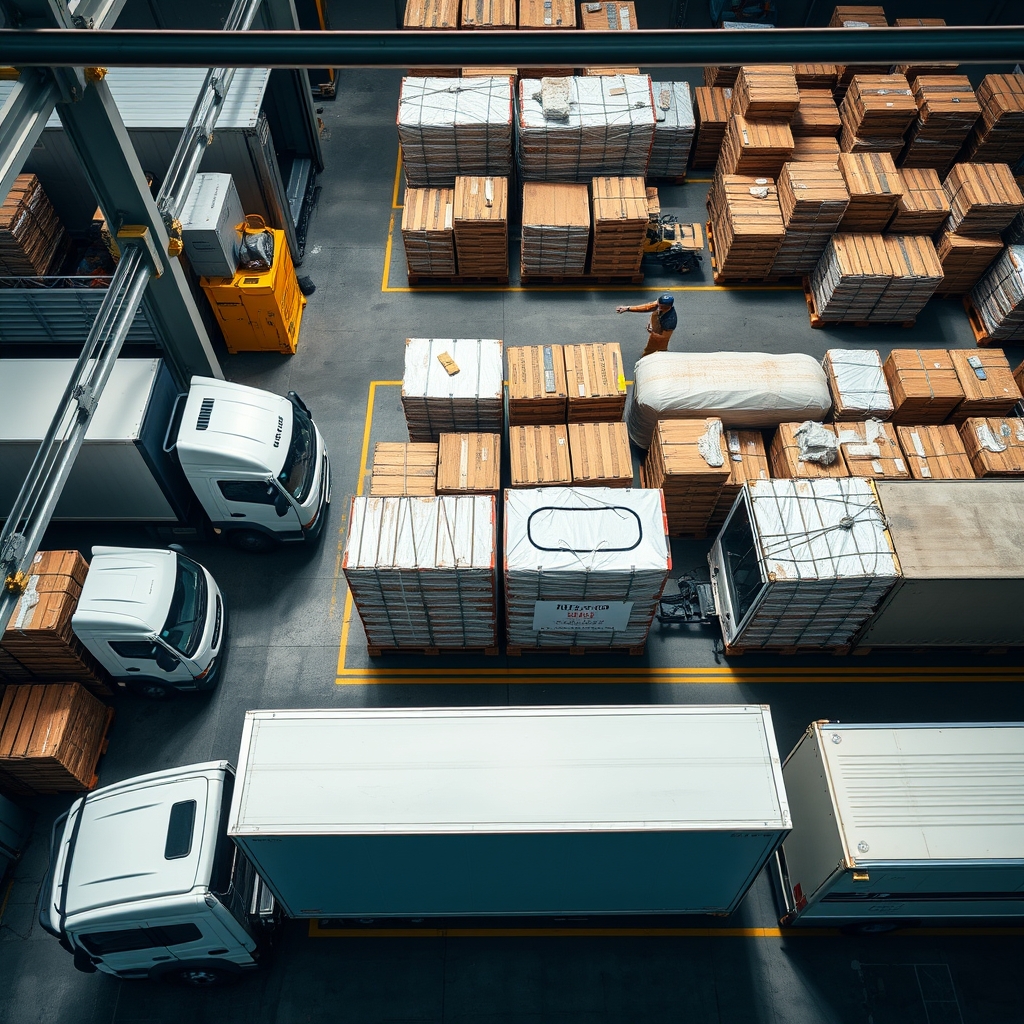
In freight, there's a persistent myth that cutting costs means accepting slower service. The reality in 2026 is exactly the opposite: the most cost-efficient shippers are also among the fastest, because they've mastered the art of freight consolidation. By intelligently grouping shipments, optimizing truck utilization, and leveraging technology to find consolidation opportunities that humans miss, leading companies are saving 15–30% on transportation spend while maintaining or even improving delivery times.
This guide covers the consolidation strategies that actually work in 2026, from tried-and-true methods to AI-powered approaches that are redefining what's possible.
Why Consolidation Matters More Than Ever
The economics are simple: moving half-empty trucks is expensive. The average LTL shipment utilizes just 28% of a trailer's capacity, and even truckload shipments average only 72% utilization. Every cubic foot of empty space is money left on the table.
But the pressure to consolidate has intensified in 2026 for several reasons beyond basic economics:
- Carbon reporting requirements: The SEC's climate disclosure rules now require public companies to report Scope 3 emissions, including transportation. Fewer, fuller trucks directly reduce your reportable carbon footprint.
- Driver shortage economics: With the driver shortage projected at 82,000 by 2027, every available truck needs to move maximum freight per trip.
- Customer expectations: E-commerce has conditioned buyers to expect fast, free shipping. Consolidation funds those delivery promises without destroying margins.
📊 The Consolidation Opportunity in Numbers
Shippers who implement systematic consolidation programs save an average of 22% on per-unit freight costs. Multi-stop truckload moves cost 35–45% less than equivalent separate LTL shipments. AI-driven consolidation platforms identify 3.2x more grouping opportunities than manual planning. Companies consolidating effectively report 18% fewer total shipments with zero reduction in delivery performance.
Strategy 1: Multi-Stop Truckload (MSTL)
Multi-stop truckload is the workhorse of consolidation strategy. Instead of sending three separate LTL shipments to customers in the same region, you load them all on one dedicated truck that makes sequential stops. The economics are compelling: a three-stop TL move typically costs 35–45% less than three individual LTL shipments, even after accounting for stop-off charges ($50–$150 per stop).
When MSTL Works Best
- Multiple orders shipping to the same metro area or along a common corridor
- Individual shipments are 4,000–10,000 lbs (too heavy for parcel, too light for full TL)
- Delivery windows can be coordinated within a 1–2 day range
- Products are compatible (no hazmat mixing issues, similar handling requirements)
Making MSTL Work Operationally
The biggest challenge with MSTL is coordination. You need to hold orders long enough to build a full truck without missing delivery commitments. The solution is implementing order pooling windows—specific time blocks (typically 24–48 hours) during which orders accumulate before being assigned to a truck. The key is setting these windows based on lane-specific data: high-volume lanes can use shorter windows, while lower-volume lanes may need longer accumulation periods.
Strategy 2: Pool Distribution
Pool distribution takes consolidation a step further by using a regional hub as a mixing point. Instead of shipping individual orders directly from your DC to end customers, you send one full truckload to a pool point (a cross-dock facility near your delivery cluster), where it's broken down and delivered locally via smaller, more efficient vehicles.
The savings compound at each stage:
- Line haul savings: One full TL to the pool point vs. multiple LTL shipments (30–40% savings)
- Last-mile efficiency: Local delivery from the pool point reduces miles per stop by 40–60%
- Speed improvement: Direct TL to the pool point often arrives faster than LTL through a carrier's hub network
Pool distribution is particularly effective for shippers with 10+ deliveries per week to a specific metro area. National retailers, food distributors, and building materials companies have used pool distribution for decades, but the model is now accessible to mid-market shippers through 3PL-operated shared pool programs.
Strategy 3: AI-Driven Shipment Grouping
Traditional consolidation relies on planners visually scanning order boards and identifying grouping opportunities. This works for obvious clusters but misses the more complex multi-variable optimizations that algorithms excel at.
AI-driven consolidation platforms analyze every pending order across multiple dimensions simultaneously:
- Geographic clustering: Not just same-city, but optimized stop sequences that minimize total route miles
- Weight and cube optimization: Maximizing both weight and cubic utilization (many shipments "cube out" before they "weigh out" or vice versa)
- Delivery window compatibility: Matching orders whose delivery windows overlap, even across different customers
- Commodity compatibility: Ensuring consolidated loads don't create handling conflicts
- Historical pattern recognition: Predicting future orders based on historical patterns, allowing the system to recommend holding a partially built load for 6 hours because a complementary order has an 87% probability of arriving
Strategy 4: Buyer-Side Consolidation
Most consolidation strategies focus on the outbound side—grouping your shipments to your customers. But inbound consolidation—grouping shipments from your suppliers—often represents an even larger opportunity because it's frequently overlooked.
How It Works
Instead of having each supplier ship individually to your DC (often at premium LTL rates you're paying through inflated product costs), you establish a milk run or consolidation program where a single truck picks up from multiple suppliers in a region and delivers one full load to your facility.
The savings typically range from 20–35% on inbound freight, with the added benefit of more predictable inbound receiving schedules. Retailers like Walmart pioneered this approach, but modern TMS platforms make it accessible to any shipper managing 10+ regular suppliers.
Avoiding the Consolidation Traps
Consolidation isn't without risks. The most common pitfalls include:
- Over-holding: Waiting too long for the "perfect" full truck, causing orders to miss their delivery windows. Set maximum hold times and enforce them ruthlessly.
- Ignoring accessorial costs: Multi-stop moves with liftgate, residential delivery, or inside delivery requirements can erode consolidation savings quickly. Factor accessorials into your consolidation ROI calculations.
- Single-mode thinking: The best consolidation strategy might combine modes—TL line haul to a pool point, then LTL or parcel for final delivery. Don't limit your optimization to a single mode.
- Neglecting the customer experience: Consolidation should be invisible to the customer. If it adds variability to delivery dates or creates confusion with multiple partial deliveries, the cost savings aren't worth the customer satisfaction hit.
Getting Started: A 90-Day Consolidation Roadmap
Days 1–30: Analyze your current shipment data. Identify lanes with multiple daily or weekly shipments below truckload volume. Calculate current cost per unit shipped on each lane.
Days 31–60: Pilot MSTL on your top 3–5 highest-volume lanes. Measure cost per unit, transit time, and on-time delivery. Compare against your LTL baseline.
Days 61–90: Expand to pool distribution on lanes where you have 10+ weekly deliveries to a metro area. Evaluate AI consolidation tools if your shipment volume exceeds 50 orders per day.
The shippers who win on cost in 2026 aren't the ones negotiating the hardest on rates—they're the ones who need fewer shipments in the first place.
Find Your Hidden Consolidation Opportunities
FreightPulse analyzes your shipment patterns in real time, identifying consolidation opportunities that cut costs without slowing delivery.
Start Free Trial →