The Rise of Freight-as-a-Service: How Subscription Logistics Is Changing Shipping
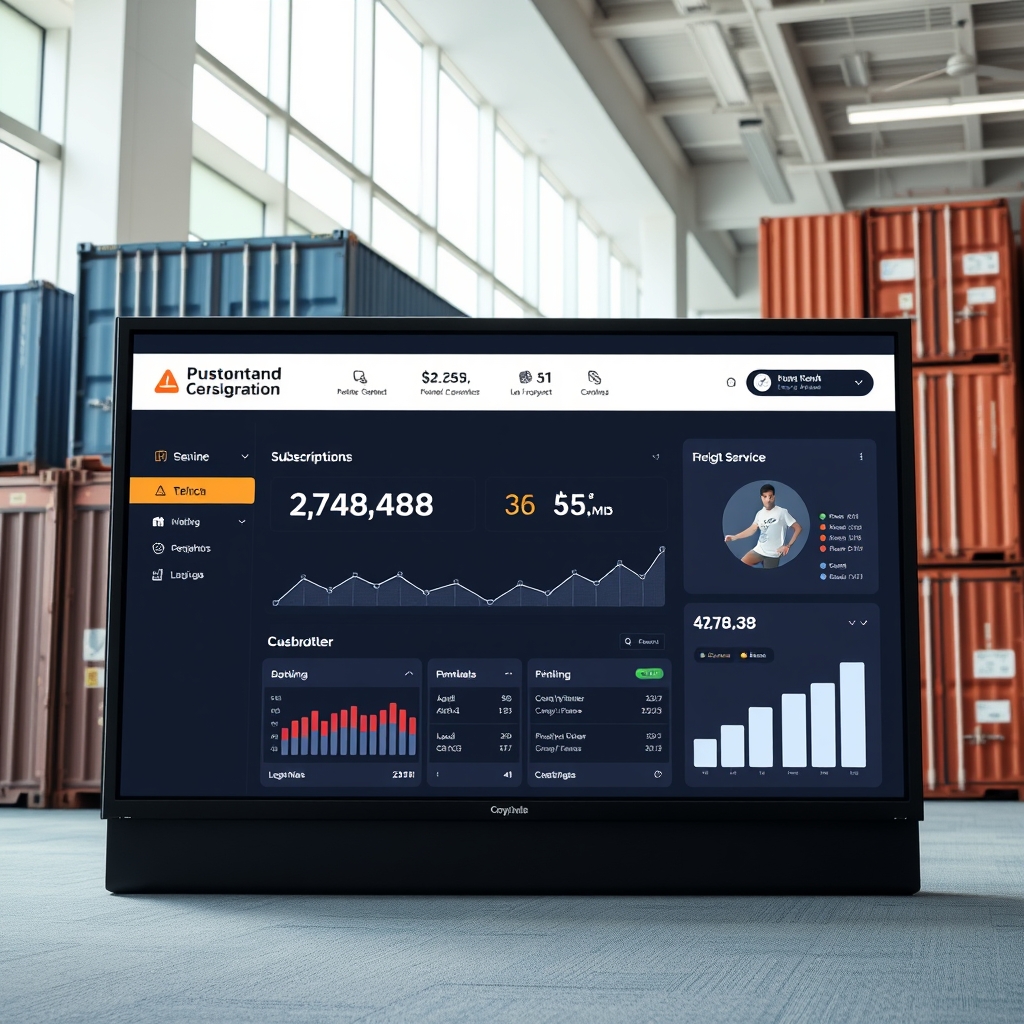
Software went from boxed CDs to SaaS. Music went from albums to Spotify. Now freight is making the same leap. Freight-as-a-Service (FaaS) is emerging as one of the most significant business model shifts in logistics, replacing the traditional transaction-by-transaction approach with subscription-based, bundled logistics services that promise predictable pricing, simplified operations, and better service quality.
For shippers tired of volatile spot rates, opaque surcharges, and managing a dozen vendor relationships for a single supply chain, FaaS offers a compelling alternative. But is it right for your business? Let's break down how it works, who's doing it, and what the trade-offs look like.
What Is Freight-as-a-Service?
At its core, FaaS applies the subscription economy model to logistics. Instead of negotiating individual rates for each shipment, mode, and service, shippers pay a recurring fee (monthly or annual) that covers a defined scope of logistics services. Think of it as a logistics operating system rather than a collection of point solutions.
A typical FaaS offering bundles some combination of:
- Transportation: Ocean, air, trucking, and/or rail capacity allocated by volume tier
- Warehousing: Storage space and fulfillment services at strategic locations
- Customs brokerage: Import/export clearance, duty calculation, and compliance
- Technology: TMS, visibility platform, analytics dashboards, and API access
- Insurance: Cargo coverage included in the subscription
- Account management: Dedicated logistics coordination team
The key distinction from traditional 3PL relationships is the pricing model: instead of cost-plus or per-transaction pricing, FaaS providers offer fixed or tiered monthly rates that absorb rate volatility. The provider assumes the risk of market fluctuations in exchange for committed volume and predictable revenue.
Subscription vs. Transactional: The Fundamental Shift
Traditional freight purchasing is inherently reactive. You have a shipment, you get quotes, you book the cheapest or fastest option. Each transaction is independent. This approach creates several problems:
- Budget unpredictability: Monthly freight spend can swing 30–50% based on rate volatility, surcharges, and volume fluctuations
- Administrative burden: Each shipment requires quoting, booking, tracking, invoice reconciliation, and dispute resolution
- Fragmented vendor management: Different carriers for different modes, lanes, and services—each with their own portal, pricing structure, and support team
- Reactive optimization: Without committed volume, shippers have limited leverage to negotiate better rates or service levels
FaaS flips this model. By committing to a monthly subscription, shippers gain:
- Predictable costs: Fixed monthly logistics spend that finance teams can actually budget around
- Single point of contact: One provider, one invoice, one dashboard for all logistics services
- Guaranteed capacity: Subscription includes allocated space on vessels, in warehouses, and on trucks—no scrambling during peak season
- Continuous optimization: The provider is incentivized to optimize your supply chain (lower costs = higher margins for them on a fixed-price contract)
Market Sizing
The global FaaS market is projected to reach $28 billion by 2028, growing at 24% CAGR. SMBs shipping 50–500 TEU annually represent the fastest-growing segment, drawn by the simplicity and cost predictability that FaaS provides versus managing freight procurement in-house.
Key Players and Approaches
Flexport
Perhaps the most visible FaaS pioneer, Flexport has evolved from a digital freight forwarder into a full-stack logistics platform. Their subscription tiers bundle ocean/air forwarding, customs, trucking, warehousing, and their technology platform. The emphasis is on visibility and control—shippers get a single dashboard that shows every shipment, every cost, and every document in real time.
Shippo and Shipment Platforms
On the parcel and e-commerce side, Shippo's subscription model gives SMBs access to negotiated carrier rates, label generation, tracking, and returns management for a flat monthly fee. This template is expanding into LTL and freight as platforms like Shippo move upmarket.
Post-Convoy Digital Brokerages
The successor platforms born from Convoy's technology and talent are building subscription models for truckload shipping. Instead of per-load brokerage fees, shippers commit to monthly volume and get guaranteed capacity, fixed per-mile rates, and real-time tracking—all through an API-first platform.
Regional 3PLs Going Subscription
Traditional 3PLs are repackaging their services as subscriptions to compete. The model typically includes dedicated account management, allocated warehouse space, and guaranteed trucking capacity for a fixed monthly fee, with overage charges for volume above the committed tier.
The Technology Stack Behind FaaS
FaaS only works because of the technology infrastructure that enables real-time cost allocation, automated operations, and transparent reporting:
- API-first architecture: Every service (booking, tracking, documents, billing) is accessible via API, enabling seamless integration with the shipper's ERP, OMS, or e-commerce platform. This is non-negotiable—FaaS without APIs is just a traditional 3PL with different billing.
- Dynamic routing engines: AI-powered optimization that automatically selects the best mode, carrier, and route for each shipment within the subscription parameters. The system balances cost, transit time, and carbon footprint in real time.
- Automated customs compliance: Machine learning models that classify products, calculate duties, and generate customs documentation without manual intervention. This is critical for making bundled customs brokerage economically viable.
- Real-time cost attribution: Granular tracking of costs per shipment, per SKU, per customer—even within a fixed subscription. Shippers need to understand their unit economics even when total spend is predictable.
- Predictive analytics: Demand forecasting and capacity planning tools that help both the shipper and the FaaS provider optimize resource allocation across the subscription base.
Pricing Models: How FaaS Is Structured
Volume-Tiered Subscriptions
The most common model. Shippers commit to a volume tier (e.g., 20–50 TEU/month for ocean, 100–200 FTL shipments/month for trucking) and pay a fixed monthly fee. Shipments within the tier are covered; overages are billed at pre-negotiated rates. Think of it like a cell phone plan with a data allowance.
Per-Unit Fixed Pricing
Some FaaS providers offer fixed per-unit rates (per container, per pallet, per parcel) that remain constant for the contract term, regardless of market conditions. The shipper gets rate stability; the provider hedges through portfolio diversification across many customers and lanes.
All-Inclusive Landed Cost
The most ambitious model: a single per-unit price that includes every cost from origin factory to destination warehouse—transportation, customs, insurance, handling, and technology. No surprise surcharges, no accessorial charges, no fuel adjustments. This requires sophisticated cost modeling but delivers the ultimate budget predictability.
Who Benefits Most from FaaS?
SMBs (50–500 Shipments/Month)
Small and mid-size businesses benefit the most. They lack the volume for enterprise carrier contracts, the staff for complex logistics management, and the technology budget for a full TMS stack. FaaS gives them enterprise-grade logistics at a predictable monthly cost, often 15–25% lower than their previous fragmented approach.
E-Commerce Brands Scaling Internationally
Brands expanding from domestic to international fulfillment face a steep learning curve: customs, duties, international shipping, foreign warehousing. FaaS bundles all of this complexity into a single service, letting brands focus on product and marketing rather than logistics operations.
Companies with Seasonal Volume Swings
Businesses with predictable seasonality can structure FaaS subscriptions with seasonal tiers—higher capacity allocation during peak months, lower during off-peak—smoothing both operations and cash flow.
The Trade-Offs: When FaaS Doesn't Fit
- Large enterprises with negotiating power: Companies shipping thousands of containers annually can often negotiate better rates directly with carriers than any FaaS provider can offer. The subscription premium isn't worth the convenience.
- Highly specialized cargo: Hazmat, project cargo, oversized equipment, and other specialized freight don't fit neatly into subscription tiers. Custom solutions remain necessary.
- Volume uncertainty: If your monthly shipping volume is highly unpredictable, you may end up paying for capacity you don't use or facing steep overage charges. FaaS rewards volume commitment and predictability.
- Vendor lock-in risk: Consolidating all logistics with a single FaaS provider creates dependency. If the provider has service issues or goes out of business (as Convoy demonstrated), the disruption to your supply chain is significant.
Questions to Ask a FaaS Provider
What happens if my volume drops 30% below the committed tier? What's the overage rate structure? Can I get a detailed cost breakdown per shipment even within the subscription? What are the contract exit terms? Do you offer multi-provider redundancy for carrier capacity? How do you handle rate adjustments at contract renewal?
The Future of FaaS
FaaS is still in its early innings. As the model matures, expect to see:
- Usage-based hybrid models: Combining a base subscription with pay-per-use flexibility—similar to how cloud computing evolved from reserved instances to a mix of reserved and on-demand.
- Industry-specific packages: FaaS offerings tailored to verticals—pharmaceutical cold chain subscriptions, e-commerce fulfillment bundles, automotive just-in-time logistics packages.
- Carbon-neutral tiers: Premium subscription tiers that include verified carbon offsets or guaranteed use of sustainable fuels, enabling shippers to meet ESG commitments without managing offset procurement.
- AI-driven dynamic subscriptions: Plans that automatically adjust based on demand signals, market conditions, and shipper behavior—moving from static tiers to continuously optimized pricing.
The shift from transactional to subscription logistics mirrors what happened in software, media, and transportation (ride-sharing). It won't replace all freight purchasing—but for a growing segment of shippers, the predictability, simplicity, and bundled value of FaaS is becoming too compelling to ignore.
Power Your Logistics Platform with Data
FreightPulse APIs provide the rate data, port intelligence, and analytics that FaaS platforms need to price and optimize subscriptions.
Start Free — 100 calls/mo →