Electric Trucks in Commercial Freight: Reality vs. Hype in 2026
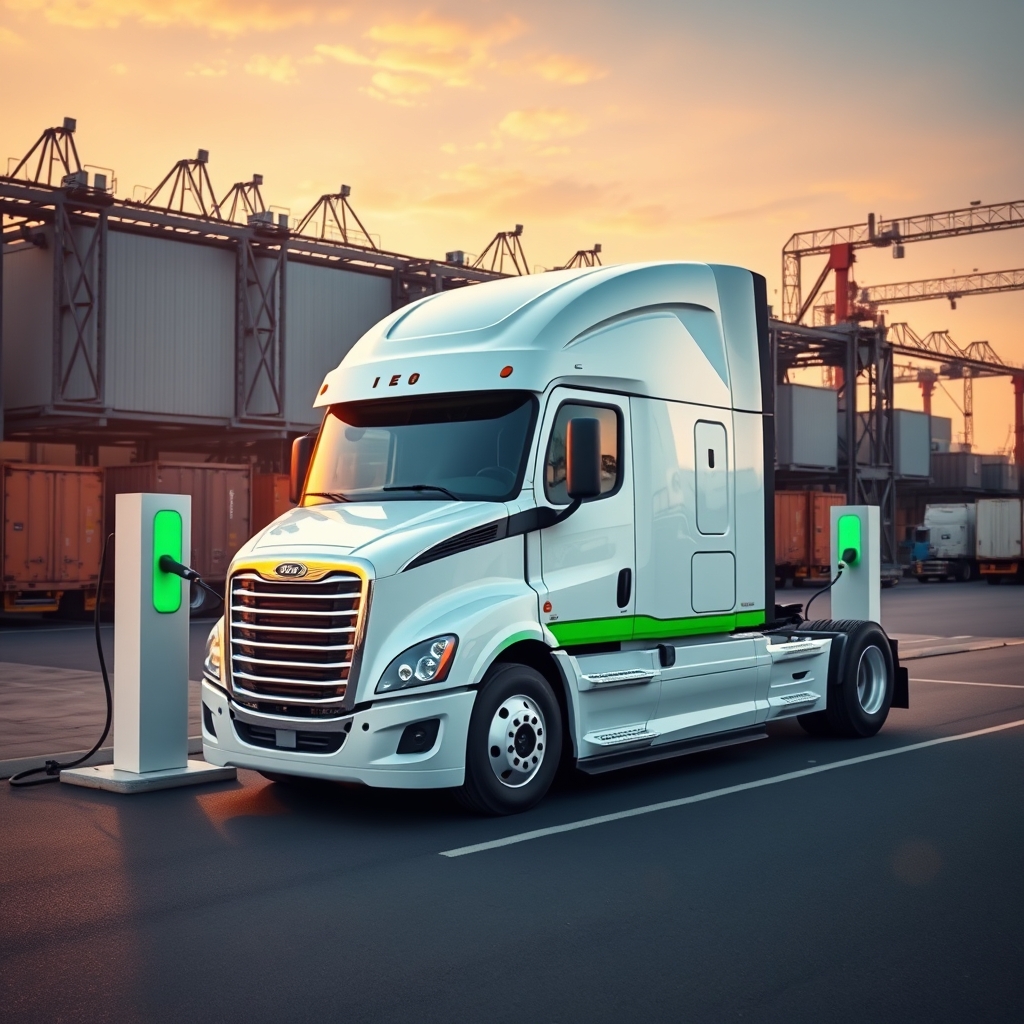
Electric trucks have dominated logistics headlines for years, with bold promises of zero-emission freight and dramatically lower operating costs. But in 2026, we finally have enough real-world deployment data—from fleets like PepsiCo's 50 Tesla Semis in Sacramento, Schneider's growing fleet of Freightliner eCascadias, and Amazon's massive Rivian delivery van rollout—to separate the genuine transformation from the marketing noise. The answer, as with most things in freight, is nuanced: electric trucks are genuinely game-changing for specific use cases, while remaining impractical or uneconomical for others.
This analysis cuts through the hype with hard numbers on total cost of ownership, real-world range and payload performance, charging infrastructure reality, and the specific freight applications where electric makes financial sense today—no carbon credits or regulatory mandates required.
The Current State of Electric Truck Technology
Class 8 Long-Haul: The Hardest Problem
The Class 8 long-haul tractor is the most visible and most challenging application for electrification. Here's where things stand in early 2026:
- Tesla Semi: In production (limited volumes, ~3,000 units delivered by Q1 2026). Real-world range of 300–350 miles with a 40,000 lb payload, below Tesla's initial 500-mile claim for most operating conditions. Charging from 20% to 80% takes approximately 45 minutes on a Tesla Megacharger
- Freightliner eCascadia: The most widely deployed Class 8 BEV in North America (~4,500 units on road). Available in 220-mile and 280-mile range configurations. Strong reputation for reliability with uptime above 95%
- Volvo VNR Electric: Well-suited for regional haul with up to 275 miles of range. Over 600 units in service, primarily in California and the Pacific Northwest
- Nikola Tre BEV: Approximately 200 units delivered. The hydrogen fuel cell variant remains in limited pilot testing
The uncomfortable truth for long-haul: a diesel tractor can cover 1,000+ miles on a single tank with a 5-minute fill-up. Even the best electric trucks in 2026 offer 300 miles of real-world range and require 30–60 minutes of charging. For a driver running 500+ miles per day under hours-of-service regulations, this means at least one extended charging stop that reduces daily productivity by 8–12%.
Medium-Duty and Last-Mile: Where Electric Shines
The economics flip entirely for medium-duty trucks (Class 4–6) and last-mile delivery vans operating in urban environments:
- Fixed daily routes: Delivery vans and medium-duty trucks typically run 80–150 miles per day on predictable routes, well within battery range
- Return-to-base operations: Vehicles return to a depot nightly, enabling overnight charging on cheap off-peak electricity
- Stop-and-go efficiency: Regenerative braking recovers 15–25% of energy in urban stop-and-go driving, where diesel trucks are least efficient
- Low-emission zone compliance: An increasing number of cities (Los Angeles, New York, London, Amsterdam) are implementing zero-emission zones for delivery vehicles
⚡ Electric vs. Diesel TCO Comparison (2026, Per Vehicle Over 7 Years)
Class 8 Regional (200 mi/day): Electric $0.92/mile vs. Diesel $1.18/mile — Electric wins by 22%
Class 8 Long-Haul (500 mi/day): Electric $1.15/mile vs. Diesel $1.10/mile — Diesel still wins by 4%
Class 6 Urban Delivery (120 mi/day): Electric $0.68/mile vs. Diesel $0.95/mile — Electric wins by 28%
Last-Mile Van (80 mi/day): Electric $0.45/mile vs. Diesel $0.72/mile — Electric wins by 38%
Assumptions: Electricity at $0.12/kWh (off-peak), diesel at $4.20/gal, includes vehicle cost, energy, maintenance, insurance
The Charging Infrastructure Challenge
The biggest bottleneck for electric truck adoption isn't the trucks—it's the charging infrastructure. Building a reliable, high-power charging network for commercial freight is orders of magnitude more complex than installing Tesla Superchargers for passenger cars.
Power Requirements
A single Megawatt Charging System (MCS) port delivers up to 3.75 MW of power—enough to power 3,000 homes simultaneously. A truck stop serving 20 electric trucks simultaneously would need 50–75 MW of grid capacity, equivalent to a small factory. Most existing truck stops have electrical service of 1–5 MW. The grid upgrades required to support high-power truck charging can take 2–4 years and cost $2–$10 million per site, depending on location and utility infrastructure.
Depot Charging
For fleets operating from dedicated depots, the economics are much more favorable:
- Overnight charging at 50–150 kW: Lower power per vehicle, but sufficient to fully charge trucks during the 8–10 hour overnight window
- Managed charging: Software that staggers charging across vehicles to stay within the facility's power limit, reducing demand charges
- On-site solar and battery storage: Some fleets are installing solar arrays and stationary batteries at depots, reducing grid dependency and energy costs by 20–40%
- Infrastructure cost: $50,000–$150,000 per charging port installed, with depot-wide systems for 50+ trucks running $3–$8 million
En-Route Charging Network
For regional and long-haul applications, en-route charging is essential. The current state:
- Tesla Megacharger network: ~120 locations operational in North America as of Q1 2026, heavily concentrated in California, Texas, and the I-95 corridor
- Pilot/Flying J (ChargePoint partnership): 85 locations with high-power truck charging, primarily at existing truck stops
- NEVI (National Electric Vehicle Infrastructure) program: $7.5 billion in federal funding is accelerating buildout, but most NEVI sites target passenger vehicles. Truck-specific corridors are behind schedule
- Gap analysis: The DOE estimates 10,000+ public truck charging locations are needed by 2030 for full network coverage. We're at approximately 300 in 2026
Which Freight Operations Should Go Electric Today?
Strong "Yes" — Deploy Now
- Urban last-mile delivery: The strongest economic case. Daily routes under 150 miles, depot-based, stop-and-go driving. Payback in 2–3 years without subsidies
- Drayage (port trucking): Short distances (typically under 100 miles round-trip), severe air quality regulations near ports, and return-to-yard operations make this ideal. Los Angeles and Long Beach ports are mandating zero-emission drayage by 2030
- Regional LTL pickup and delivery: P&D routes of 100–200 miles per day from terminal-based operations. LTL carriers like Estes and Old Dominion are piloting eCascadias in these roles with positive results
- Dedicated contract carriage (short-haul): Dedicated routes under 250 miles with predictable schedules allow optimized charging and maximum uptime
Conditional "Maybe" — Pilot Carefully
- Regional truckload (200–300 mile lanes): Economically viable on specific lanes where charging infrastructure exists. Requires careful route-by-route analysis
- Refrigerated transport: The battery drain from running the reefer unit reduces range by 15–25%, making cold chain applications more range-constrained. But for short urban cold chain routes, it works
Clear "Not Yet" — Wait for Next Generation
- Long-haul truckload (400+ miles): Range anxiety is real and justified. Charging infrastructure gaps make cross-country electric trucking unreliable. Wait for 500+ mile range trucks and MCS network buildout (likely 2028–2029)
- Heavy haul and oversize: Battery weight reduces payload capacity. A typical Class 8 BEV battery pack weighs 10,000–16,000 lbs—significantly eating into the 80,000 lb GVWR limit. Weight-sensitive commodities suffer
The Role of Hydrogen Fuel Cells
Hydrogen fuel cell electric vehicles (FCEVs) are often positioned as the solution for long-haul applications where battery-electric falls short. The refueling experience mirrors diesel (10–15 minutes for a full tank), and range can exceed 500 miles. However, the economics remain challenging:
- Hydrogen fuel cost: $8–$14 per kg in 2026 (equivalent to $6–$10 per diesel gallon equivalent)
- Refueling infrastructure: Fewer than 20 heavy-truck hydrogen stations in the U.S.
- Vehicle availability: Nikola Tre FCEV and Hyundai XCIENT are in pilot programs but not commercially scaled
The consensus view in 2026: hydrogen will eventually play a role in long-haul freight, but the timeline has pushed out to 2029–2032 for economic viability. Battery technology is improving faster than hydrogen infrastructure is building out.
Fleet Transition Strategy: A Practical Playbook
- Audit your routes: Map every vehicle in your fleet by daily mileage, route predictability, and return-to-base pattern. Identify the 20–30% of vehicles that are obvious EV candidates
- Run the TCO model: Use real local electricity rates (including demand charges), your actual diesel cost, and maintenance records to build a vehicle-by-vehicle business case
- Plan charging infrastructure early: Utility upgrades take 12–24 months. Start the process before you order trucks, not after
- Pilot with 5–10 vehicles: Validate real-world range, charging logistics, and driver acceptance before scaling
- Leverage incentives: Federal tax credits ($40,000 per Class 8 BEV under the IRA), state programs (California's HVIP offers up to $120,000), and utility make-ready programs can reduce upfront costs by 30–50%
- Monitor battery degradation: Track state-of-health data to inform warranty claims and replacement planning. Most OEMs warranty batteries for 8 years or 500,000 miles, but real-world degradation varies
The electric truck revolution is real, but it's not uniform. It's not "electric trucks are the future of all freight"—it's "electric trucks are the present for specific applications and the future for most others." The fleets that win will be the ones that understand which applications are ready today and move decisively, while avoiding premature deployment in use cases where the technology and infrastructure aren't yet mature.
Optimize Your Fleet with Better Data
FreightPulse provides lane-level rate intelligence to help you evaluate electric vs. diesel economics by route.
Start Free Trial →