Drone Delivery in Logistics: How UAVs Are Transforming Last-Mile Freight in 2026
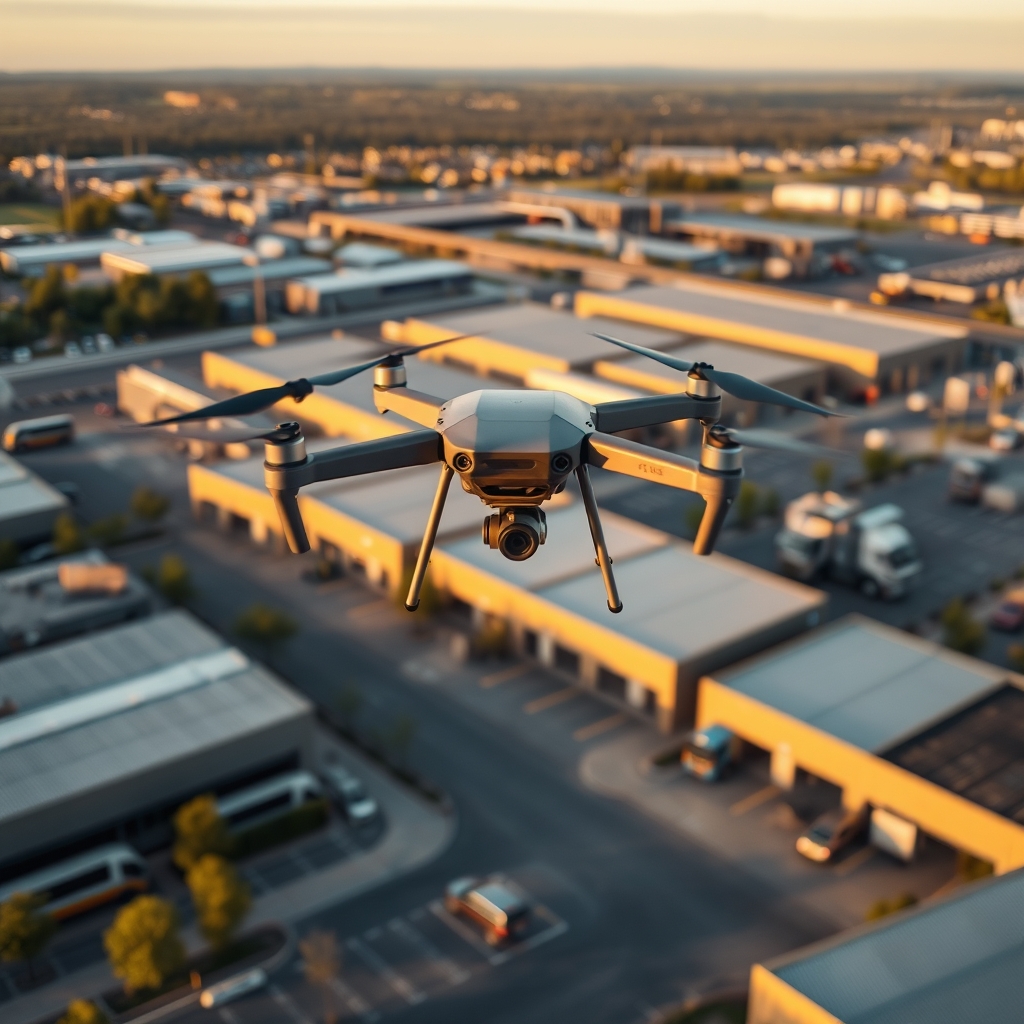
The buzz around drone delivery has been building for a decade, but 2026 marks the year it's finally scaling beyond pilot programs. With the FAA's expanded Part 135 certifications, new beyond-visual-line-of-sight (BVLOS) rules, and advances in battery technology, commercial drone delivery is moving from "interesting experiment" to "operational reality" for logistics companies of all sizes.
The numbers tell the story: the global drone logistics market hit $11.2 billion in 2025, up from $4.8 billion in 2023, and is projected to reach $29 billion by 2030. But behind the headlines, there are practical questions every freight and logistics professional needs to answer: Where do drones actually make sense? What's the real cost per delivery? And how does this affect your supply chain strategy?
The Regulatory Breakthrough: What Changed in 2025–2026
For years, drone delivery was throttled by regulatory uncertainty. That changed significantly when the FAA finalized its BVLOS operating rules in late 2025, establishing a clear framework for commercial drone operations without requiring a human spotter for every flight. Key provisions include:
- Automated detect-and-avoid (DAA) systems are now certified as equivalent to human visual observers for Class G airspace below 400 feet
- Type certificates have been issued to seven drone manufacturers for package delivery platforms carrying payloads up to 55 lbs
- Remote ID compliance is mandatory, creating a digital "license plate" system that enables shared airspace management
- State and local preemption was clarified, giving the FAA primary authority over drone flight paths (though local governments retain land-use and noise regulation powers)
The EU has followed a parallel path with its U-space framework, and cross-border drone corridors between EU member states are now operational for urgent medical and industrial parts delivery.
Where Drones Actually Make Economic Sense
Not every delivery should—or will—go by drone. The sweet spot is emerging clearly in 2026, and it's more nuanced than "everything under 5 pounds."
1. Rural and Suburban Last-Mile
Traditional last-mile delivery in rural areas costs $8–$15 per stop due to long distances between deliveries. Drones can cover a 15-mile radius from a micro-fulfillment center at $2.50–$4.00 per delivery, making previously unprofitable routes viable. Walmart's drone program now covers 75% of the Dallas–Fort Worth metro area with 30-minute delivery windows.
2. Urgent Industrial Parts
When a critical machine part is needed on an oil rig, construction site, or remote factory, the traditional options are expensive courier services or overnight shipping. Drone delivery of parts under 10 lbs can reduce delivery time from hours to minutes, with direct cost savings of 40–60% compared to emergency courier services.
3. Medical and Pharmaceutical
Zipline, the pioneer in medical drone delivery, now operates in 10 countries and has completed over 1 million deliveries. In the US, their partnership with major hospital networks delivers blood products, lab samples, and pharmaceuticals between facilities with 15-minute average delivery times—compared to 45+ minutes by ground courier.
4. Port-to-Vessel and Ship-to-Shore
One of the most exciting emerging use cases: delivering spare parts, documents, and supplies to vessels at anchor or in port. Traditional launch boat services cost $500–$2,000 per trip and require hours of coordination. Drone delivery to ships cuts this to under $100 and 20 minutes. Major ports including Rotterdam, Singapore, and Los Angeles now have active drone delivery corridors for vessel services.
💡 Cost Comparison: Last-Mile Delivery Methods (2026)
Traditional van delivery: $6–$12 per stop (urban), $8–$15 (suburban/rural)
Autonomous ground robot: $3–$6 per delivery (urban only, limited range)
Drone delivery: $2.50–$5 per delivery (suburban/rural), $4–$7 (urban, higher regulatory costs)
Crowdsourced gig delivery: $5–$10 per delivery (variable quality/speed)
The Technology Stack: What's Inside a 2026 Delivery Drone
Modern delivery drones are far more sophisticated than the quadcopters of 2020. The leading platforms in 2026 share several key characteristics:
- Hybrid VTOL designs: Vertical takeoff and landing combined with fixed-wing cruise for efficiency—enabling 30+ mile range with 10 lb payloads
- Solid-state LiDAR + computer vision: Multi-sensor fusion for obstacle detection in all weather conditions, including rain and fog
- Precision landing systems: RTK GPS combined with visual landing pads enable package placement accuracy within 12 inches
- Automated loading/unloading: Standardized package containers that clip magnetically, enabling fleet turnaround times under 3 minutes
- Cellular + satellite connectivity: Dual-link command and control with automatic failsafe if both links are lost
Challenges and Limitations: The Reality Check
Weather Dependency
Drones can't fly in all conditions. High winds (above 25 mph), heavy rain, snow, and icing ground most commercial platforms. In regions with frequent severe weather, this creates reliability concerns. The industry average uptime due to weather restrictions is about 85%—meaning 15% of scheduled flights get delayed or cancelled. For time-critical deliveries, this requires hybrid planning that includes ground backup.
Payload Limitations
The 55 lb FAA weight limit (including the drone itself) means practical payload capacity is 5–15 lbs for most platforms. This covers a huge percentage of e-commerce packages but excludes larger freight. Heavy-lift drones carrying 100+ lbs exist but operate under different (and more restrictive) certification requirements.
Noise and Community Acceptance
Drone noise remains a significant community concern. A delivery drone at 50 feet produces 55–65 dB—comparable to a normal conversation, but the high-frequency buzz is perceived as more annoying than equivalent decibel levels from ground vehicles. Several municipalities have imposed flight-time restrictions (no deliveries before 7 AM or after 9 PM), which limits operational windows.
Airspace Congestion
As drone operations scale, managing shared low-altitude airspace becomes critical. UTM (Unmanned Traffic Management) systems are still maturing, and near-miss incidents between commercial drones have increased 3x in the past year as volume grows. The industry needs robust automated deconfliction before truly dense urban operations are safe.
Integration with Your Supply Chain: A Practical Guide
If you're considering drone delivery as part of your logistics strategy, here's the practical framework:
- Identify high-cost last-mile routes — Look for delivery zones where your current cost per stop exceeds $8 and volume is sufficient to justify a drone hub
- Evaluate drone-as-a-service (DaaS) providers — You don't need to buy and operate drones yourself. Companies like Zipline, Wing, and DroneUp offer per-delivery pricing with full regulatory compliance
- Plan hybrid networks — Don't replace ground delivery entirely. Design networks where drones handle time-sensitive or high-cost routes and ground handles the rest
- Integrate via API — Leading DaaS providers offer REST APIs for order submission, tracking, and proof of delivery that integrate with standard TMS/WMS platforms
- Monitor regulatory changes — Drone regulations are still evolving rapidly. Assign someone to track FAA updates, state laws, and local ordinances in your operating areas
📊 Key Metric: Drone Delivery ROI Breakeven
For a typical suburban micro-fulfillment hub operating 5 drones: initial setup cost of $250K–$400K (including landing infrastructure and regulatory compliance). At 50 deliveries per drone per day, most operators reach ROI breakeven within 14–18 months when replacing $10+ per-stop ground delivery routes.
What's Next: 2026–2028 Outlook
The next two years will see several inflection points:
- Multi-drone swarm operations: Single-operator management of 10+ drones simultaneously, dramatically improving economics
- Hydrogen fuel cells: Extending range to 100+ miles and payload to 25+ lbs for fixed-wing platforms
- Urban drone corridors: Dedicated flight paths over highways and rail lines that enable urban drone delivery at scale
- Intermodal integration: Drones launching from delivery trucks to cover the final 1–3 miles, combining the efficiency of both modes
The logistics companies that start building drone delivery capability now—even through DaaS partnerships—will have a significant competitive advantage as the technology and regulations mature. The question isn't whether drones will be a standard part of the logistics toolkit, but how quickly you adapt your operations to include them.
Track Drone Delivery Costs with FreightPulse
Our API now includes drone delivery rate benchmarks alongside traditional freight modes.
Start Free Trial →