Digital Twins in Warehouse Operations: From Concept to Competitive Advantage
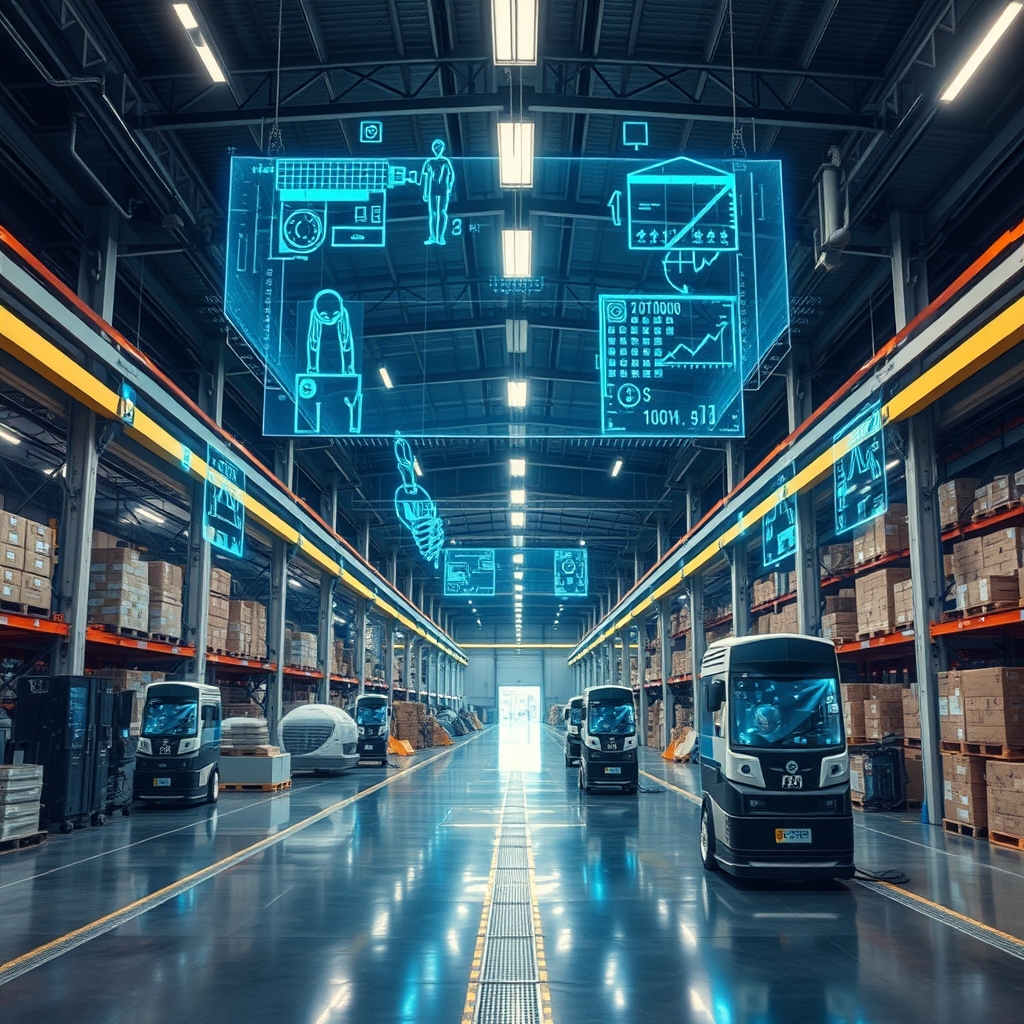
The concept of a digital twin — a real-time virtual replica of a physical system — has been used in aerospace and manufacturing for over a decade. But it's only in the past two years that the technology has become practical for warehouse operations. The convergence of affordable IoT sensors, cloud computing scalability, and AI-powered simulation engines has brought digital twins from the realm of billion-dollar factories to the everyday distribution center.
And the results are hard to ignore. Warehouses deploying digital twins in 2026 are reporting 15–30% improvements in throughput, 20–40% reductions in equipment downtime, and picking accuracy rates exceeding 99.8%. For an industry where single-digit efficiency gains are celebrated, these numbers represent a generational leap.
What a Warehouse Digital Twin Actually Looks Like
A warehouse digital twin is not simply a 3D model of your building. It's a living, breathing simulation that mirrors every aspect of your physical operation in real time. The components include:
- Spatial model: A geometrically accurate representation of the facility including racking, aisles, dock doors, staging areas, and mezzanines
- Asset layer: Real-time positions and states of forklifts, conveyors, sortation systems, AGVs, and robotic systems
- Inventory layer: SKU-level location, quantity, and velocity data synchronized with the WMS
- Workforce layer: Anonymous movement patterns, task assignments, and productivity metrics for human workers
- Environmental layer: Temperature, humidity, lighting, and energy consumption data from building management systems
All these layers update continuously — typically every 1–5 seconds — creating a virtual mirror that operators can observe, analyze, and experiment with.
🏗️ Build vs. Buy
In 2024, building a warehouse digital twin required $500K–2M in custom development. Today, platforms like NVIDIA Omniverse, Siemens Xcelerator, and AWS IoT TwinMaker offer pre-built warehouse modules that can be configured and deployed for $50K–200K, with ongoing costs of $2K–8K per month depending on facility size and sensor density.
Five High-Impact Use Cases
1. Layout Optimization
The most immediate ROI from a warehouse digital twin comes from layout testing. Instead of physically rearranging racking and staging areas — a process that can take weeks and disrupt operations — operators simulate changes in the digital twin and measure the impact on pick paths, congestion, and throughput. A major 3PL reported testing 47 layout variations in a single week using their digital twin, ultimately finding a configuration that reduced average pick path distance by 23%.
2. Predictive Equipment Maintenance
Digital twins continuously analyze equipment performance data to predict failures before they happen. Vibration sensors on conveyor motors, load sensors on forklifts, and cycle counters on sortation systems feed data into the twin, which uses machine learning models to identify anomalous patterns. The results: unplanned downtime reductions of 35–50%, with maintenance costs falling 15–20% as repairs are scheduled proactively rather than reactively.
3. Labor Planning and Simulation
One of the most valuable — and sensitive — applications is workforce simulation. By modeling worker movement patterns and task completion rates, digital twins can predict staffing needs for upcoming shifts based on inbound volume forecasts. This goes beyond simple headcount planning: the simulation can identify optimal task assignments, break schedules, and training needs. Warehouses using this capability report 12–18% improvements in labor productivity.
⚠️ Privacy Consideration
Workforce tracking in digital twins must be handled carefully. Best practices include using anonymized movement data, aggregating metrics at team level rather than individual, and being transparent with workers about what's being tracked and why. Several jurisdictions now have specific regulations governing warehouse worker surveillance — ensure compliance before deploying workforce analytics features.
4. Inbound Flow Optimization
Digital twins can simulate inbound truck arrivals against dock door capacity, receiving staff availability, and put-away capacity to identify bottlenecks before they create congestion. By adjusting appointment schedules in the digital twin first, warehouses can smooth inbound flow and reduce truck dwell times at the dock. One e-commerce fulfillment center reduced average inbound processing time from 4.2 hours to 2.8 hours using this approach.
5. Disaster and Disruption Modeling
What happens if a major conveyor goes down during peak? What if a snowstorm prevents 40% of your workforce from arriving? Digital twins let you simulate these scenarios and develop contingency plans. Some operators run weekly "stress tests" in their digital twin, identifying vulnerabilities and pre-positioning backup resources. This capability alone has been credited with preventing millions in lost revenue during real-world disruptions.
Implementation Roadmap: Getting Started
Implementing a warehouse digital twin doesn't have to be a massive capital project. The most successful deployments follow a phased approach:
- Phase 1 — Foundation (Months 1–3): Deploy IoT sensors for critical assets (conveyors, dock doors, HVAC), establish data pipelines to cloud platform, create basic spatial model from CAD drawings or LiDAR scans.
- Phase 2 — Visualization (Months 3–6): Build the real-time dashboard layer, integrate WMS data for inventory visibility, begin tracking KPIs against the digital twin baseline.
- Phase 3 — Simulation (Months 6–12): Enable "what-if" scenario testing for layout changes, staffing models, and flow optimization. This is where the major ROI begins.
- Phase 4 — Autonomy (Months 12–18): Implement closed-loop automation where the digital twin recommends and automatically implements optimizations (e.g., dynamic slotting, real-time task assignment).
Common Pitfalls to Avoid
Based on our analysis of dozens of warehouse digital twin deployments, these are the mistakes that derail projects most often:
- Over-engineering the initial model: Starting with every possible data input creates complexity that delays time-to-value. Begin with the 5–10 data streams that matter most and expand from there.
- Ignoring data quality: A digital twin is only as accurate as its inputs. If your WMS inventory accuracy is 92%, your twin will inherit that error. Fix data quality issues first.
- Treating it as an IT project: Digital twins succeed when operations teams own the use cases and IT enables the infrastructure. Projects led solely by IT often deliver technically impressive twins that don't solve real operational problems.
- Underestimating change management: Warehouse supervisors and managers need training and buy-in. If the people making daily decisions don't trust or use the twin, it becomes an expensive screensaver.
The ROI Picture
For a 500,000 sq ft distribution center processing 50,000 orders per day, the typical digital twin ROI breaks down as follows: implementation costs of $150K–300K in Year 1 (including sensors, platform, and integration), ongoing costs of $5K–10K per month, and annual savings of $800K–1.5M from throughput improvements, reduced downtime, and labor optimization. Most deployments reach breakeven within 8–14 months.
Digital twins are no longer experimental technology for warehousing — they're rapidly becoming table stakes for competitive distribution operations. The question isn't whether your warehouse needs a digital twin, but how quickly you can move from visualization to optimization.
Integrate Warehouse Intelligence with Logistics Data
FreightPulse connects your warehouse operations with real-time freight, port, and vessel data for end-to-end visibility.
Start Free — 100 calls/mo →