Cross-Border E-Commerce Logistics: Navigating Customs and Last-Mile in 2026
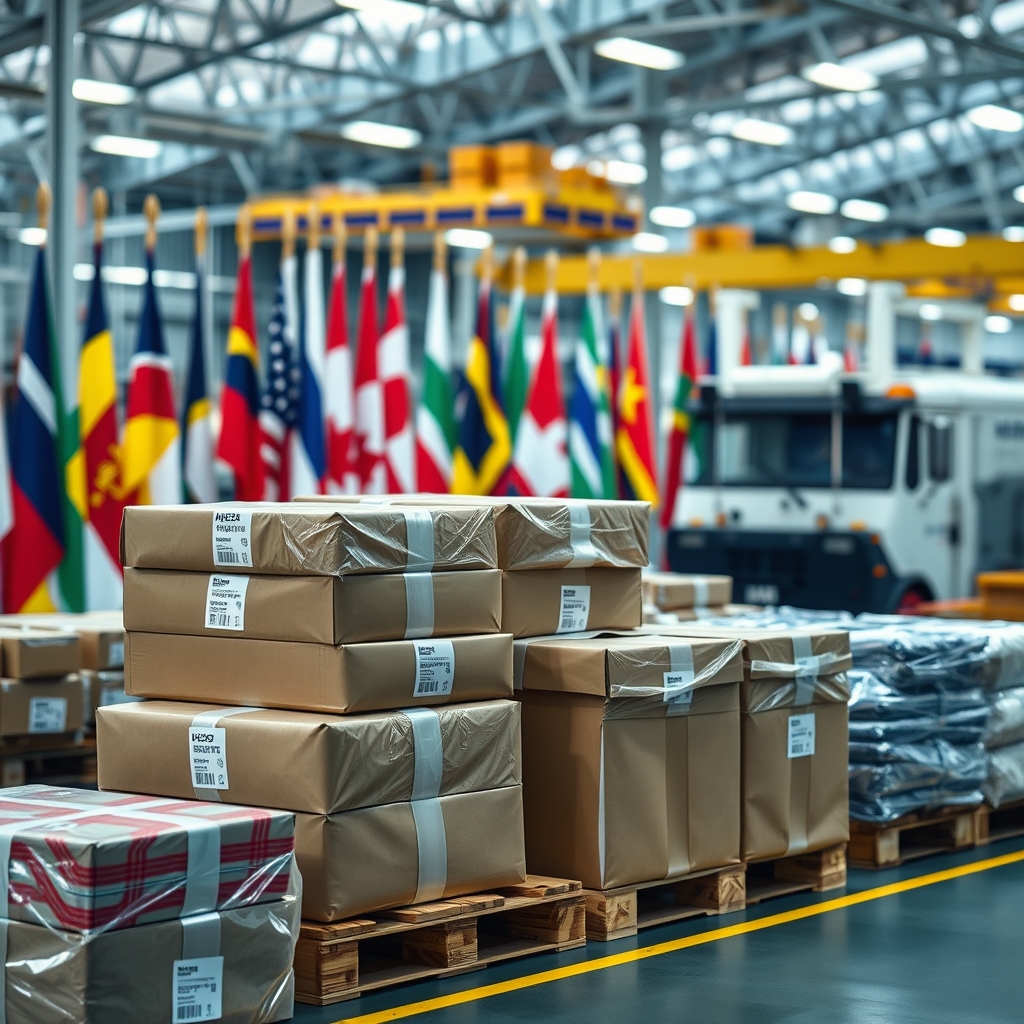
Cross-border e-commerce is booming — and getting more complicated by the quarter. Global cross-border online sales reached $1.6 trillion in 2025, with projections from Juniper Research putting the figure at $2.1 trillion by 2028. But behind every international purchase is a logistics chain that must navigate customs regulations, duty calculations, last-mile delivery networks, and return flows that differ radically from domestic fulfillment.
For freight professionals and e-commerce operators, 2026 brings both opportunity and regulatory complexity. The de minimis landscape is shifting, customs technology is advancing rapidly, and consumer expectations for cross-border delivery speed are converging with domestic standards. Here's what you need to know.
The De Minimis Shakeup
The most consequential regulatory change affecting cross-border e-commerce logistics is the evolving de minimis threshold landscape — the value below which imported goods are exempt from duties and simplified customs processing.
United States: Section 321 Under Siege
The U.S. de minimis threshold of $800 per shipment — the highest in the world — has been the engine powering direct-to-consumer cross-border shipping from China via platforms like Temu, Shein, and AliExpress. In 2023 alone, over 1 billion Section 321 shipments entered the U.S., up from 685 million in 2022.
However, bipartisan legislation introduced in late 2025 is poised to dramatically restrict Section 321:
- Country exclusions: The proposed Import Security and Fairness Act would exclude goods from non-market economies (primarily China) from de minimis eligibility entirely.
- Value reduction: Companion proposals would lower the general de minimis threshold from $800 to $200 for all countries of origin.
- Data requirements: New advance data requirements mandate 10-digit HTS classification, country of origin, and seller identification for all Section 321 entries — a massive data collection burden.
💰 The Financial Impact of De Minimis Changes
CBP estimates that if Chinese goods are excluded from Section 321, approximately 60% of current de minimis shipments would become dutiable, generating $10–15 billion in new annual duty revenue but adding $3–8 per shipment in customs processing costs. For high-volume cross-border shippers, this represents a fundamental business model challenge.
Canada and Mexico: Tighter Thresholds
Canada's de minimis threshold sits at just CAD $20 for duties (CAD $40 for taxes) — among the lowest of any developed nation. This means virtually every e-commerce package entering Canada faces formal customs processing. Mexico's threshold of $50 USD is similarly restrictive. Under USMCA, both countries agreed to maintain thresholds of at least $117 CAD / $50 USD, but pressure to lower even these modest levels continues.
Customs Automation: The Technology Revolution
The sheer volume of cross-border e-commerce parcels — estimated at 4 billion annually entering the U.S. alone — has forced customs authorities worldwide to embrace automation or drown in paper.
CBP's Entry Type 86
U.S. Customs and Border Protection's Entry Type 86 test, now a permanent program, allows automated processing of Section 321 shipments with advance electronic data. This has reduced clearance times from 2–3 days to under 4 hours for compliant shipments. Major customs brokers like Flexport, C.H. Robinson, and Livingston International have built API-based integrations that enable real-time classification and clearance.
AI-Powered Classification
Harmonized Tariff Schedule classification — historically requiring trained customs specialists — is being transformed by AI. Platforms like Zonos, Avalara, and Tarifflo use machine learning to automatically classify products into correct HTS codes with 95%+ accuracy, down to the 10-digit level. This automation is critical when processing millions of unique SKUs across cross-border e-commerce catalogs.
Single Window Systems
The WCO's Single Window initiative — where traders submit all import/export data through a single portal — is now operational in 85 countries. The U.S. ACE (Automated Commercial Environment) system processes 99% of all import entries electronically, while Canada's CARM (Canada Border Services Agency Assessment and Revenue Management) system, fully deployed in 2025, has modernized Canadian import processing.
USMCA Compliance: The North American Advantage
For businesses shipping within North America, USMCA offers significant advantages — but only with proper compliance documentation:
- Certificate of Origin: USMCA simplified the certification process, allowing producers, exporters, or importers to self-certify origin. No more government-stamped forms.
- Cumulation rules: Materials from any USMCA country count toward regional value content thresholds, enabling more goods to qualify for duty-free treatment.
- Textile and apparel: The "yarn forward" rule requires that qualifying garments be made from yarn produced in North America — relevant for e-commerce fashion brands.
- Digital products: USMCA prohibits customs duties on digital products (software, e-books, music) traded between the three countries.
⚠️ Common USMCA Compliance Mistakes
CBP audits of USMCA claims have increased 40% since 2024. The top compliance failures: incomplete or missing certificates of origin (35% of violations), incorrect regional value content calculations (28%), and failure to maintain supporting records for the required 5-year period (22%). Penalties for false USMCA claims range from $10,000 to $25,000 per violation.
Last-Mile Cross-Border Delivery: Closing the Speed Gap
Consumer expectations don't stop at borders. A 2025 Pitney Bowes survey found that 61% of cross-border shoppers expect delivery within 5 business days, and 28% expect 3 days or less. Meeting these expectations requires rethinking last-mile strategies:
Bonded Warehousing and Pre-Positioning
The most effective strategy for fast cross-border delivery is pre-positioning inventory in bonded warehouses near the destination market. Companies like Passport Shipping, GlobalE, and Flow Commerce operate bonded fulfillment networks that allow merchants to store inventory duty-deferred, clearing customs only when an order is placed. This can reduce cross-border delivery times from 7–14 days to 2–3 days.
Consolidation and Deconsolidation Hubs
For markets where pre-positioning isn't economical, consolidation hubs aggregate multiple small parcels into bulk shipments for customs clearance, then deconsolidate for last-mile delivery. DHL eCommerce, UPS i-parcel, and FedEx Cross Border operate extensive hub networks. The economics: consolidation reduces per-parcel customs brokerage costs from $15–25 to $2–5.
Local Delivery Partners
National postal services remain the dominant last-mile provider for cross-border e-commerce, handling an estimated 60% of international parcel deliveries. But regional carriers are gaining share: Estafeta in Mexico, Canada Post's Purolator, and local same-day providers are offering competitive alternatives with better tracking and faster delivery.
Returns: The Cross-Border Achilles' Heel
Cross-border returns remain the most painful — and expensive — part of international e-commerce logistics. Return rates for cross-border orders average 15–20% (versus 8–10% for domestic), and the logistics cost of processing an international return averages $33 per item, compared to $10–15 domestically.
Strategies to manage cross-border returns costs:
- In-country return centers: Establish local return addresses in major markets to consolidate returns before shipping them back in bulk.
- Refund without return: For items under $30, it's often cheaper to refund the customer and write off the product than to ship it back across a border.
- Local resale: Partner with liquidation platforms (like B-Stock or Happy Returns) to resell returned items in the destination country rather than repatriating them.
- Virtual try-on and sizing AI: Reduce apparel returns (the largest category) by deploying AI sizing tools like True Fit or Fit Analytics that reduce size-related returns by 25–30%.
Building a Cross-Border Logistics Strategy for 2026
1. Monitor Regulatory Changes Actively
De minimis thresholds, duty rates, and compliance requirements are changing rapidly. Subscribe to CBP bulletins, work with a knowledgeable customs broker, and build scenario plans for potential regulatory changes.
2. Invest in Customs Technology
Automated classification, duty calculation, and electronic customs filing aren't optional at scale. Budget $50,000–$200,000 annually for customs technology platforms — it pays back quickly in reduced clearance times and compliance penalties avoided.
3. Optimize Your Returns Process
Map the true cost of cross-border returns for every market you serve. In many cases, establishing a local return address with consolidation and bulk repatriation will cut return logistics costs by 40–60%.
Simplify Cross-Border Logistics
FreightPulse provides real-time tracking, customs documentation management, and carrier comparison for cross-border shipments.
Start Free TrialThe Future: Seamless Borders
The long-term trajectory of cross-border e-commerce logistics points toward increasingly frictionless trade — automated customs clearance in milliseconds, pre-calculated landed costs displayed at checkout, and delivery speeds that make borders invisible to the consumer. But getting there requires navigating the messy middle ground of 2026, where regulations are tightening, technology is advancing, and the gap between consumer expectations and operational reality remains wide. The companies that master this complexity will own the cross-border market.