How BRICS+ Trade Corridors Are Reshaping Global Freight Routes in 2026
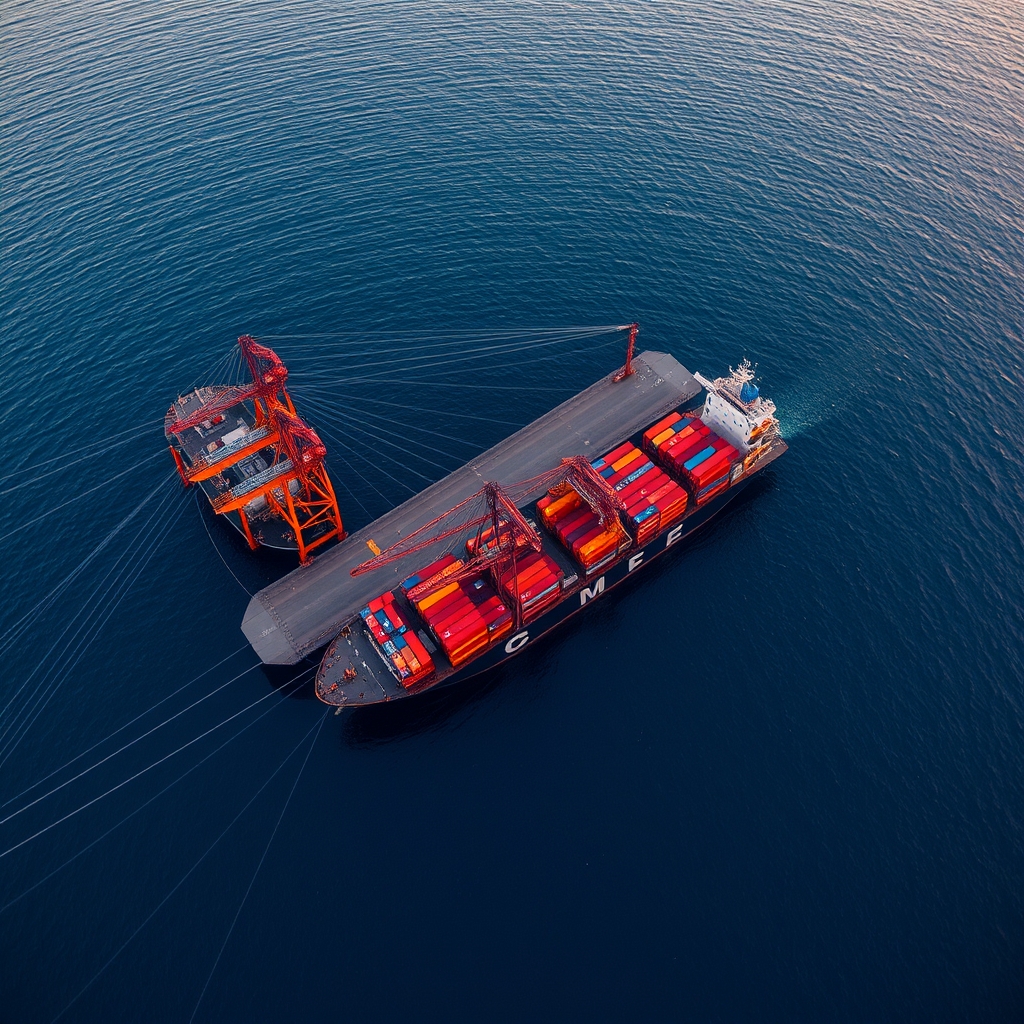
For decades, global trade has flowed along corridors designed by and for Western economies: the Suez Canal connecting Europe to Asia, the Panama Canal linking the Atlantic to the Pacific, and trans-Pacific routes tying Chinese manufacturing to American consumers. These routes—and the financial, legal, and logistical infrastructure that supports them—have defined supply chain strategy for every company shipping goods internationally.
That's changing. The BRICS+ bloc—now comprising Brazil, Russia, India, China, South Africa, Egypt, Ethiopia, Iran, Saudi Arabia, and the UAE, with Indonesia, Thailand, and others in the membership pipeline—represents over 45% of the world's population, 37% of global GDP (PPP), and a growing share of international trade. More importantly, these nations are actively building alternative trade corridors that bypass traditional Western-dominated chokepoints. For supply chain professionals, understanding these corridors isn't geopolitical speculation—it's operational necessity.
The BRICS+ Expansion: Context and Momentum
The original BRIC concept (coined by Goldman Sachs in 2001) was an investment thesis. BRICS+ in 2026 is a geopolitical force. The January 2024 expansion brought in six new members, and the bloc continues to grow. The common thread isn't ideology—it's a desire for alternatives to Western-dominated trade and financial systems.
Key statistics that matter for logistics:
- BRICS+ nations control 42% of global oil production (Saudi Arabia, UAE, Russia, Iran, Brazil). Energy is the lifeblood of freight—whoever controls oil influences shipping costs.
- Intra-BRICS trade grew 28% in 2025, now exceeding $1.2 trillion annually. This trade increasingly flows through new corridors rather than traditional routes.
- The New Development Bank (NDB) has committed $45 billion in infrastructure loans, with transportation corridors as a primary focus.
- China's Belt and Road Initiative (BRI) has invested over $1 trillion in transportation infrastructure across 150+ countries, creating the physical foundations for new trade routes.
The International North-South Transport Corridor (INSTC)
The INSTC is perhaps the most strategically significant new trade corridor. Running from St. Petersburg, Russia through Iran to Mumbai, India—with branches to Central Asia and the Caucasus—it's designed as a direct alternative to the Suez Canal route for Russia-India-Iran trade.
Route Configuration
- Western route: Russia → Azerbaijan → Iran (road/rail) → Bandar Abbas → India (ocean)
- Eastern route: Russia → Kazakhstan → Turkmenistan → Iran → India
- Trans-Caspian route: Russia → Caspian Sea (ferry) → Iran → India
Performance Metrics
The INSTC promises significant transit time improvements over the traditional route. A shipment from Mumbai to Moscow via the Suez Canal takes approximately 40–45 days. Via the INSTC, transit time drops to 25–30 days—a 30–40% reduction. Cost savings of 25–30% are also projected due to shorter distances and lower canal fees.
However, challenges remain. The corridor requires cargo to switch between ocean, rail, and road modes multiple times. Customs procedures at each border crossing add unpredictability. Infrastructure quality varies dramatically—modern ports in India contrast with aging rail networks in parts of Iran and Central Asia. Investment is accelerating (Iran has committed $3 billion to rail upgrades on the INSTC route), but full maturity is still 3–5 years away.
Corridor Capacity
The INSTC handled approximately 14 million tons of cargo in 2025, up from 6 million in 2023. Target capacity by 2028: 30 million tons. For comparison, the Suez Canal handles approximately 1.4 billion tons annually. The INSTC isn't replacing Suez—it's creating an alternative for specific trade lanes.
China-Central Asia Corridors
China has methodically built overland freight infrastructure connecting its western provinces to Central Asia, the Middle East, and Europe. These corridors are already operational and carrying significant volumes:
The China-Europe Railway Express
Over 17,000 train trips in 2025 connected 116 Chinese cities with 219 European cities across 25 countries. The primary routes run through Kazakhstan and Russia (northern route) or Kazakhstan, the Caspian, Azerbaijan, Georgia, and Turkey (middle corridor). Transit time: 15–20 days from Chinese factory to European distribution center—twice as fast as ocean, 80% cheaper than air.
The Middle Corridor (Trans-Caspian)
Bypassing Russia entirely, the Middle Corridor runs from China through Kazakhstan, across the Caspian Sea to Azerbaijan, through Georgia, and into Turkey. Volume on this route surged 60% in 2025 as shippers sought alternatives to Russian transit amid sanctions uncertainty. The EU has committed €10 billion to Middle Corridor infrastructure development, recognizing its strategic importance.
China-Pakistan Economic Corridor (CPEC)
Connecting China's Xinjiang province to Pakistan's Gwadar Port on the Arabian Sea, CPEC provides China with direct access to the Indian Ocean without traversing the Strait of Malacca—a critical strategic interest. For freight, CPEC offers a shorter route for Chinese goods destined for the Middle East and East Africa.
De-Dollarization and Its Impact on Freight Contracts
BRICS+ nations are actively reducing reliance on the US dollar for trade settlement. In 2025, approximately 23% of intra-BRICS trade was settled in local currencies (primarily Chinese yuan, Indian rupees, and Russian rubles), up from less than 5% in 2020.
For freight professionals, this has several practical implications:
- Currency risk in contracts: Freight rates on BRICS+ corridors are increasingly quoted in yuan or local currencies rather than USD. Shippers need to build currency hedging into their logistics budgets for these routes.
- Payment systems: The BRICS+ alternative to SWIFT (the mBridge platform and bilateral settlement mechanisms) is being used for freight payments. Companies trading on these corridors may need to establish banking relationships that support non-dollar settlement.
- Pricing dynamics: As more trade settles in non-dollar currencies, freight rate benchmarks on these corridors will diverge from dollar-denominated indices. Traditional freight rate databases may not capture these emerging markets accurately.
Alternative to Suez: Russia-India-Iran Triangle
The Houthi attacks on Red Sea shipping in 2024–2025 exposed the vulnerability of the Suez Canal route. BRICS+ nations have accelerated alternative corridor development in response:
- Russia's Northern Sea Route (NSR): Climate change is making the Arctic route viable for longer periods each year. Transit from Shanghai to Rotterdam via the NSR is 30% shorter than via Suez. Russia has invested heavily in icebreaker capacity and Arctic port infrastructure. Container volumes on the NSR reached 2 million TEU in 2025—still tiny compared to Suez, but growing 40% annually.
- Iran's Chabahar Port: Developed with Indian investment, Chabahar provides India with a direct ocean-to-land route to Central Asia and Afghanistan, bypassing Pakistan. It's also a key node on the INSTC.
- Egypt's alternative role: As a BRICS+ member, Egypt is positioning itself as a logistics hub serving both traditional Suez traffic and new BRICS+ corridor flows. The Suez Canal Economic Zone is being expanded to accommodate both Western and BRICS+ aligned supply chains.
Red Sea Disruption Impact
During the peak of Houthi disruptions in 2024, shipping companies rerouted 90% of container traffic around the Cape of Good Hope, adding 10–14 days to Asia-Europe voyages. This event accelerated investment in BRICS+ alternative corridors by 3–5 years, as both nations and companies recognized the strategic risk of single-route dependency.
New Development Bank: Infrastructure Funding
The NDB (headquartered in Shanghai) is the financial engine behind BRICS+ corridor development. Unlike the World Bank and Asian Development Bank, NDB infrastructure loans come without Western policy conditionality. Key logistics-relevant projects funded or under consideration:
- Indian rail modernization: $5 billion for dedicated freight corridors connecting Indian ports to inland distribution centers and the INSTC
- Brazilian port expansion: $2.3 billion for Santos and Paranaguá port capacity increases to handle growing South-South trade
- South African logistics infrastructure: $1.8 billion for rail and port rehabilitation, critical for African trade corridor development
- Iranian rail electrification: $3 billion for rail upgrades on INSTC routes
Impact on Ocean Freight Rates
The emergence of BRICS+ corridors is affecting ocean freight rates in several ways:
- Route diversification reduces chokepoint premiums: As alternatives to Suez and Malacca develop, the "risk premium" embedded in rates through these chokepoints should moderate over time.
- New demand on secondary ports: Ports like Chabahar, Gwadar, Vladivostok, and Mombasa are seeing increased traffic, creating new rate dynamics on previously minor trade lanes.
- Fleet redeployment: As trade patterns shift, carrier alliances are adjusting vessel deployment. Trans-Pacific and Asia-Europe main lanes may see capacity easing as some volume migrates to overland corridors, potentially moderating rates on traditional routes.
- Rate data gaps: Many emerging BRICS+ routes lack the transparent rate data that exists for major ocean lanes. Shippers need specialized intelligence to benchmark rates on these corridors.
Strategic Implications for Western Supply Chains
For companies based in the US and Europe, the BRICS+ corridor development creates both risks and opportunities:
Risks
- Supplier diversification complexity: If your suppliers are in BRICS+ nations, their logistics options are expanding—but some of those options may not be accessible or optimal for your supply chain.
- Sanctions and compliance: Corridor routes through Russia, Iran, and other sanctioned entities create compliance risks. Supply chain teams need detailed visibility into routing to ensure sanctions compliance.
- Competitive disadvantage: BRICS+ based competitors may access lower-cost, faster trade routes that aren't available to Western companies.
Opportunities
- Route redundancy: For shippers with supply chains touching BRICS+ nations (India, UAE, Saudi Arabia, Brazil), new corridors provide backup options when traditional routes face disruption.
- Emerging market access: BRICS+ infrastructure development is opening distribution possibilities in Central Asia, East Africa, and other underserved markets.
- Rate arbitrage: As new corridors mature, rate competition between traditional and alternative routes can benefit shippers who monitor both markets.
What Shippers Should Do Now
- Map your BRICS+ exposure: Identify which of your supply chain nodes (suppliers, customers, warehouses) are in BRICS+ nations and could be affected by corridor shifts.
- Monitor corridor development: Track infrastructure milestones, capacity additions, and service reliability on BRICS+ routes relevant to your lanes.
- Build currency flexibility: If you're trading with BRICS+ nations, develop capability to quote, contract, and settle in non-dollar currencies.
- Evaluate compliance risks: Ensure your supply chain visibility tools can trace routing through sanctioned territories and flag compliance issues.
- Diversify route strategies: For critical lanes, maintain routing options through both traditional and BRICS+ corridors. Single-route dependency is the biggest risk in the new trade landscape.
The global freight map is being redrawn in real time. The companies that understand these shifts—and build supply chains flexible enough to capitalize on them—will have a significant competitive advantage in the years ahead.
Monitor Global Trade Route Shifts
FreightPulse tracks freight rates, port congestion, and transit times across traditional and emerging trade corridors worldwide.
Start Free — 100 calls/mo →